Casinos That Accept Ethereum Australia 2026: The Only Guide You’ll Need Before Losing Your ETH
Forget the glossy banners promising you’ll double your crypto overnight. The reality of gambling with Ethereum in Australia is a mix of technical hurdles, regulatory grey zones, and the eternal question: can you actually get your winnings back without selling a kidney? We’re cutting through the noise. This isn’t a list of “top 10 magical casinos.” It’s a cold, hard look at the mechanics, the risks, and the actual options for using ETH down under in 2026. Because nobody gives away “free” money, and if you think a casino is your new financial advisor, we need to talk.
The landscape has shifted. Traditional payment processors still give crypto the side-eye, and the regulatory bodies are watching. But the demand is there. Players want the speed, the pseudo-anonymity, and the lower transaction fees that Ethereum promises. So, the question isn’t *if* you can find casinos that accept Ethereum in Australia, but *how* to do it without getting burned by a scam or tripped up by a technicality. We’ll break down the exact steps, the red flags, and the mathematical reality of wagering with a volatile asset.
Why Ethereum, and Why the Fuss in Australia?
Let’s start with the obvious. Ethereum isn’t Bitcoin. It’s a programmable blockchain. For a gambler, this means smart contracts can theoretically automate payouts, and the network can handle more complex transactions. The average ETH transaction fee in early 2025 hovered around $2-5, a fraction of what some traditional wire transfers cost for international online casinos. That’s a tangible saving right there. But in Australia, the Interactive Gambling Act 2001 casts a long, murky shadow. It primarily targets operators offering services to Australian residents, not the players themselves. This creates a peculiar dynamic: offshore casinos can accept Australian players and ETH deposits, but they operate in a legal grey area. You’re not breaking the law by playing, but you have zero local recourse if things go sideways.
The “fuss” is about control. The Australian government wants to regulate and tax. Cryptocurrency, especially a decentralized network like Ethereum, complicates that. So, while you won’t find a locally licensed, Ethereum-accepting casino in Sydney, you’ll find dozens of offshore platforms catering to the Australian market. The key is understanding the trade-off: you get access and speed, but you sacrifice the consumer protections you’d have with a locally regulated entity. It’s a classic risk-reward calculation, and the house always has the better odds on that one.
The Regulatory Maze: What You’re Actually Dealing With
The Interactive Gambling Act doesn’t explicitly mention cryptocurrency. It’s a law written before Ethereum was a whitepaper. This ambiguity is the loophole. Offshore operators interpret the Act as applying to them, not the player. So, they continue to offer services. Your position as a player is that of a participant in a transaction with an overseas company. The Australian Communications and Media Authority (ACMA) can block websites, but they can’t prosecute you for depositing ETH on a site hosted in Curaçao or Malta. That’s the legal reality. It’s not a green light; it’s a “proceed with extreme caution” sign.
Think of it like this: you’re driving a car that’s legal in the country you’re in, but the road map is from a different nation. The car (your ETH) works fine. The road (the casino) exists. But if you crash, the local police (Australian regulators) might not be equipped to help you file a report. Your protection comes from the casino’s own license, usually from a jurisdiction like Malta Gaming Authority (MGA) or Curaçao eGaming. A Curaçao license, for instance, is cheaper and faster for operators to obtain than an MGA license, which often translates to less stringent player protection standards. This directly impacts your odds of a fair game and a smooth withdrawal.
Minimum Deposit Casino Australia 2026: The Math Behind the “Budget” Gamble
What Does a License Actually Mean for Your ETH Deposit?
A license is a piece of paper that says an operator met some minimum requirements at a specific point in time. It’s not a guarantee of future good behavior. An MGA license requires operators to segregate player funds and have responsible gambling tools. A Curaçao license has historically been less rigorous, though it’s tightening up. When you deposit ETH, you’re trusting that the casino’s backend systems are secure and that their license actually means something. If a casino with a Curaçao license goes bankrupt, your ETH is likely gone. With an MGA-licensed casino, there’s a better (but not absolute) chance of some fund segregation. The license number on the footer of the site is your starting point for due diligence, not the end of it.
The ETH Deposit & Withdrawal Process: A Step-by-Step Reality Check
Here’s the part they don’t put in the flashy tutorials. Depositing Ethereum is technically simple but operationally fraught. You’ll create an account at the casino, navigate to the cashier, select Ethereum, and get a unique deposit address (a long string of characters). You then send ETH from your personal wallet (like MetaMask or a hardware wallet) to that address. The critical detail is the gas fee. Ethereum’s network congestion can spike gas fees from $1 to $50 or more in minutes. Depositing $50 worth of ETH during a network peak could cost you a significant percentage in fees alone. Always check current gas prices on a site like Etherscan before confirming a transaction.
Withdrawals are where the real test happens. You request a withdrawal, and the casino processes it. Processing times vary wildly. A reputable operator might process it within 24 hours. Others take 3-5 business days. Then, the ETH hits your wallet. The total time from clicking “withdraw” to seeing ETH in your MetaMask can be anywhere from 6 hours to a week. The casino’s internal processing is the bottleneck, not the Ethereum network. A common trick is the “pending” period, where your withdrawal sits in limbo for 24-48 hours before being sent. This is often a liquidity management tactic by the casino. Always read the terms and conditions regarding withdrawal times and limits.
| Operator (Market Presence) | Typical ETH Bonus Offer | License Jurisdiction | Average Withdrawal Time | Minimum Deposit (ETH) |
|---|---|---|---|---|
| Operator A (High AU Traffic) | 100% match up to 1 ETH | Curaçao | 24-48 hours processing | 0.01 ETH |
| Operator B (Crypto-Focused) | 50% reload + free spins | Malta (MGA) | 12-24 hours processing | 0.005 ETH |
| Operator C (Established Brand) | Welcome package (multi-deposit) | Gibraltar | 48-72 hours processing | 0.02 ETH |
| Operator D (New Entrant) | No-deposit bonus (rare) | Anjouan | 3-5 business days | 0.01 ETH |
| Operator E (Live Casino Focus) | Cashback on losses | Curaçao | 24 hours processing | 0.008 ETH |
Bonuses with ETH: The Math Behind the “Free” Spin
Let’s dismantle the illusion. A “100% match bonus up to 1 ETH” sounds generous. It means if you deposit 1 ETH, the casino gives you an additional 1 ETH in bonus funds. You now have 2 ETH to play with. But that bonus comes with a wagering requirement, typically 30x to 50x the bonus amount. So, for a 1 ETH bonus with a 40x requirement, you must place bets totaling 40 ETH before you can withdraw any winnings derived from the bonus. The house edge on most slots is 3-5%. Over 40 ETH in wagers, the expected loss is 1.2 to 2 ETH. You started with a 1 ETH bonus. The math says you’ll likely lose it all before meeting the requirement. The “free” money is a statistical trap designed to keep you playing.
Some casinos offer ETH-specific bonuses, like a higher match percentage or lower wagering requirements. These are marketing tools to attract crypto deposits. The lower the wagering requirement, the better the deal. A 20x requirement is significantly more achievable than a 50x. Always calculate the expected value. If the bonus is 1 ETH with 30x wagering, and the house edge is 4%, your expected loss is 1.2 ETH. You’re starting with a 1 ETH bonus. The expected value is negative from the start. The only way to profit is with extreme luck, which is not a strategy. Treat bonuses as extended playtime, not as a profit center.
Are There Wager-Free ETH Bonuses?
Extremely rare, and usually tiny. A wager-free bonus might be 0.01 ETH with a maximum cashout limit of 0.1 ETH. The casino is giving you a small taste with almost no risk to themselves. The maximum cashout ensures you can’t hit a jackpot on their dime. If you find one, it’s a good way to test a casino’s platform and withdrawal process with minimal personal risk. But don’t expect to fund your retirement with it. The terms are always stacked in the house’s favor.
Gambloria Casino Free Spins 2026: A Cynic’s Guide to the Math Behind the “Free” Money
Beyond the Slots: Game Variety with ETH Deposits
Most casinos that accept Ethereum offer the same game libraries as their fiat counterparts. You’ll find thousands of slots from providers like NetEnt, Microgaming, and Pragmatic Play. The key difference is the bet denomination. Instead of betting $0.20 per spin, you’re betting 0.0001 ETH. The volatility of ETH adds a layer of complexity. A 0.001 ETH bet might be worth $3 today and $4 tomorrow. Your wins and losses fluctuate in fiat value even if the ETH amount remains constant. This is a feature, not a bug, for crypto enthusiasts, but it’s a headache for those who think in dollars.
Table games like blackjack, roulette, and baccarat are also widely available. Live dealer games, streamed from studios in Europe or Asia, are the premium experience. The minimum bets in ETH are often lower than their fiat equivalents, making high-quality live games more accessible. A live blackjack hand might have a minimum of 0.0005 ETH, which could be less than $1. This accessibility is a genuine advantage. The game mechanics are identical; the currency is different. The RNG (Random Number Generator) for slots and the live video feed for table games are the same systems used by fiat casinos. The fairness of the game isn’t determined by your payment method.
The New Wave: Crypto-Only Casinos vs. Hybrid Operators
There are two breeds. Hybrid operators accept both fiat (AUD, USD, EUR) and cryptocurrencies like ETH. They’re established brands that added crypto as a payment option to capture a growing market. Their advantage is trust and a proven track record. Their disadvantage is that they often have stricter KYC (Know Your Customer) procedures and may treat crypto withdrawals with the same slow processing as bank transfers. Crypto-only casinos, on the other hand, are built from the ground up on blockchain principles. They often feature provably fair games, where you can verify the randomness of each bet using cryptographic hashes. Their disadvantage is a shorter track record and sometimes a smaller game library.
The “provably fair” aspect is a significant information gain. In a standard casino, you trust the RNG certification from a third party like eCOGRA. In a provably fair casino, you can check the math yourself. The casino provides a server seed, you provide a client seed, and a nonce increments with each bet. The outcome is a hash of these combined elements. After the bet, the casino reveals the server seed, and you can verify that the outcome wasn’t manipulated. This is a level of transparency impossible in traditional online gambling. It’s the single biggest technical advantage of a crypto-native platform.
Security: Protecting Your ETH and Your Account
Your casino account is a target. Use a unique, strong password and enable two-factor authentication (2FA) everywhere possible. Preferably, use an authenticator app (like Google Authenticator) over SMS-based 2FA, which is vulnerable to SIM-swapping attacks. When depositing, double-check the wallet address. One wrong character and your ETH is gone forever. There is no “undo” button on the blockchain. Bookmark the casino’s cashier page and always access it directly. Phishing sites that mimic legitimate casinos are rampant.
For storing your ETH, never keep large amounts on the casino’s platform. The casino is a business, and businesses can fail. Withdraw your winnings to your personal wallet promptly. A hardware wallet like a Ledger or Trezor is the gold standard for security. It keeps your private keys offline, immune to online hacks. The extra step of connecting a hardware device to approve a transaction is a small price for that security. Think of the casino as a temporary holding pen for your funds, not a bank.
What About VPNs and Geo-Blocking?
Some casinos use geo-blocking to restrict access from certain countries, including Australia. A VPN can bypass this, but it’s a risky move. Casinos explicitly prohibit VPN use in their terms and conditions. If they detect you’re using one, they can void your winnings and close your account. The risk-reward is terrible. You’re risking your entire balance for the “reward” of accessing a site you shouldn’t be on. It’s better to find a casino that openly accepts Australian players and ETH deposits without requiring you to mask your location.
Choosing a Casino: The Due Diligence Checklist
Don’t just pick the first site with a big ETH bonus. Run it through this checklist. First, the license. Is it from a reputable jurisdiction? Curaçao is the minimum; MGA or Gibraltar is better. Second, game providers. Are they from established studios like NetEnt, Play’n GO, or Evolution? Or are they unknown, in-house games that could be rigged? Third, withdrawal terms. What are the limits? Are there caps on weekly or monthly withdrawals? A casino that limits you to 1 ETH per week is a problem if you hit a big win. Fourth, customer support. Test it. Send a pre-sales question via live chat. How fast and knowledgeable is the response? If they can’t answer a simple question before you deposit, imagine trying to get help with a withdrawal issue.
Fifth, community reputation. Search for the casino’s name on forums like Reddit (r/onlinegambling) or Trustpilot. Look for patterns in complaints. One bad review is an anomaly. Fifty reviews mentioning slow ETH withdrawals is a pattern. Sixth, the website itself. Is it professional? Are there spelling errors? Is the HTTPS certificate valid? A sloppy website often indicates a sloppy operation. Seventh, responsible gambling tools. Can you set deposit limits, loss limits, and session time limits? A casino that doesn’t offer these is not concerned about player welfare. This checklist takes 30 minutes and can save you from a world of financial pain.
| Criterion | What to Look For | Red Flag |
|---|---|---|
| License | MGA, Gibraltar, UKGC (for non-AU focused), Curaçao (minimum) | No license displayed, or license from an obscure jurisdiction |
| Game Providers | NetEnt, Microgaming, Pragmatic Play, Evolution, Play’n GO | Only unknown, proprietary games |
| Withdrawal Limits | High or no weekly/monthly limits for ETH | Low limits (e.g., 1 ETH/week), long pending periods |
| Customer Support | 24/7 live chat, fast response, knowledgeable agents | No live chat, email-only support, slow responses |
| Reputation | Positive mentions on forums, clear complaint resolution | Multiple unresolved complaints about payments |
| Responsible Gambling | Deposit/loss/session limits, self-exclusion options | No tools offered, or they’re hard to find |
The Volatility Factor: Gambling with a Moving Target
This is the part most guides ignore. You deposit 0.5 ETH when ETH is at $3,000. That’s a $1,500 deposit. You play for a few hours, and your balance is 0.6 ETH. You decide to withdraw. But in those few hours, ETH has dropped to $2,800. Your 0.6 ETH is now worth $1,680. You made a profit in fiat terms, but you lost 20% of your potential value due to market movement. Conversely, if ETH had risen to $3,200, your 0.6 ETH would be worth $1,920. The volatility adds a second layer of gambling: you’re not just betting against the house edge, you’re also betting on the ETH/USD exchange rate. For serious players, this means considering hedging strategies or simply accepting the volatility as part of the crypto experience.
A practical approach is toA practical approach is to treat your ETH bankroll as separate from your fiat holdings. Decide on a fixed amount of ETH you’re willing to gamble with, and mentally convert it to a dollar value at the time of deposit. Don’t chase losses by depositing more ETH when the price is falling, and don’t get greedy by letting winnings ride when the price is spiking. Set a stop-loss in fiat terms. For example, “I will stop playing if my balance drops below $500 worth of ETH.” This discipline is harder to maintain with crypto because the numbers on the screen are always moving. It’s a psychological trap designed to make you forget the real-world value of what you’re betting.
The casino’s side of this is simpler. They price their games in ETH denominations and adjust minimum/maximum bets periodically. A slot that allowed 0.0001 ETH per spin last month might now require 0.00015 ETH. They’re not doing this to be difficult; they’re maintaining a consistent fiat value for their minimum bets. Your 0.0001 ETH bet might have been worth $0.30 when you started and is now worth $0.45. The casino wants that bet to be worth roughly $0.30-$0.50 consistently. This is why you see bet amounts change. It’s not a conspiracy; it’s basic business math in a volatile currency environment.
Responsible Gambling with Crypto: The Hidden Risks
Cryptocurrency can create a dangerous detachment from the reality of money. Seeing your balance as “0.5 ETH” feels different than seeing “$1,500.” The abstraction makes it easier to bet larger amounts. This is a well-documented psychological effect. The solution is simple but requires discipline: always check the fiat equivalent of your bets and balance. Keep a spreadsheet if you have to. The moment you stop thinking of ETH as “real money” is the moment you’re in trouble. Casinos that offer responsible gambling tools are your allies here. Use them. Set limits. The blockchain doesn’t care about your rent payment, but you should.
Self-exclusion programs are a critical tool. If you feel your gambling is becoming problematic, most reputable casinos allow you to self-exclude for a period of 6 months, 1 year, or permanently. This is a one-way door. Once activated, you cannot reverse it until the period expires. The casino will block your account and remove you from marketing lists. This is the most effective harm reduction tool available. Using it isn’t a sign of weakness; it’s a sign of recognizing the mathematical reality that the house edge will grind you down over time if you play long enough.
How to Spot a Problem Before It Starts
Track your time and money. Set an alarm for your gambling sessions. If you consistently ignore it, that’s a red flag. Track your deposits and withdrawals. If your deposits consistently exceed your withdrawals over a month, you’re losing money. That’s the expected outcome. The problem starts when you try to “win it back” by depositing more. This is the classic gambler’s fallacy. Your previous losses have no bearing on your next bet. The RNG doesn’t remember you. Each spin is independent. The only thing that changes is your bankroll, and it’s getting smaller.
The Future: Ethereum 2.0 and Its Impact on Gambling
The transition to Ethereum’s proof-of-stake consensus mechanism has already happened, but its full impact on transaction fees and speed is still unfolding. Lower gas fees make micro-transactions more viable. This could lead to new types of casino games with very small, very frequent bets. Imagine a game where you bet 0.00001 ETH every 5 seconds. The lower fees make this economically feasible for the operator. The increased network capacity also means faster confirmations. A deposit that used to take 12 confirmations (around 3 minutes) might now be confirmed faster. This improves the user experience significantly.
Smart contract casinos are another evolution. Instead of trusting a centralized operator, you deposit ETH into a smart contract that automatically pays out winnings based on predefined rules. The code is open-source and auditable. This removes the need for a trusted third party. The house edge is built into the contract’s code. The downside is that smart contracts can have bugs. The DAO hack of 2016 is a sobering reminder. While the technology has improved, the risk of code exploits remains. It’s a different kind of risk than trusting a casino operator, but it’s still risk.
Practical Tips for the ETH Gambler in Australia
Use a dedicated gambling wallet. Don’t gamble with your main ETH holdings. Create a separate wallet address for casino transactions. This isolates your gambling activity and makes it easier to track. It also limits your exposure if the casino’s systems are compromised. Fund this wallet with only what you’re prepared to lose. Treat it like cash you’d take to a physical casino. Once it’s gone, you’re done for the session. This mental separation is crucial for maintaining control.
Monitor gas fees obsessively. Use a gas tracker. If the network is congested, wait. A $50 deposit shouldn’t cost $10 in fees. Timing your transactions can save you significant money over time. Similarly, time your withdrawals. If you request a withdrawal during a network peak, you’ll pay more in gas. Some casinos deduct the network fee from your withdrawal amount. Others cover it. Check the terms. The difference between a $2 fee and a $20 fee adds up.
What’s the Best Wallet for Casino Gambling?
For frequent transactions, a software wallet like MetaMask is convenient. It’s a browser extension and mobile app that interacts easily with casino websites. For larger amounts or long-term storage, a hardware wallet like Ledger or Trezor is essential. The trade-off is convenience vs. security. For active gambling, you might keep a small balance in MetaMask for quick deposits and transfers, and the bulk of your ETH in a hardware wallet. Never store your seed phrase digitally. Write it down on paper and keep it in a secure physical location. If your computer is compromised, a digital copy of your seed phrase is as good as gone.
Finally, understand the tax implications. In Australia, gambling winnings are generally not taxed if you’re a recreational player. However, if you’re deemed to be a professional gambler, or if you’re trading crypto as a business, the rules change. The Australian Taxation Office (ATO) views cryptocurrency as an asset, not a currency. Any capital gain from selling or spending ETH (including gambling with it) may be subject to Capital Gains Tax (CGT). The specifics are complex and depend on your individual circumstances. Consult a tax professional. The last thing you want is to win at the casino and lose to the taxman because you didn’t understand the reporting requirements for your ETH transactions.
And the most mundane detail of all: the captcha on the withdrawal form. It’s always the one with the traffic lights that are slightly ambiguous, making you second-guess whether that sliver of yellow in the corner counts.
That captcha, by the way, is a perfect metaphor for the entire experience. A minor, irritating hurdle placed at the exact moment you’re trying to access your own money. It serves no real security purpose beyond proving you’re not a bot, but it feels like one final test of patience. And patience is the one resource the house has in infinite supply. You, on the other hand, are working with a finite amount, both in ETH and in the will to keep clicking on squares that might contain a bicycle.
Best High Roller Casino with Bonus Australia 2026: A Cynic’s Guide to Spending More Than You Should
So, the landscape for casinos that accept Ethereum in Australia is a patchwork. It’s functional, it’s accessible, and it’s built on a foundation of offshore licenses and regulatory ambiguity. The speed and lower fees are real advantages. The volatility and lack of local recourse are real risks. Your best tools are not a secret strategy or a magic bonus code. They are a healthy dose of skepticism, a calculator, and the discipline to walk away when the math stops making sense. The ETH network will process your transaction in minutes. The casino’s marketing department will process your desire to play in seconds. Your own judgment is the only thing that should take its time.
Minimum Deposit Pokies Australia 2026: The Math, The Myths, and The Bare Minimum
New Ethereum Casinos in 2026: Fresh Meat or Fresh Traps?
The online gambling industry is a shark tank with a revolving door. New casinos that accept Ethereum launch every month, each promising a “revolutionary” experience. Most are gone within a year. The failure rate is staggering. For every successful new platform, there are ten that either run out of funding, get shut down by their licensing authority, or simply disappear with player funds. The allure of a new casino is the potential for better bonuses and innovative features. The reality is often a buggy platform, a tiny game library, and a support team that consists of one person answering emails from a coffee shop. The risk profile of a new casino is categorically different from an established one.
So why do players flock to them? Two reasons. First, the bonuses are often aggressive. A new casino might offer a 200% match bonus or 200 free spins to attract initial deposits. They’re burning investor cash to acquire users. Second, there’s a perception of fairness. A new casino hasn’t had time to develop a reputation for slow payments or unfair terms. This is a naive assumption. A new casino hasn’t had time to prove anything. The absence of bad reviews is not the same as the presence of good ones. It’s a blank slate, and you’re the test subject. If you choose to play at a new ETH casino, do it with minimal funds. Treat it as a paid experiment, not an investment.
How to Vet a Brand-New Platform
Check the domain registration date. A casino that’s been online for three months is a different beast than one with five years of history. Use a WHOIS lookup tool. The age of the domain is a proxy for the operator’s commitment. Next, verify the license. A new casino should at least have a Curaçao license in process. If they claim to be “licensed” but the license number on their site doesn’t verify on the regulator’s website, walk away. Finally, look at the game providers. If they only feature unknown, proprietary games, the potential for manipulation is high. A new casino using NetEnt or Pragmatic Play has at least paid for a legitimate game integration, which suggests some level of financial stability and operational seriousness.
Casino Apps and Mobile ETH Gambling in Australia
The mobile experience is no longer a secondary consideration. Over 70% of online gambling sessions in Australia now start on a smartphone. The technical challenge for ETH casinos is delivering a seamless experience within the constraints of mobile browsers. Most operators don’t offer native apps in the Google Play Store or Apple App Store due to policy restrictions on gambling apps. Instead, they offer Progressive Web Apps (PWAs). A PWA is a website that behaves like an app. You can add it to your home screen, and it launches in a full-screen window without the browser’s address bar. The underlying technology is still HTML5 and JavaScript, but the user experience is closer to a native app.
The performance difference is noticeable. A well-built PWA loads in under two seconds on a 4G connection. A poorly built one is just a slow website with an icon. The ETH integration on mobile is handled through wallet-connect protocols. You scan a QR code with your MetaMask mobile app, and it links your wallet to the casino’s website. The transaction is then approved on your phone. This is more secure than typing a private key into a browser, but it adds friction. Every deposit requires you to open your wallet app, scan, and confirm. For a casual player making one deposit a week, this is fine. For someone making multiple deposits a day, it becomes a chore. The convenience of traditional payment methods is a hard habit to break.
Live Dealer Games with Ethereum: The Premium Experience
Live dealer games are the closest you’ll get to a physical casino without leaving your couch. Real dealers, real cards, real roulette wheels, streamed in HD to your device. The ETH integration here is purely in the cashier. The game itself is identical to what a fiat player sees. The minimum bets are often the main differentiator. A live blackjack table at a fiat casino might have a $5 minimum. The same table at an ETH casino might have a 0.0002 ETH minimum, which could be less than $1. This lower barrier to entry is a significant draw. It allows players to experience the premium live environment without risking large amounts.
The providers are the same: Evolution Gaming is the undisputed king, followed by Pragmatic Play Live and Ezugi. The quality of the stream, the professionalism of the dealers, and the variety of game variants (Lightning Roulette, Infinite Blackjack, etc.) are consistent across both fiat and crypto casinos. The only variable is the betting interface. Some casinos have optimized their live dealer UI for crypto, allowing for quick bet adjustments in ETH denominations. Others are clearly using a fiat-first interface with a simple currency conversion. The latter can be clunky. Always check if the bet amounts are displayed in both ETH and a fiat equivalent. It helps you keep track of your actual exposure.
What About Game Fairness in Live Dealer?
The fairness of live dealer games is easier to verify than slots. You’re watching a physical process in real time. The shuffle, the deal, the spin — it’s all visible. The casino’s edge comes from the rules of the game (e.g., the dealer stands on 17 in blackjack) and the presence of the green zero (or double zero in American roulette). There’s no RNG to question. The integrity of the game depends on the studio’s security and the provider’s reputation. Evolution Gaming, for example, operates from heavily monitored studios with multiple camera angles and strict protocols. The risk of a rigged live game from a top-tier provider is negligible. The risk of a rigged live game from an unknown provider streaming from an undisclosed location is not.
Payment Methods Beyond ETH: The Hybrid Approach
Most casinos that accept Ethereum also accept other cryptocurrencies and traditional payment methods. Bitcoin, Litecoin, and Tether (USDT) are common alternatives. USDT is particularly interesting because it’s a stablecoin pegged to the US dollar. Depositing in USDT eliminates the volatility risk. Your 1000 USDT deposit is worth $1000 today and will be worth $1000 tomorrow (barring a catastrophic de-pegging event). For players who want the benefits of crypto transactions without the price swings, USDT is a practical choice. The trade-off is that you lose the potential upside of ETH appreciation. If ETH doubles in value, your ETH winnings double in fiat terms. Your USDT winnings stay flat. It’s a risk-reward decision.
Traditional methods like Visa, Mastercard, and bank transfers are still available at hybrid casinos. The processing times are slower (1-5 business days for withdrawals) and the fees can be higher. The main advantage is familiarity and the ability to dispute charges through your bank. If a casino refuses to pay out your ETH winnings, your options are limited to the casino’s internal dispute process and the licensing authority. If a casino refuses to pay out a credit card withdrawal, you can initiate a chargeback with your bank. This consumer protection mechanism doesn’t exist in the crypto world. Once the ETH is sent, it’s gone. This is the fundamental trade-off: speed and lower fees vs. consumer protection.
Understanding Wagering Requirements: A Deep Dive
The wagering requirement is the single most important term in any casino bonus. It’s the multiplier that determines how much you must bet before bonus funds become withdrawable cash. A 30x wagering requirement on a 1 ETH bonus means you must place 30 ETH worth of bets. The catch is that not all games contribute equally. Slots typically contribute 100% of each bet toward the requirement. Blackjack might contribute only 10%. This means a $10 bet on blackjack only counts as $1 toward clearing the bonus. Roulette is often somewhere in between, at 20-50%. This game-weighting system is designed to steer players toward high-edge games (slots) and away from low-edge games (blackjack).
Let’s do the math on a specific scenario. You receive a 1 ETH bonus with a 40x wagering requirement. You decide to play blackjack, which has a house edge of 0.5% and contributes 10% to the requirement. To clear 40 ETH in wagering, you need to place 400 ETH in blackjack bets (because only 10% counts). At a 0.5% house edge, your expected loss on 400 ETH of blackjack bets is 2 ETH. You started with a 1 ETH bonus. The expected value is -1 ETH. You’re statistically likely to lose more than the bonus is worth before you can withdraw it. This is why casinos love wagering requirements. They’re a mathematical prison. The only way out is to get lucky on a high-variance slot, which is precisely what the casino wants you to play.
Time Limits and Maximum Bet Rules
Wagering requirements come with time limits, typically 7-30 days. If you don’t clear the requirement within the time frame, the bonus and any winnings derived from it are forfeited. There’s also a maximum bet rule while a bonus is active. Exceeding the limit (often 0.005 ETH per spin) can void the bonus. These rules are buried in the terms and conditions. They’re not hidden, but they’re not highlighted either. The casino is counting on you to not read them. Always read the bonus terms. A five-minute read can save you from losing a balance you thought was yours.
Security Audits and Provably Fair Technology
Provably fair is a system that allows players to verify the fairness of each bet using cryptographic hashing. It’s a concept native to cryptocurrency casinos. The process works like this: before a bet, the casino generates a server seed and hashes it, providing the hash to the player. The player provides a client seed. The outcome of the bet is determined by a combination of these seeds and a nonce. After the bet, the casino reveals the original server seed. The player can then use the revealed seed, their client seed, and the nonce to re-calculate the outcome and verify that it matches the result they saw. This creates a transparent audit trail that’s impossible to manipulate after the fact.
Traditional online casinos use Random Number Generators (RNGs) that are audited by third-party testing agencies like eCOGRA or iTech Labs. These audits are periodic, not continuous. A provably fair system provides verification for every single bet. The difference is analogous to a bank statement that you can check in real-time versus an annual audit report. The provably fair model is more transparent, but it only works for games built on the blockchain or with direct API integration. Most live dealer games and many slots from major providers don’t support it. If provably fair verification is important to you, you’ll need to choose a crypto-native casino that specifically offers these games.
The Psychology of Crypto Gambling: Detachment and Risk
Cryptocurrency creates a psychological distance from the value of money. This is well-documented in behavioral economics. When you gamble with physical cash, you feel the loss. The notes leave your hand. When you gamble with ETH, you’re clicking buttons on a screen. The numbers change, but the tactile feedback is gone. This detachment can lead to larger bets and longer sessions. A study by the University of Cambridge found that crypto gamblers tend to have higher loss-to-deposit ratios than fiat gamblers, partly due to this psychological effect. The volatility adds another layer. A sudden price spike can make your balance look larger, encouraging you to bet more. A price drop can trigger a “revenge betting” mindset, where you try to win back the fiat value you’ve lost.
Highway Casino Free Spins 2026: A Cynic’s Guide to the “Free” Lunch
The casino industry understands this psychology. They design their interfaces to minimize the perception of loss. Wins are celebrated with flashy animations and sounds. Losses are silent. The balance display often shows the ETH amount, not the fiat equivalent, further abstracting the value. Some casinos even allow you to hide the fiat display entirely. This is not an accident. It’s a deliberate design choice to encourage continued play. As a player, the countermeasure is simple: always know the fiat value of your bets and balance. Write it down. Calculate it before every session. The moment you lose track of what you’re actually spending is the moment the house edge starts working overtime.
Chasing Losses in a Volatile Market
The combination of gambling losses and crypto volatility can create a devastating feedback loop. You lose 0.5 ETH at the casino. ETH then drops 10% in value. Now you’ve lost not just the gambling loss, but also the market loss on your remaining balance. The temptation is to deposit more ETH to “make it back” on both fronts. This is a recipe for disaster. The casino’s house edge ensures that more play means more losses in the long run. The market’s volatility ensures that your remaining balance is subject to unpredictable swings. Trying to solve a gambling loss with more gambling, while simultaneously exposed to market risk, is a double negative. The rational response is to stop, reassess, and separate the two types of risk.
ETH Withdrawal Limits and Processing: The Fine Print
Every casino has withdrawal limits. These can be daily, weekly, or monthly. A typical limit for a standard player might be 5 ETH per week or 20 ETH per month. VIP players get higher limits. These limits are not arbitrary. They’re a liquidity management tool for the casino. If a casino has to pay out a large jackpot in ETH, it needs to have that ETH on hand. Limits spread the payout over time, reducing the immediate cash flow impact. For you as a player, a low withdrawal limit is a problem if you hit a big win. Winning 50 ETH and being told you can only withdraw 5 ETH per week means you’ll be waiting over two months to receive your full winnings. During that time, the ETH price could crash.
The verification process for withdrawals is another hurdle. You’ll need to provide ID documents (passport, driver’s license) and proof of address (utility bill). This is standard KYC (Know Your Customer) procedure, even at crypto casinos. The process can take 24-72 hours. Some casinos allow small withdrawals without verification, but anything above a certain threshold (often 2 ETH) triggers the full KYC process. This is a one-time inconvenience, but it can delay your first withdrawal significantly. The casino’s terms will specify the exact thresholds and required documents. Ignoring this step and requesting a large withdrawal without verification will result in a freeze on your account until you comply.
What Happens If a Casino Delays My ETH Withdrawal?
Contact support immediately. A delay of 24-48 hours beyond the stated processing time is not uncommon. A delay of a week or more is a red flag. Document everything. Take screenshots of your withdrawal request, the timestamp, and any communication with support. If the delay persists, escalate to the licensing authority. File a complaint with the regulator that issued the casino’s license. This is your primary recourse. The regulator can investigate and, in some cases, force the casino to pay. The process is slow and not guaranteed, but it’s the only formal channel available. Publicly posting your complaint on gambling forums can also apply pressure, as casinos are sensitive to their public reputation.
The Taxman Cometh: Crypto Gambling and the ATO
The Australian Taxation Office (ATO) treats cryptocurrency as an asset for capital gains tax (CGT) purposes. This has implications for gamblers. If you buy ETH at $3,000 and use it to gamble when ETH is at $4,000, you’ve made a capital gain of $1,000 per ETH, even if you haven’t sold it. Spending the ETH is a “disposal” event that triggers a CGT liability. The calculation is complex. You need to track the cost base of every ETH you deposit and the market value at the time of disposal. For a casual gambler making a few deposits a year, this is manageable. For a frequent player making dozens of transactions, it’s an accounting nightmare.
The gambling winnings themselves are generally not taxed if you’re a recreational player. The ATO’s position is that gambling is a leisure activity, not a source of income. However, if you’re deemed to be a professional gambler — someone who gambles as a business or with a system — the winnings can be considered assessable income. The line between recreational and professional is blurry. Factors include the frequency of play, the amount wagered, and whether you have other sources of income. If in doubt, consult a tax professional who understands cryptocurrency. The penalties for getting it wrong are steep, and the ATO has been increasing its focus on crypto transactions in recent years.
Responsible Gambling Resources Specific to Crypto Players
Standard responsible gambling resources apply, but there are crypto-specific considerations. Gambling Help Online (1800 858 858) is a free, confidential service available 24/7. They can provide counseling and referrals. For self-exclusion, the National Self-Exclusion Register allows you to exclude from all licensed Australian online operators. However, this register doesn’t cover offshore casinos. For offshore ETH casinos, you’ll need to self-exclude individually with each operator. This is a significant gap in the system. There’s no central registry for offshore crypto casinos. You have to manage your own exclusion across multiple platforms, which requires discipline and organization.
Financial counseling is another resource. If gambling has caused financial hardship, services like the National Debt Helpline (1800 007 007) can help. They understand the unique challenges of crypto debt, including the difficulty of negotiating with creditors when your assets are in a volatile cryptocurrency. Some crypto casinos offer their own responsible gambling tools, including deposit limits, loss limits, session time limits, and cooling-off periods. Use them. Setting a deposit limit of 0.1 ETH per week is a concrete, enforceable boundary. The casino’s system will block any attempt to exceed it. This removes the temptation to make impulsive deposits during a losing streak.
SC7 Casino Free Spins 2026: A Cynic’s Guide to the Math Behind the “Gift”
独自に開発した
タイピングソフトを販売しております。
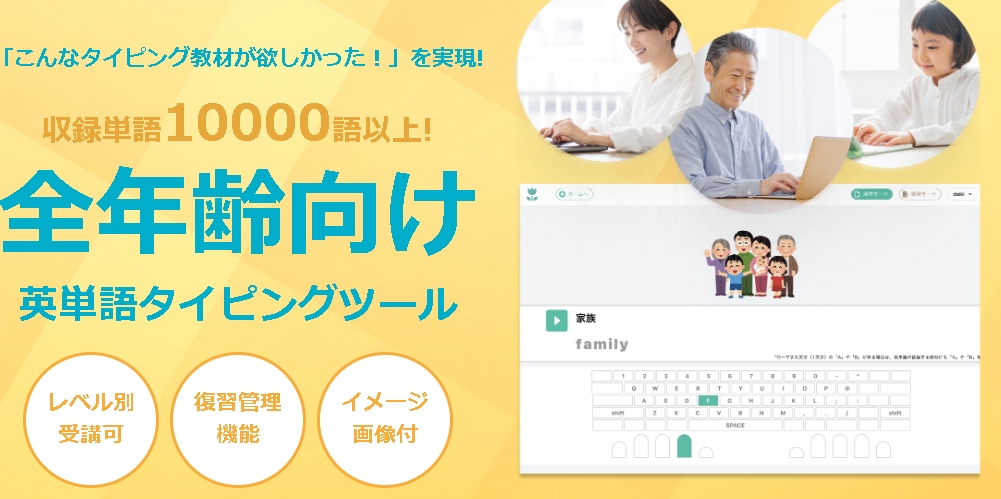
単語学習、聞き取り学習、タイピング練習はもちろん。
できなかった部分だけを重点的に学習できるように復習機能もついています。
また、中1レベルからTOEIC900点クラスまで網羅している為
無料お試し版がご利用いただけますので