Casino Sites That Accept Osko Australia 2026: The Real Math Behind Instant Deposits
The Australian online gambling landscape in 2026 is defined by one thing above all else: speed. And by speed, I don’t mean how fast you can lose your shirt on a pokie. I mean the speed of the money moving in and out. For years, the industry standard was the humble bank transfer—a process that often felt like sending a carrier pigeon. Then came PayID and Osko, powered by the New Payments Platform (NPP). Suddenly, the idea of waiting 1-3 business days for a deposit to clear felt as antiquated as using a fax machine. Today, if a casino site doesn’t offer Osko as a primary deposit method, it’s essentially telling players it’s not serious about the Australian market. But the real question isn’t just “which sites accept it?” It’s what the adoption of Osko tells us about the operational integrity and player-first philosophy of a casino. Let’s dissect the mechanics, the myths, and the actual value proposition.
How Osko and PayID Actually Work in an Online Casino Context
Forget the marketing gloss. At its core, Osko is a real-time payment rail. It’s the technology that allows money to move between bank accounts in under 60 seconds, 24/7, including weekends and public holidays. PayID is the user-friendly front end—a simple identifier, usually a mobile number or email address, that you link to your bank account instead of sharing your BSB and account number. For a casino, integrating Osko means they can offer near-instant deposits. The moment you initiate a transfer from your banking app, the funds hit the casino’s account, and your balance is credited. The process is irrevocable. There’s no “pending” status to call customer support about. It’s done. This speed is a double-edged sword for the player. It enables immediate play, which is what the house wants. But it also removes the cooling-off period that a traditional bank transfer might have provided. You can’t change your mind halfway through. The transaction is final.
The integration on the casino’s side isn’t trivial. They need to partner with a payment processor that is a participant in the NPP. This adds a layer of cost and technical complexity. Smaller, less capitalized sites often skip this, sticking to older methods like Visa/Mastercard (which can have high chargeback fees) or direct bank transfers. The presence of Osko is, therefore, a decent proxy for a site’s financial health and its commitment to the local market. It’s not a guarantee of quality, but its absence is a red flag. Think of it like a restaurant that doesn’t accept card payments—it might be a charming cash-only joint, but it also might be avoiding a paper trail.
From a player’s perspective, the mechanics are simple. You select Osko/PayID at the cashier, enter the casino’s PayID details (often a dedicated email address or ABN), specify the amount, and approve the transfer in your banking app. The funds are there in seconds. Withdrawals work similarly, though not all casinos that accept Osko deposits will process withdrawals via the same rail. This is a critical distinction. Many use Osko for inflows but revert to slower methods for outflows. Always check the withdrawal options separately. A site that offers Osko for both directions is demonstrating a higher level of integration and a greater willingness to let money flow freely, which is, ironically, not always in the casino’s best interest. They’d prefer you to keep playing.
The Australian Regulatory Maze: Why Osko Casinos Exist in a Grey Zone
Here’s the part most articles gloss over. The Interactive Gambling Act 2001 (IGA) makes it illegal for online casinos to offer real-money games to people in Australia. Full stop. There are no domestic licenses for online casinos. The Australian Communications and Media Authority (ACMA) actively blocks offshore gambling sites. So, when we talk about “casino sites that accept Osko Australia,” we are, by definition, talking about offshore operators licensed in jurisdictions like Curaçao, Malta (MGA), or Gibraltar. These sites are not “Australian casinos.” They are international platforms that have chosen to cater to the Australian market by offering AUD transactions, AUD-friendly payment methods like Osko and PayID, and sometimes even Australian-themed branding. The legal risk falls on the operator, not the player. To date, there have been no prosecutions of individual Australians for playing on these sites. But the regulatory environment is a constant game of whack-a-mole. The ACMA’s list of blocked sites grows every month. A site that is accessible today might be on the blocklist tomorrow. This is why the choice of a reputable, well-established operator is paramount. You want a site with the resources to navigate this landscape, not a fly-by-night operation that will vanish when the pressure mounts.
Osko’s presence in this ecosystem is fascinating. It’s a mainstream, regulated payment system operated by the major Australian banks. Its use for gambling transactions is a known, if unspoken, reality. The banks are aware. The NPP is aware. Yet the rails remain open. This creates a peculiar situation: a fully traceable, instant payment method being used for an activity that occupies a legal grey area. For the player, this traceability means your bank will see the transaction. While they won’t block it (usually), it’s not anonymous. This is a stark contrast to cryptocurrencies, which some offshore casinos also accept. Osko transactions are tied to your identity via your bank account. There’s a paper trail a mile long. This isn’t necessarily bad—it adds a layer of accountability—but it’s something to understand. You are not gambling in a vacuum.
Is Using an Offshore Casino with Osko Legal for Australian Players?
The short answer is: the law is unclear and untested in the courts. The IGA targets the providers, not the consumers. No individual Australian has ever been fined or prosecuted for depositing at an offshore casino. However, using a payment method like Osko, which is integrated into the national banking system, does create a clear record of the transaction. The risk is theoretical but non-zero. The more practical concern is consumer protection. If a dispute arises with an offshore operator, you have limited recourse under Australian law. Your best protection is choosing an operator with a strong reputation and a valid license from a recognized jurisdiction, even if that jurisdiction isn’t Australia.
Beyond the Deposit: Game Libraries and Software Providers at Osko Casinos
A casino’s willingness to integrate a modern payment rail like Osko often correlates with its approach to game selection. These are not the same sites offering the same stale library of 200 games from five years ago. The top-tier operators accepting Osko in 2026 are aggregators. They don’t develop their own games; they license them from a wide array of software providers. The difference between a mediocre site and a good one is the breadth and quality of this portfolio. You’re looking for a mix of the industry giants and the innovative newcomers. The presence of providers like Pragmatic Play, Play’n GO, NetEnt, and Evolution Gaming (for live dealer) is a baseline requirement. But the real value is in the long tail—studios like Nolimit City, Push Gaming, or Hacksaw Gaming that offer high-volatility, feature-rich slots that the more traditional casinos often omit.
Let’s talk numbers. A competitive Osko casino in 2026 should have a library of at least 2,000-3,000 games. This isn’t about quantity for its own sake. It’s about variety. You need a range of volatility profiles, themes, and mechanics. A player who enjoys the steady grind of a low-volatility slot like Blood Suckers (NetEnt) has different needs than a chase-the-jackpot player grinding away on a Megaways title. The live dealer section is equally critical. It’s not just blackjack and roulette anymore. The best sites offer game shows like Crazy Time, Lightning Roulette, and Sweet Bonanza CandyLand. The quality of the stream, the professionalism of the dealers, and the variety of tables (including VIP and high-roller options) are key differentiators. A site that skimps on its live casino is not investing in the player experience.
The mobile experience is non-negotiable. Every game must be playable on a smartphone without needing to download a separate app. The shift to HTML5 means this is technically straightforward, but the execution varies wildly. Clunky interfaces, long load times, and games that crash on older devices are signs of a site that hasn’t optimized its platform. Test it yourself. Before you deposit, play a few games in demo mode on your phone. If the experience is frustrating, it won’t get better when real money is on the line. The integration of Osko itself should be seamless on mobile—initiating a deposit from your banking app and returning to the casino lobby should take less than a minute.
The “Bonus” Illusion: Deconstructing Promotions at Osko Casinos
Casinos love to dangle a “welcome bonus” like a free lollipop at the dentist’s office. It seems like a nice gesture, but you know there’s a catch. And the catch is always in the terms and conditions. The typical offer is a 100% match on your first deposit, up to a certain amount, often bundled with free spins. On the surface, doubling your money sounds great. But the real value is determined by the wagering requirements. This is the number of times you must bet the bonus amount (and sometimes the deposit amount) before you can withdraw any winnings. A 30x wagering requirement on a $100 bonus means you need to place $3,000 in bets before you can cash out. For a $200 bonus, it’s $6,000. And that’s assuming you don’t lose it all before you get there.
The house edge ensures that, over a large enough sample size, the casino will win. A 96% RTP (Return to Player) slot means, on average, for every $100 wagered, $96 is returned to players over millions of spins. The casino keeps the other $4. To clear a $3,000 wagering requirement on such a slot, your expected loss is around $120. So, that “free” $100 bonus has an expected cost to you of $120 before you even see a dime of profit. It’s a math problem, not a gift. The casinos know this. The bonus is a marketing tool designed to get you in the door and playing. The terms are structured so that the majority of players will not clear the requirement with a positive balance. This isn’t cynical; it’s just business.
Free spins are even more transparent. They are usually valued at the minimum bet per spin, often $0.10 or $0.20. So, “100 free spins” might be worth $10 in total bet value. Any winnings from these spins are then subject to the same, or often higher, wagering requirements. They are a taste, a teaser. The real decision point is the reload bonuses, cashback offers, and loyalty programs. These are where the long-term value lies, if you can navigate the terms. A 10% weekly cashback on net losses, with a low or no wagering requirement, is worth more than a flashy welcome bonus. It’s a direct rebate on your play. Always read the fine print. The word “free” in a casino context is almost always a misnomer.
What Are Typical Wagering Requirements for Welcome Bonuses at Osko Casinos?
Typical wagering requirements range from 30x to 50x the bonus amount. Some casinos apply the requirement to both the deposit and the bonus, which effectively doubles the playthrough needed. For example, a 100% match bonus up to $200 with a 40x wagering requirement on deposit + bonus means you must wager ($200 + $200) x 40 = $16,000 before withdrawal. Always check the terms. A lower number is better, but the game weighting also matters—slots usually contribute 100%, while table games might contribute only 10% or not at all.
Payment Methods: Osko vs. The Alternatives
Osko’s primary advantage is speed. But it’s not the only option. Understanding the trade-offs between different payment methods is key to managing your bankroll and your expectations. Credit and debit cards are ubiquitous but can be blocked by Australian banks for gambling transactions. They also often carry fees for cash advances, which is how a gambling deposit is typically classified. E-wallets like Skrill and Neteller are popular because they add a layer of separation between your bank account and the casino. They are fast for deposits and often for withdrawals too. The downside is the extra step and the potential for fees on both ends. Cryptocurrencies like Bitcoin and Ethereum offer anonymity and fast transactions, but their value volatility adds another layer of risk. A $100 Bitcoin deposit could be worth $95 or $105 by the time you’re ready to withdraw, independent of your gambling results.
Dolly Casino Free Spins 2026: A Veteran’s Unvarnished Guide to Spinning for Nothing
Here’s a direct comparison of the most common methods you’ll encounter at a reputable Osko casino.
| Payment Method | Typical Deposit Speed | Typical Withdrawal Speed | Key Advantage | Key Disadvantage |
|---|---|---|---|---|
| Osko / PayID | Instant (under 60 seconds) | Instant to 1 hour | Speed, direct bank integration | Not anonymous, requires NPP participation |
| Credit/Debit Card | Instant | 1-5 business days | Widespread, familiar | May be blocked by bank, cash advance fees |
| E-Wallet (Skrill/Neteller) | Instant | Within 24 hours | Separation from bank, often fast payouts | Extra account needed, potential fees |
| Cryptocurrency | 10-60 minutes (network dependent) | 10-60 minutes | Anonymity, no bank interference | Price volatility, technical learning curve |
| Bank Transfer | 1-3 business days | 3-7 business days | High limits, very secure | Slowest method, no anonymity |
The choice often comes down to a trade-off between convenience, speed, and privacy. Osko wins on speed and convenience for those who don’t mind the transaction being linked to their bank account. E-wallets are a solid middle ground. Crypto is for those who prioritize privacy above all else. A good casino will offer at least three of these options, giving you the flexibility to choose based on your current needs. The minimum deposit amount is also a factor. Osko and e-wallets often have lower minimums (e.g., $10-$20) compared to bank transfers ($50+). This matters if you’re a casual player or testing a new site.
New Casino Sites Accepting Osko in 2026: Opportunity or Trap?
The allure of a new casino is understandable. Fresh design, a potentially massive welcome bonus, the promise of being an “early adopter.” But in the world of offshore gambling, “new” is often a synonym for “unproven.” A new site hasn’t had time to build a track record of paying players quickly and without hassle. It hasn’t weathered regulatory storms or handled a major dispute. The risks are higher. However, the opportunity is also real. Newer sites are more likely to be built on modern tech stacks, offer the latest games from emerging studios, and have more aggressive bonus terms to attract players. They might also have faster, more flexible withdrawal limits as they try to build a positive reputation.
The key to evaluating a new Osko casino is to look beyond the surface. Who owns it? Is the parent company known? What license does it hold? A Curaçao eGaming license is the most common and the least stringent. A license from the Malta Gaming Authority (MGA) or the UK Gambling Commission (UKGC) is a much stronger indicator of regulatory oversight, though UKGC-licensed sites typically don’t accept Australian players. Check for independent audit seals from companies like eCOGRA or iTech Labs, which test game fairness and RNG integrity. Read player reviews on independent forums—not the testimonials on the casino’s own site. Look for patterns in complaints, especially regarding withdrawals. A few negative reviews are normal. A consistent pattern of players reporting frozen accounts or delayed payments is a siren.
New sites often have lower player liquidity, which can affect live dealer games and poker rooms. A blackjack table with only two other players feels very different from a full table. Tournament prize pools might be smaller. These are practical considerations that affect the quality of the experience. If you do decide to try a new site, do it with a small, disposable deposit. Use it as a test. Make a deposit via Osko, play a bit, and then request a withdrawal. The speed and smoothness of that first withdrawal will tell you more about the casino than any amount of marketing copy. If they make you jump through hoops for a $50 cashout, imagine what a $5,000 one will be like.
Responsible Gambling: The Only Strategy That Actually Works
Every reputable casino, including those accepting Osko, is required to provide responsible gambling tools. These are not suggestions; they are features you should use.Deposit limits, loss limits, session time reminders, and self-exclusion options are standard. A deposit limit lets you cap how much you can add to your account over a day, week, or month. A loss limit does the same for net losses. Session time reminders are pop-ups that tell you how long you’ve been playing. Self-exclusion is the nuclear option—a temporary or permanent ban from the site. These tools are only effective if you use them. Setting a deposit limit before you start playing is a proactive step. Waiting until you’ve already lost more than you intended is reactive, and by then, the emotional damage is done. The speed of Osko deposits can work against you here. The frictionless transfer from bank to casino makes it easy to bypass a limit you set on yourself by simply depositing from a different account or using a different method. The tools are a safety net, not a mind-reading device.
The psychology of gambling is well-documented. The variable ratio reinforcement schedule—the unpredictable nature of wins—is what makes it addictive. The near-miss effect, where you almost win, triggers the same neural pathways as an actual win. Online casinos, with their constant stream of sounds, animations, and “big win” celebrations, are engineered to exploit these psychological vulnerabilities. The instant nature of Osko deposits removes a natural pause point. In the old days, initiating a bank transfer gave you a few days to cool off. Now, the money is there before you’ve even closed your banking app. This is a feature for the casino, not a benefit for the player. It’s a responsibility you have to manage yourself. Set your limits, stick to them, and remember that the house always has a mathematical edge. The only guaranteed way to win is not to play.
Critical Questions About Osko Casinos Answered
How Do I Know If a Casino Site Legitimately Accepts Osko in Australia?
Check the cashier or banking page of the casino. Legitimate Osko integration will list PayID as a deposit option, usually with specific instructions and a dedicated PayID (like an email address or ABN) to send funds to. Be wary of sites that only mention “bank transfer” without specifying Osko or PayID. Also, verify that the site accepts Australian Dollars (AUD). A site that forces currency conversion is not optimized for the Australian market and may not have proper Osko rails. Finally, look for the site’s gambling license in the footer. While an offshore license doesn’t guarantee Osko acceptance, a reputable operator will be transparent about its licensing and regulatory status.
Are There Fees for Using Osko at Online Casinos?
The casino itself should not charge a fee for Osko deposits. The payment rail is designed for low-cost transactions. However, your own bank might have fees for outgoing transfers, though this is increasingly rare for standard NPP payments. Always check your bank’s fee schedule. For withdrawals, some casinos may impose a small processing fee, but this is more common with other methods. The real cost is the potential for currency conversion if the casino doesn’t operate in AUD. Stick to sites that list AUD as an account currency to avoid hidden exchange rate markups.
What Is the Minimum Deposit Amount When Using Osko?
Minimum deposits vary by casino but typically range from AUD 10 to AUD 30 for Osko transactions. This is generally lower than the minimum for bank transfers (often AUD 50+) and comparable to e-wallets. The low barrier to entry is part of Osko’s appeal for casual players. However, be aware that the minimum deposit required to activate a welcome bonus is often higher than the general minimum deposit. Always read the bonus terms to see the qualifying amount.
Can I Withdraw My Winnings Directly to My Bank Account via Osko?
Many, but not all, casinos that accept Osko deposits also support withdrawals via the same method. When available, it’s the fastest way to get your hands on your money, often processed within an hour. The casino will send the funds to your registered PayID. If Osko withdrawals aren’t offered, the site will typically default to a bank wire transfer, which takes 1-5 business days. Before you deposit, check the withdrawal options to avoid disappointment. A site that accepts instant deposits but only offers slow withdrawals is making a calculated choice about cash flow.
Is My Personal and Financial Information Safe When Using Osko at a Casino?
The security of the transaction itself is high. Osko and PayID are built on the same secure infrastructure as Australia’s major banks. The casino never sees your full bank account details—only the PayID you provide. The risk lies with the casino’s own data security practices. A reputable site will use SSL encryption (look for the padlock icon in the browser) to protect your account data. They should also have a clear privacy policy detailing how your information is stored and used. The biggest vulnerability is often the player’s own account security. Use a strong, unique password and enable two-factor authentication (2FA) if the site offers it. Your bank account is linked to your PayID, so treat your casino account with the same level of security.
Why Would a Casino Choose Not to Offer Osko?
Cost and complexity. Integrating with the NPP requires technical partnerships and transaction fees that older payment methods don’t have. Smaller or less capitalized operators may not see the ROI, especially if their player base is more international and less Australia-focused. Some may also be deterred by the regulatory grey area of processing gambling transactions through Australia’s national payment system. For the player, a casino’s refusal to adopt Osko in 2026 is a signal. It suggests they are either not prioritizing the Australian market or lack the resources to compete on a level that matters to local players. It’s a convenience issue, but it’s also a proxy for how seriously they take the user experience.
Criteria for Selecting a Reliable Osko Casino: A Methodology
Choosing a casino isn’t about finding the biggest bonus. It’s about risk management. You are entrusting a company with your money and your personal data. The selection criteria should reflect that. Start with the license. A license from the Malta Gaming Authority (MGA) or Gibraltar Regulatory Authority (GRA) carries more weight than one from Curaçao. This is because the licensing requirements for player protection, game fairness, and financial segregation are stricter. Next, look at the operator’s history. How long have they been in business? A track record of five or more years is a good sign. It means they’ve survived market fluctuations and regulatory challenges.
Payment processing is a critical pillar. A reliable casino will have clear, published terms for deposits and withdrawals. They will list Osko/PayID as a primary option for Australian players and will process withdrawals promptly. The industry standard for “fast” withdrawal is under 24 hours. Anything longer is a red flag. Check the withdrawal limits. Are they daily, weekly, and monthly? High rollers need to ensure the limits are sufficient for their play style. The game library is another key factor. It should be sourced from reputable, audited software providers. The presence of a live dealer section with games from Evolution or Pragmatic Play Live is a strong indicator of quality. Finally, test the customer support. Send a query via live chat before you deposit. Ask about Osko withdrawal times. The speed and quality of the response will tell you a lot about how they’ll treat you when you have a real problem.
There is no single “best” casino. The best one for you depends on your priorities. If you value speed above all, prioritize sites with a reputation for instant Osko withdrawals. If you’re a slots enthusiast, look for the deepest game library. If you’re a cautious player, prioritize the strongest license. The methodology is about aligning the casino’s strengths with your needs. Don’t be swayed by marketing. Be swayed by facts, track records, and the tangible features of the platform. The presence of Osko is the entry ticket. Everything else is what you evaluate once you’re inside.
Minimum Deposit Pokies Australia 2026: The Math, The Myths, and The Bare Minimum
The Fine Print: Understanding Terms and Conditions at Osko Casinos
The terms and conditions (T&Cs) are the legal contract between you and the casino. They are long, boring, and absolutely critical. Most players skip them. This is a mistake. The T&Cs govern everything: bonus eligibility, wagering requirements, withdrawal rules, account verification, and dispute resolution. A common clause to watch for is the “dormant account” policy. If your account is inactive for a certain period (often 12-18 months), the casino may charge a monthly maintenance fee or, in extreme cases, void your balance. Another is the “maximum bet” rule while a bonus is active. Exceeding the limit (often $5-$10 per spin) can void all your bonus winnings. This is a trap for players who increase their bet size after a big win.
Account verification is another area where the T&Cs are paramount. Before your first withdrawal, you will need to provide proof of identity (passport, driver’s license), proof of address (utility bill), and sometimes proof of ownership of the payment method used. This is standard anti-money laundering (AML) procedure. The process can take 24-72 hours. Plan for this delay. Don’t wait until you’ve won a large sum to start gathering your documents. Have them ready. The T&Cs will also specify which documents are accepted and the format. Submitting blurry photos or expired IDs will only delay the process. The casino is legally obligated to verify your identity. It’s not optional, and it’s not personal. It’s the cost of doing business in a regulated industry.
Finally, look for the dispute resolution clause. Reputable casinos will mention an Alternative Dispute Resolution (ADR) service. This is an independent third party that can mediate if you have a complaint you can’t resolve with the casino directly. The name of the ADR provider should be listed in the T&Cs or the footer of the site. If there’s no mention of an ADR, it means you have nowhere to go if the casino decides to act in bad faith. That’s a risk you shouldn’t take. The T&Cs are the ultimate test of a casino’s transparency. A site that hides critical information in dense legalese is not a site that respects its players. Read them. It’s tedious, but it’s the only way to know what you’re signing up for.
Best Australian Pokies Online 2026: A Veteran’s No-Nonsense Guide
The entire process, from depositing with Osko to navigating the labyrinth of terms, is designed to be just smooth enough to keep you playing. The instant gratification of the deposit contrasts sharply with the potential delays of verification and withdrawal. It’s a system built on asymmetry. Understanding that asymmetry is the first step toward playing on your own terms, not theirs. The final annoyance is often the most mundane: the site’s search function, which somehow can’t find a game that’s clearly listed on the homepage.
The search function, which somehow can’t find a game that’s clearly listed on the homepage. It’s a small thing, but it speaks volumes about the level of polish. If they can’t get the basic site navigation right, what does that say about their payment processing or customer support? It’s the digital equivalent of a restaurant with a dirty menu. You start to wonder about the kitchen. And that’s the real takeaway from navigating these platforms. The Osko deposit is the easy part. The hard part is finding a site that has its house in order from top to bottom, where the instant payment isn’t just a lure into a poorly managed operation. The details matter more than the headline offer. Always.
The Speed Trap: When Instant Deposits Meet Delayed Gratification
There is a peculiar irony in the Osko ecosystem that the marketing departments conveniently omit. The deposit is instant. The adrenaline spike is instant. But the moment you decide to take your money and run? That is where the friction begins. This is not a bug; it is a feature of the architecture. Casinos love the velocity of money coming in, but they are remarkably creative when it comes to slowing down the velocity of money going out. It is the financial equivalent of a revolving door that only spins one way. You enter the lobby effortlessly, but to leave, you have to find the fire escape, fill out a form, and wait for security to escort you out.
Even with Osko, which is technically capable of bidirectional instant transfers, the withdrawal process is often gated by internal “processing times.” A casino might advertise “instant payouts,” but read the fine print. It usually means “instant approval.” Once approved, the funds hit your Osko account in seconds. However, that approval step can take anywhere from 12 to 48 hours, sometimes longer for larger sums. Why? Because a human (or a very cautious algorithm) has to verify that you aren’t money laundering, that you haven’t breached a bonus term, and that you are, in fact, the person you claim to be. This “Know Your Customer” (KYC) friction is the hidden cost of playing on regulated or semi-regulated platforms. It is a necessary evil, but it is also a convenient delay tactic. Every hour your withdrawal is pending is an hour you might change your mind and cancel it to play some more. The house knows this. The math knows this.
Consider the psychological contrast. You deposit $100 via Osko. It hits your account in 11 seconds. You play, you win, your balance sits at $500. You request a withdrawal. A banner pops up: “Processing Request. Please allow up to 24 hours.” The disparity is jarring. The technology exists to move that $500 back to your bank in the same 11 seconds. The delay is administrative, not technical. It is a buffer zone designed to protect the casino’s liquidity and, let’s be honest, to tempt you into reversing the withdrawal. The “reverse withdrawal” button is the most dangerous feature in any online casino. It is placed prominently, often glowing or pulsating, while the “confirm withdrawal” button is a dull grey. It is a dark pattern in its purest form. The Osko casinos that are genuinely player-friendly will minimize this pending period or eliminate it entirely for verified accounts. But they are the exception, not the rule. Most operators use the processing window as a standard operating procedure. It is the digital equivalent of a casino floor with no clocks and no windows. Time distortion is part of the business model.
Mobile Optimization: The Osko Casino in Your Pocket
The entire premise of Osko is built on the ubiquity of smartphones. You don’t initiate a PayID transfer from a desktop banking portal usually; you do it from your banking app on the same device you are playing on. This creates a seamless loop: open casino app/site, copy PayID, switch to banking app, paste PayID, authorize, switch back, play. The entire cycle takes less than a minute. But this seamlessness only works if the casino’s mobile interface is not a dumpster fire. And frankly, many of them are. The transition from desktop to mobile often results in broken layouts, truncated menus, and live dealer streams that look like impressionist paintings on a 6-inch screen.
A truly mobile-optimized Osko casino in 2026 should be indistinguishable from a native app. The days of “m.dot” sites (separate mobile URLs) are largely over, replaced by responsive design that adapts to the viewport. But responsive does not always mean functional. A common failure point is the cashier interface. On desktop, the payment options are laid out in a clear grid. On mobile, they are often crammed into a dropdown menu or a scrollable list that is difficult to navigate with a thumb. If you have to pinch and zoom to enter your PayID details, the site has failed a basic usability test. The best operators have invested in a dedicated mobile cashier experience, with large buttons, minimal text fields, and integration with biometric authentication (Face ID, fingerprint) for both the casino login and the banking app authorization.
Game performance on mobile is another critical metric. HTML5 has standardized the delivery of slots and table games across devices, but optimization varies. A game that runs smoothly on a high-end iPhone 15 Pro might stutter on a mid-range Android device. The difference often comes down to asset compression and rendering efficiency. Casinos that partner with top-tier providers like NetEnt or Play’n GO generally have better-optimized mobile games because those providers invest heavily in cross-platform compatibility. Smaller studios sometimes cut corners. The practical test is simple: play a session of 20-30 minutes on your phone. Does the battery drain at an alarming rate? Does the device get hot? Do the touch controls feel responsive, or is there a lag between tapping “spin” and the reels actually moving? These are not trivial concerns. A laggy interface can lead to accidental bets or missed opportunities, which translates directly to lost money. And the Osko deposit that funded that session? It was instant. The irony of a frictionless payment method funding a friction-heavy gaming experience is not lost on anyone who has played on a poorly optimized site.
Cryptocurrency vs. Osko: The Battle for the Australian High Roller
For the average player, Osko is the perfect tool. It is fast, familiar, and tied to the regulated banking system. But for a certain segment of the market—the high rollers, the privacy-conscious, the crypto-native—Osko is too transparent. Every transaction is visible to the bank. Every deposit is a data point that could, theoretically, affect your creditworthiness or trigger an internal review. Cryptocurrency offers an alternative. Bitcoin, Ethereum, and stablecoins like USDT allow for deposits and withdrawals that are pseudonymous and, in many cases, faster than traditional banking rails. A Bitcoin withdrawal from a casino can be confirmed on the blockchain in 10-60 minutes, depending on network congestion and the fee paid. There is no “pending” status controlled by a casino’s finance department. Once the transaction is broadcast, it is irreversible and unstoppable.
Real Cash Online Pokies Australia 2026: A Veteran’s Guide to Not Losing Your Shirt
The trade-off is volatility and complexity. A $1,000 Bitcoin deposit might be worth $980 or $1,020 by the time you finish your session, purely due to market fluctuations. This adds a layer of risk that Osko eliminates. For a player who is gambling with money they can afford to lose, this volatility might be acceptable. For someone who is on a tight budget, it is an unnecessary complication. The other issue is the learning curve. Setting up a crypto wallet, understanding private keys, and navigating blockchain transactions is not for everyone. It is getting easier, but it is still a barrier to entry that Osko, with its familiar banking app interface, simply does not have. The Australian market, by and large, has voted with its feet. Osko adoption is high because it meets players where they are: in their banking apps, using Australian dollars, without needing to learn about gas fees or seed phrases.
However, the crypto casinos are not going away. They cater to a niche that values speed and privacy above all else. Some of the most innovative platforms are crypto-first, offering features like provably fair games, where the outcome of each bet can be independently verified on the blockchain. This is a level of transparency that no Osko casino can match, because the fairness of their games relies on third-party audits and RNG certifications, which are opaque by comparison. The provably fair model is a radical departure from the “trust us” approach of traditional casinos. It is not mainstream yet, but it is gaining traction among technically savvy players. For the rest of us, Osko remains the pragmatic choice. It is not perfect, but it is the most convenient way to move money in and out of a casino account in Australia today.
Can I Use Osko for Withdrawals at All Australian-Facing Casinos?
No. While Osko is widely accepted for deposits, withdrawal support is not universal. Many casinos use Osko as a one-way street: instant in, slower out via bank wire or e-wallet. This is often a liquidity management strategy. The casino wants to control the outflow of funds to maintain reserves for other players’ deposits. Before you deposit, always check the withdrawal options. A site that accepts Osko deposits but only offers bank transfers for withdrawals is making a deliberate choice. It is not necessarily a dealbreaker, but it is a factor in your decision. The speed of your first withdrawal is the most honest test of a casino’s payment philosophy.
The VIP Illusion: Loyalty Programs at Osko Casinos
Every casino wants to call you a “VIP.” It is a flattering label, designed to make you feel special, valued, and—most importantly—willing to deposit more. The reality of most VIP programs is far less glamorous. They are tiered systems where you earn points for every dollar wagered. The more you wager, the higher you climb, and the “better” the rewards become. But let’s do the math. A typical VIP program might offer 1 point per $10 wagered on slots. To reach the first meaningful tier, you might need 1,000 points, which means $10,000 in wagers. On a slot with a 4% house edge, your expected loss over that volume is $400. What do you get for losing $400? Maybe a $10 bonus, or 50 free spins worth $0.10 each. The “reward” is a fraction of your expected loss. It is a loyalty program in the same way a frequent flyer program is a loyalty program: it rewards you for spending money, but the rewards are subsidized by the money you have already spent.
The higher tiers—Gold, Platinum, Diamond, whatever marketing-friendly name they choose—offer better conversion rates, dedicated account managers, faster withdrawals, and invitations to exclusive events. But reaching these tiers requires wagering volumes that are beyond the reach of the average player. A Diamond-tier player at a major casino might be wagering $50,000 or more per month. At that level, the “perks” are significant: a dedicated VIP host, personalized bonuses, cashback rates of 10-15%, and invitations to real-world events like sports matches or luxury holidays. But for the player wagering $500 a month, the VIP program is largely cosmetic. You are a minnow in a pond full of sharks. The casino’s attention is on the whales. This is not cynicism; it is economics. The Pareto principle applies: 80% of the revenue comes from 20% of the players. The VIP program is designed to identify and retain that 20%.
The “VIP treatment” is often compared to a cheap motel with a fresh coat of paint. The language is luxurious, but the execution is utilitarian. A “personal account manager” might be a shared support agent who handles hundreds of “VIPs.” An “exclusive bonus” might be a 50% reload offer with a 40x wagering requirement. The real value in a VIP program is not the flashy perks; it is the tangible benefits: faster withdrawals, higher limits, and lower wagering requirements on bonuses. If a casino’s VIP program offers these, it is worth pursuing. If it is all sizzle and no steak—points for merchandise, “exclusive” tournaments with tiny prize pools—it is a distraction. The best Osko casinos are transparent about their VIP terms. They publish the point conversion rates, the tier thresholds, and the specific benefits at each level. If this information is hidden behind a “contact us to learn more” wall, it is because the terms are not favorable enough to publish.
The Verification Gauntlet: KYC and AML at Offshore Casinos
You have won. You want your money. And now the casino wants to see your passport, a utility bill, and a selfie of you holding a handwritten note with today’s date. Welcome to the KYC (Know Your Customer) process. It is intrusive, time-consuming, and often poorly explained. But it is not optional. Anti-money laundering (AML) regulations require casinos to verify the identity of their players, especially before processing withdrawals. The level of verification required varies by casino and by jurisdiction. A Curaçao-licensed site might only ask for a photo ID. A Malta-licensed site will almost certainly require proof of address and proof of payment method ownership.
The process is usually triggered by your first withdrawal request. Some casinos allow you to deposit and play without verification, but they will freeze your account the moment you try to cash out. This is a common source of frustration. Players deposit via Osko, play for weeks, win a significant amount, and then hit a wall of documentation requests. The solution is proactive: submit your verification documents as soon as you create your account, before you even deposit. This way, when you do win, the withdrawal can be processed immediately without the verification delay. It is a small inconvenience upfront that saves a major headache later. The documents themselves are standard: a government-issued photo ID (passport, driver’s license), a recent utility bill or bank statement (dated within the last 3 months) showing your name and address, and sometimes a screenshot of your banking app showing the Osko transaction.
The AML side is less visible but equally important. Casinos are required to monitor transactions for suspicious activity. Large or unusual deposits, rapid deposit-withdrawal cycles, and transactions that do not match your player profile can all trigger a “Source of Funds” (SOF) request. This is where the casino asks you to prove where the money came from. It is not an accusation; it is a regulatory requirement. But it can feel like one. If you are a high-volume player, expect to be asked for SOF documentation periodically. The key is to be organized. Keep records of your deposits, your bank statements, and any relevant financial documents. The faster you can provide the requested information, the faster the casino can clear your account. The Osko transaction trail makes this easier, because the payment is traceable and linked to your verified bank account. It is a double-edged sword: the transparency that makes Osko convenient also makes you more visible to compliance departments.
What Documents Are Typically Required for KYC Verification at Osko Casinos?
Standard KYC documents include a government-issued photo ID (passport or driver’s license), proof of address (utility bill, bank statement, or government letter dated within the last 3 months), and proof of payment method ownership (screenshot of your banking app showing the Osko transaction or a bank statement). Some casinos also require a selfie with your ID. Submit these proactively to avoid withdrawal delays. The process typically takes 24-72 hours, but can take longer during high-volume periods.
Game Fairness and RNG Certification: Can You Trust the Spin?
The question that every gambler asks, silently or aloud: is this game rigged? The short answer is: if you are playing at a reputable casino, no. The long answer involves Random Number Generators (RNGs), independent audits, and regulatory oversight. An RNG is a software algorithm that generates a sequence of numbers with no discernible pattern. In a slot machine, the RNG determines the outcome of each spin. In a blackjack game, it determines the order of the cards. The RNG is the digital equivalent of a shuffled deck. But who verifies that the shuffle is fair? This is where third-party auditors come in. Companies like eCOGRA, iTech Labs, and GLI (Gaming Laboratories International) test and certify the RNGs used by casino software providers. They run millions of simulated spins to ensure that the game’s actual RTP (Return to Player) matches the theoretical RTP published by the provider.
A casino that displays an audit certificate from one of these labs is demonstrating a commitment to fairness. But not all certificates are created equal. eCOGRA, for example, publishes monthly payout reports for the casinos it audits. These reports show the actual RTP for each game category (slots, table games, poker) over the previous month. This is a level of transparency that is rare in the industry. A casino that publishes these reports is confident in its fairness. A casino that does not is, at best, indifferent to player trust. The audit certificate should be visible on the casino’s website, usually in the footer or on a dedicated “Fairness” or “Security” page. If you cannot find it, ask customer support. If they cannot provide it, walk away.
The provably fair model, common in crypto casinos, takes this a step further. Instead of relying on a third-party audit, the player can independently verify the outcome of each bet using cryptographic hashes. This is a more robust form of transparency, but it requires a level of technical understanding that most players do not have. For the average player, the presence of a reputable audit certificate is sufficient. The key is to play at casinos that use games from established providers like NetEnt, Microgaming, Play’n GO, or Pragmatic Play. These providers have their own internal QA processes and are subject to regular audits by the casinos that license their games. A casino that uses games from unknown or unlicensed providers is a gamble in itself. The game might be fair, but you have no way of knowing. Stick to the known quantities. The house edge is already built in; you do not need to add the risk of an unverified RNG to the equation.
独自に開発した
タイピングソフトを販売しております。
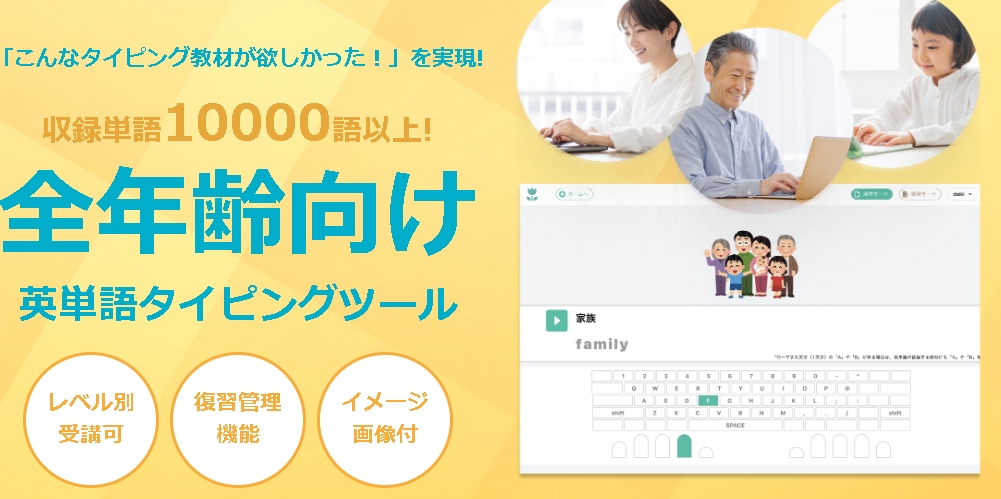
単語学習、聞き取り学習、タイピング練習はもちろん。
できなかった部分だけを重点的に学習できるように復習機能もついています。
また、中1レベルからTOEIC900点クラスまで網羅している為
無料お試し版がご利用いただけますので