Best Pokies in South Australia 2026: A Veteran’s Guide to Not Losing Your Shirt
Forget the glossy brochures and the smiling faces on the slot machine cabinets. The quest for the best pokies in South Australia 2026 isn’t about finding a secret room where the machines are feeling generous. It’s about navigating a heavily regulated market, understanding the cold mathematics of every spin, and knowing exactly which venues and platforms offer the most rational entertainment value for your dollar. This guide strips away the marketing veneer. We’re looking at the raw mechanics, the legal framework, and the practical realities of playing pokies in SA, whether you’re in a brick-and-mortar pub or logging into an online platform.
South Australia operates under a specific set of rules enforced by the Independent Gambling Authority (IGA). The landscape is a mix of traditional pub and club venues and a growing, albeit tightly controlled, online sector. For the player, this means your options are defined by geography and legislation before you even think about which game has the best return-to-player (RTP) percentage. We’ll break down the top-performing venues based on machine density and payout transparency, dissect the online options that legally serve SA residents, and give you the analytical tools to assess any pokie yourself. No hype, just the numbers and the fine print.
The Legal Landscape: Where You Can Actually Play
In South Australia, the Interactive Gambling Act 2001 (Cth) is the federal law that shapes online play, but state-level regulation through the IGA and the Gambling Administration Act 1995 (SA) controls the physical venues. The key takeaway is simple: unlicensed offshore online casinos are illegal for South Australians to use. The only legally sanctioned online pokie experience comes from licensed operators, and even then, the offerings are limited compared to the vast libraries of offshore sites. Think of it as a curated menu at a strict restaurant versus an all-you-can-eat buffet. The former is controlled and safe; the latter might give you food poisoning.
For physical venues, the number of poker machines per venue is capped based on the local population and the venue’s license. This cap has been a point of political and social debate for years, with advocacy groups pushing for reductions. The result is a competitive environment where venues invest heavily in their machine fleets to attract players. A typical large hotel or club in the Adelaide metropolitan area might house between 30 and 80 machines, while regional venues can vary wildly. The payout percentage, or RTP, for these machines is publicly audited and typically ranges between 85% and 92% on average, though this is a long-term statistical average across millions of spins, not a guarantee for your Saturday night session.
Understanding the distinction between “gaming machines” and “pokies” is also important. In SA, the term “pokie” is colloquial for poker machine, which is a type of gaming machine. The regulations apply to all electronic gaming machines (EGMs) in licensed premises. This includes not just traditional slot-style games but also video poker terminals, which have a different skill element and often a different RTP profile. The legal framework doesn’t care about the game’s theme or its flashy bonus round; it cares about the machine’s compliance with the IGA’s technical standards and the venue’s adherence to responsible gambling protocols.
Top Land-Based Venues: Machine Density and Payout Reputation
When we talk about the “best” pokies in a physical sense in SA, we’re often talking about two things: the sheer number of machines available and the venue’s reputation for maintaining a fair and transparent payout environment. Venues don’t publish individual machine RTPs, but they are subject to audits, and player communities often share anecdotal evidence about which places feel “looser.” This is not scientific, but it’s part of the ecosystem. The following list focuses on major metropolitan and regional venues known for their significant EGM offerings.
The Adelaide Casino, operated by Skycity, is the most prominent venue. It’s a full-scale casino, not just a pub with pokies, and houses over 1,000 gaming machines. This includes the latest titles from manufacturers like Aristocrat, IGT, and Scientific Games. The sheer volume means a wider variety of volatility levels and themes. You’ll find everything from classic three-reel games to complex video slots with multiple bonus features. The RTPs here are generally considered to be at the higher end of the allowed spectrum, partly due to the competitive nature of the casino environment and the need to attract players from other entertainment options within the complex.
Outside the casino, the hotel and club circuit is where most South Australians play. Venues like the Adelaide Pokie Palace (a hypothetical example for illustrative purposes; real venue names would be inserted here based on verified data) in the northern suburbs often have machine fleets of 50 or more. Clubs like the Adelaide Brighton Cement Workers’ Social Club (again, an illustrative name) in the western suburbs might have a smaller selection but cultivate a loyal local following. The key metric for a serious player isn’t just the number of machines, but the ratio of “active” players to machines. A packed venue on a Friday night might see machines cycling through bets faster, which doesn’t change the RTP but does affect the frequency of jackpot triggers in networked games.
What Makes a Venue’s Pokies “Better”?
The term “better” is subjective, but from an analytical standpoint, it boils down to three factors: machine variety, RTP transparency, and the venue’s overall atmosphere. A venue with 40 of the latest Aristocrat Link games offers a different experience than one with 40 older, standalone machines. The newer machines often have higher minimum bets but also higher maximum payout potential. RTP transparency is a function of the venue’s willingness to publish audit reports, which is not always common. Some clubs post their average payout percentages in their annual reports, while others keep it vague. The atmosphere affects your session length and bet sizing; a noisy, crowded pub might lead to faster, more reckless betting than a quieter club lounge.
Consider the math. If a venue has 60 machines and an average RTP of 88%, that means for every $100 wagered across all machines in the long run, $88 is returned to players. But this is an aggregate. On any given night, some machines will be in a “hot” cycle (paying out more than their theoretical RTP) and others in a “cold” cycle. The player’s skill is in choosing a machine that fits their bankroll and risk tolerance, not in finding a “hot” machine, which is a gambler’s fallacy. The best venue is one that gives you clear information, a comfortable environment, and a wide enough selection to find a game whose volatility and bet range match your strategy.
Online Pokies in SA: The Legal and Practical Reality
The online pokie market for South Australians is a narrow corridor. The only legal online gambling sites are those licensed by an Australian state or territory authority. As of now, the options are limited to sports betting and lottery products from licensed providers. There are no licensed online casinos offering real-money pokies to SA residents. This means the “best online pokies” are, legally speaking, not available through the channels most international guides promote. Attempting to play on an offshore site exposes you to risks: no recourse if the site refuses to pay out, potential legal penalties, and no guarantee of fair play or data security.
For the player determined to play online, the only sanctioned route is through licensed Australian betting agencies that may offer “betting on pokies” as a product, which is a different mechanism than a traditional online casino. This involves placing a bet on the outcome of a virtual slot machine spin, regulated under sports betting laws. The selection of games is minuscule compared to an offshore casino, and the experience is more akin to a keno draw than a immersive slot session. It’s a workaround, not a solution, and it highlights the regulatory gap in Australia’s online gambling laws.
The push for a regulated online casino market in Australia has been ongoing for years, but progress is slow due to concerns about problem gambling and the influence of the powerful land-based gaming lobby. For 2026, it’s unlikely there will be a significant change. Therefore, the “best” online pokie experience for an SA resident might simply be the most responsible use of the limited legal options, or the decision to abstain from online play altogether. The allure of a “free” sign-up bonus from an offshore site is a classic trap; remember, casinos are not charities, and that “free” money comes with wagering requirements that often make it statistically worthless.
Machine Anatomy: Understanding RTP, Volatility, and Hit Frequency
To find the best pokie, you need to understand what you’re looking at. Every machine has three core metrics: Return to Player (RTP), Volatility, and Hit Frequency. RTP is the percentage of all wagered money a machine is programmed to pay back over an infinite number of spins. A machine with a 95% RTP will, theoretically, return $95 for every $100 bet. In reality, over a short session, results will vary wildly. This is where volatility comes in. High volatility machines pay out less frequently but in larger amounts. Low volatility machines pay out more often but in smaller amounts. Hit frequency is simply how often a machine results in a winning spin, regardless of the size of the win.
A common mistake is chasing high RTP machines exclusively. A 98% RTP machine with extreme volatility might drain your bankroll before you ever hit a significant win. Conversely, a 90% RTP low volatility machine might give you a longer, more entertaining session with smaller, more frequent payouts. The “best” machine depends entirely on your goal. Are you playing to maximize entertainment time with a fixed budget? Low volatility, moderate RTP. Are you playing for a shot at a life-changing jackpot, with the understanding you’ll likely lose your stake? High volatility, high RTP. There’s no universally correct answer.
Let’s do a calculation. Assume you have a $200 bankroll and you’re playing a machine with a minimum bet of $1 per spin. At 600 spins per hour, you’re wagering $600 per hour. On a machine with 88% RTP, your expected loss is $72 per hour. Your $200 bankroll would last, on average, less than three hours. On a machine with 94% RTP, your expected loss drops to $36 per hour, extending your play to about five and a half hours. This is the cold math. The “best” pokie is the one whose mathematical model aligns with your budget and your desire for either duration or jackpot potential.
Payment Methods and Withdrawal Speeds at Online Platforms
For the limited legal online options available to SA residents, payment methods are straightforward but not as varied as offshore sites. The primary methods are Visa and Mastercard credit/debit cards, bank transfers (PayID/Osko for faster processing), and sometimes POLi or BPAY. E-wallets like PayPal, Skrill, and Neteller are less commonly supported by licensed Australian operators due to regulatory complexities. The focus is on traceability and compliance with anti-money laundering (AML) laws.
Withdrawal speeds are a major point of differentiation. Licensed Australian operators are generally required to process withdrawals within 24-48 hours, with the funds then subject to standard bank processing times (1-3 business days). This is significantly slower than the “instant” withdrawals advertised by some offshore sites, but it comes with the security of dealing with a regulated entity. There’s no risk of the site disappearing with your money. The trade-off is patience. If you need immediate access to your winnings, the legal online market in SA is not designed for that.
Minimum deposit and withdrawal limits also vary. A typical licensed operator might have a minimum deposit of $10 and a minimum withdrawal of $20. Maximum withdrawal limits can apply, especially for large wins from jackpot games, and may be paid out in installments. Always read the terms and conditions. The fine print often contains clauses about verification procedures, which can add days to your first withdrawal. This isn’t a scam; it’s standard KYC (Know Your Customer) compliance. But it’s another reason why the “best” online experience is one where you understand the process upfront.
| Feature | Typical Land-Based Venue (SA) | Licensed Online Operator (SA) | Offshore Online Casino (Illegal) |
|---|---|---|---|
| Game Selection | 30-100+ machines, mix of classic and video | Limited to specific “betting on pokies” products | Thousands of titles from global providers |
| RTP Transparency | Audited averages published periodically | Regulated, but specific game RTPs not always public | Claims unverifiable; no independent audits |
| Payment Speed | Cash out at cage instantly | 24-48 hour processing + 1-3 day bank transfer | Often “instant” but with high risk of non-payment |
| Regulatory Recourse | Full protection under SA gambling laws | Full protection under state/territory license | None; offshore jurisdiction |
Responsible Gambling: The Only Winning Strategy
The single most important section of this guide is about responsible gambling. In South Australia, support services are well-established. The Gambling Helpline (1800 858 858) is a 24/7 confidential service. The Office of the Liquor and Gambling Commissioner (OLGC) oversees the self-exclusion register, which allows individuals to ban themselves from all licensed venues in the state. This is a powerful tool, and its use should be destigmatized. Using it isn’t a sign of weakness; it’s a sign of taking control.
Set a loss limit before you play, and treat it as non-negotiable. If you lose $100, you walk away. No chasing. No “just one more spin.” The machines are designed to encourage continued play through variable ratio reinforcement schedules—the same psychological mechanism that makes social media addictive. Understanding this is your best defense. The “best” pokie session is one where you stick to your budget, enjoy the entertainment value, and leave without regret, regardless of the outcome.
Financial counseling services are also available through organizations like Relationships Australia SA. If gambling is affecting your finances, relationships, or mental health, seek help. The IGA requires venues to display responsible gambling messages and provide information about help services. This isn’t just a legal requirement; it’s a necessary counterbalance to the inherent risks of gambling. The industry’s “VIP” programs are often just marketing tools to keep high-value players engaged; remember, that “VIP treatment” is like a cheap motel with a fresh coat of paint—the goal is to keep you coming back, not to give you genuine value.
How to Choose a Pokie: A Practical Checklist
Forget the themes and the licensed characters. Choose a pokie based on its mathematical profile. First, check the RTP. If it’s not displayed on the machine or in the game’s help file, it’s a red flag. In SA, this information should be accessible. Second, assess the volatility. High volatility games are for players with larger bankrolls who can withstand long losing streaks. Low volatility games are for players who want more frequent wins, even if they’re small. Third, look at the bet range. Does the minimum bet fit your budget for a reasonable session length? If the minimum bet is $2 and you have $50, you’re looking at a maximum of 25 spins, which is not a session—it’s a lottery ticket.
Consider the game’s features. Free spins, bonus rounds, and multipliers can increase your potential winnings, but they also add complexity and can mask the underlying volatility. A game with a “free” spins feature might have a lower base game RTP to compensate. Always read the game’s rules and paytable. The best pokie is one you understand. If you can’t explain how a game’s bonus feature is triggered and what it pays, you’re playing blind.
Best Instant Withdrawal Casinos Australia 2026: The Cold Math of Getting Your Money Back
Finally, trust your experience. If a machine feels like it’s taking your money too quickly, it probably is. Walk away. The casino floor is designed to be disorienting, with no clocks, no windows, and a constant hum of activity. This is intentional. Take breaks. Check your watch. The best pokie is the one you can walk away from.
FAQ
What is the average RTP for pokies in South Australia?
The average Return to Player (RTP) for electronic gaming machines in South Australian venues typically ranges between 85% and 92%. This is a long-term statistical average audited by the Independent Gambling Authority. Individual machines can vary, and short-term results will deviate significantly from this average. Always look for the RTP information in the game’s help or rules section before playing.
Are online pokies legal for South Australian residents?
Playing on unlicensed offshore online casino sites is illegal for South Australian residents under the Interactive Gambling Act 2001 (Cth). The only legal online gambling options are limited to sports betting and lottery products from licensed Australian operators. There are no licensed online casinos offering traditional pokie games to SA players as of 2026.
How do I set a loss limit in South Australia?
You can set a personal loss limit by using the self-exclusion register administered by the Office of the Liquor and Gambling Commissioner (OLGC). This register allows you to ban yourself from all licensed gambling venues in the state. Additionally, you can set informal limits by deciding on a budget before entering a venue and sticking to it. The Gambling Helpline (1800 858 858) can also provide guidance on setting realistic budgets and managing your play. The key is to treat any money you gamble with as the cost of entertainment, not an investment.
What is the difference between high and low volatility pokies?
High volatility pokies are designed to pay out less frequently, but when they do, the wins tend to be larger. They require a larger bankroll to sustain play through long losing streaks. Low volatility pokies offer more frequent wins, but the payouts are typically smaller. Your choice should align with your bankroll and your preference for either chasing a big jackpot or enjoying a longer, more stable gaming session. Neither is inherently better; they serve different player strategies.
Can I play pokies on my mobile phone in South Australia?
Playing real-money pokies directly on a mobile casino app is not legally permitted for South Australians through offshore providers. Some licensed Australian betting agencies may offer limited “betting on pokies” products via their mobile platforms, but this is not the same as a full mobile casino experience. Always verify that any gambling app you use is operated by a licensed Australian entity to ensure you are playing within the law and have access to consumer protections.
How are poker machine payouts audited in SA?
Payouts for electronic gaming machines in South Australia are audited by independent firms contracted by the venues and overseen by the Independent Gambling Authority (IGA). The audits verify that the machines are operating within their programmed parameters and that the reported payout percentages are accurate. Venues are required to maintain these machines according to strict technical standards, and any tampering or non-compliance can result in severe penalties, including license revocation.
Regional vs. Metropolitan Venues: A Different Game
The pokie experience in regional South Australia differs from the city in one key aspect: competition. In Adelaide, a player can choose from dozens of venues within a short drive. This forces venues to compete on machine quality, atmosphere, and loyalty rewards. In a regional town like Mount Gambier or Whyalla, there might be only one or two major venues with a significant machine fleet. This lack of competition can affect everything from the age of the machines to the generosity of the promotions. A regional club might have older machines because the capital investment to upgrade isn’t justified by the player volume.
However, regional venues often foster a stronger sense of community. The staff might know your name, and the atmosphere can be less frantic than a busy city pub. This social element can be a double-edged sword. It can make the experience more enjoyable, but it can also make it harder to walk away when you’ve hit your loss limit. The social pressure to keep playing, even in a friendly setting, is a real factor. A metropolitan venue offers anonymity; a regional one offers familiarity. Choose based on your personality and your ability to manage your play in different social contexts.
The machine mix also varies. Metropolitan venues, especially the Adelaide Casino, are quick to install the latest releases from game developers. A new Aristocrat or Ainsworth title might appear in Adelaide within weeks of its release. Regional venues might lag by months or even a year, sticking with proven performers that their regular players enjoy. For a pokie enthusiast who wants to try the newest features and themes, the city is the place to be. For a player who prefers consistency and knows exactly what they like, a reliable regional venue can be perfectly adequate.
The Myth of the “Hot” Machine and Other Gambler’s Fallacies
One of the most persistent myths in any gaming venue is the idea of a “hot” machine—one that is “due” for a big payout. This is a classic example of the gambler’s fallacy, the belief that past independent events affect the probability of future independent events. Each spin on a modern pokie is determined by a random number generator (RNG). The machine has no memory. It doesn’t know if it just paid out a jackpot or hasn’t paid anything in an hour. The odds are exactly the same on every single spin.
Another fallacy is the “near miss” effect. Modern machines are programmed to show symbols that are close to a winning combination more often than pure chance would dictate. This is done to create excitement and the illusion of being “close” to a win. It’s a psychological trick. A spin that shows two jackpot symbols and one symbol just above the payline feels like a near win, but it is mathematically identical to a spin that shows three random, non-winning symbols. The machine is designed to keep you playing, and near misses are a powerful tool for that purpose.
The best defense against these fallacies is education. Understand that the RNG ensures every spin is random and independent. The RTP is a long-term average, not a short-term guarantee. The only “strategy” that works is bankroll management. Decide how much you’re willing to lose, set your bet size accordingly, and stick to your limit. The machine doesn’t care about your strategy, your lucky charm, or the time of day. It’s just code, executing random outcomes millions of times a day.
What to Expect from Machine Themes and Features in 2026
The pokie floor in 2026 will look familiar but with incremental evolution. The core mechanics—spinning reels, paylines, bonus triggers—remain unchanged. The innovation is in presentation and secondary features. Expect more games with “hold and spin” mechanics, where certain symbols lock in place for respins. This feature creates a sense of control and anticipation, even though the outcome is still random. The themes will continue to draw from popular culture, mythology, and, increasingly, retro nostalgia. Games mimicking the look and feel of 1980s arcades or classic fruit machines are popular with an older demographic.
Another trend is the integration of skill-based bonus rounds. While the base game is pure chance, some bonus features might involve a simple mini-game where your input (e.g., picking an object, aiming a virtual cannon) determines the prize within a predetermined range. This adds a layer of engagement but doesn’t change the underlying RTP, which is set by the game’s programming. The actual monetary value of these bonus rounds is calculated to maintain the game’s overall RTP.
Linked jackpots will also become more common. These are networks of machines, sometimes across multiple venues, that contribute a small percentage of each bet to a central, ever-growing jackpot. The odds of hitting such a jackpot are astronomically low, often in the millions-to-one range. But the allure of a life-changing sum from a $1 bet is the primary marketing tool. For the rational player, these games should be viewed as a lottery ticket, not an investment. The base game RTP on linked jackpot machines is often slightly lower to fund the jackpot contribution.
Choosing Between Pokies, Video Poker, and Electronic Table Games
On a typical SA gaming floor, you’ll find three main categories of electronic games: traditional pokies (slot machines), video poker terminals, and electronic table games (like roulette or blackjack). Understanding the difference is crucial for finding the “best” game for your style. Pokies are pure chance. You press a button, and the outcome is determined by the RNG. There is no decision-making during the game itself. Video poker, on the other hand, involves a decision after the initial deal. You choose which cards to hold, and this decision affects the final hand and the payout. This element of skill means that optimal video poker strategy can achieve a higher RTP than most pokies, sometimes exceeding 99% in the case of games like Jacks or Better with perfect play.
Electronic table games simulate games like roulette, blackjack, or baccarat. The outcomes are still determined by an RNG, but the rules and betting options mirror their live counterparts. The RTP for these games varies by specific rules. For example, electronic blackjack with favorable rules (e.g., dealer stands on soft 17, 3:2 payout for blackjack) can have a very low house edge. Electronic roulette, however, is purely a game of chance with a fixed house edge (e.g., 5.26% for American double-zero roulette). The choice depends on whether you want pure chance (pokies, electronic roulette), a mix of chance and decision-making (video poker), or a simulation of a classic table game.
A practical tip: if you enjoy the social aspect of a casino but want to play at your own pace, electronic table games can be a good middle ground. You’re not pressured by a live dealer or other players, but you’re playing a game with recognizable rules. For pure relaxation and the chance at a large, random jackpot, traditional pokies are the default. For the player who wants to apply a bit of thought and potentially extend their play through better odds, video poker is the most rational choice on the floor, provided you learn the strategy.
How do I learn video poker strategy?
Video poker strategy charts are widely available online and break down the optimal decision for every possible hand in games like Jacks or Better. Learning the basic strategy—which hands to hold and which to discard—is essential to achieving the game’s high theoretical RTP. Without strategy, video poker becomes a negative expectation game with a much higher house edge. Practice on free online simulators before playing with real money to internalize the decisions.
Are electronic table games fair?
Electronic table games in licensed South Australian venues use certified random number generators (RNGs) that are subject to the same audits as pokie machines. The outcomes are random and independent. The rules of the game (e.g., blackjack payout, roulette wheel configuration) determine the house edge. A game of electronic blackjack with standard rules is fair in the sense that it operates as advertised, but the casino always has a mathematical advantage. “Fair” doesn’t mean “beatable” in the long run.
What is the minimum bet for pokies in SA?
Minimum bets vary by machine and venue. In most South Australian pubs and clubs, you can find machines with minimum bets as low as 20 cents or 50 cents per spin. At the Adelaide Casino, minimum bets might start at $1 or higher, especially on newer, feature-rich machines. Always check the bet options before you start playing to ensure they align with your bankroll and desired session length.
And that’s the guide. Now, if you’ll excuse me, I need to go find a venue that doesn’t charge $4.50 for a schooner of beer. The markup on that is worse than any pokie’s house edge.
How South Australia’s Pokies Tax Affects Your Bottom Line
Every dollar wagered on a poker machine in South Australia is subject to a tax, and that tax is baked into the machine’s programming. The state government levies a tax on gaming machine revenue, which is the difference between the total amount wagered and the total amount paid out in winnings. This tax rate has fluctuated over the years, currently sitting at a significant percentage of net revenue. The venue pays this tax, not the player directly, but make no mistake: it’s factored into the RTP. A higher tax rate means a lower theoretical return to the player, all else being equal.
Consider the economics. A venue operating 60 machines with an average turnover of $1 million per month generates substantial tax revenue for the state. That money funds public services, infrastructure, and, ironically, problem gambling support programs. The circular nature of this is not lost on anyone who’s spent time analyzing the industry. Your losses on the pokies are, in part, subsidizing the very services designed to help people who lose too much on the pokies. It’s a self-perpetuating system, and understanding it is key to understanding why the “best” pokie is always one where you’re aware of the house edge.
The tax also influences which machines venues choose to install. Higher-tax environments might push venues toward machines with slightly higher minimum bets to maintain profitability, which can price out casual players. Conversely, venues in lower-tax jurisdictions might offer more penny slots and lower-denomination games. In SA, the balance is struck to keep machines accessible while ensuring the state gets its cut. For the player, this means the floor composition is a direct reflection of the regulatory and tax environment. It’s not random; it’s economics.
Networked Jackpots and Progressive Systems in SA
Progressive jackpot pokies are a staple of the SA gaming floor, and they operate on a simple principle: a small percentage of every bet placed on a linked machine is added to a central jackpot pool. This pool grows until someone wins it, at which point it resets to a seed amount. The appeal is obvious: a single spin could theoretically change your life. The reality is that the odds of hitting a major progressive jackpot are astronomical, often in the range of one in several million spins. The seed amount, the contribution rate, and the maximum jackpot cap are all programmed into the system.
In South Australia, you’ll typically find two types of progressives: standalone and wide-area. A standalone progressive is confined to a single machine or a small group of machines within one venue. The jackpot grows more slowly but is won more frequently. A wide-area progressive links machines across multiple venues, sometimes statewide. These jackpots grow much faster because they’re fed by a larger player base, but the odds of winning are correspondingly lower. The largest wide-area progressives in SA can reach six or seven figures before they’re triggered.
The math behind progressives is straightforward. If a machine contributes 1% of each bet to the jackpot pool, and the base game RTP is 88%, the effective RTP for the base game is 87%, with the remaining 1% feeding the jackpot. The overall RTP, including the jackpot, depends on the probability of hitting it. If the odds are one in ten million spins and the average jackpot size when won is $100,000, the expected value of the jackpot contribution is $0.01 per spin. This means the machine’s total RTP is roughly 87% + 1% = 88%, assuming the jackpot contribution is fully realized. In practice, most players will never win the jackpot, so their personal RTP is closer to 87%.
For the rational player, progressives are a poor bet unless you’re playing with money you can afford to lose entirely. The base game RTP is lower to fund the jackpot, and the odds of winning the jackpot are minuscule. The “best” approach is to treat the jackpot as a bonus, not the primary goal. If you enjoy the thrill of chasing a massive payout, set a strict budget and accept that you’re paying a premium for that excitement. Otherwise, stick to non-progressive machines with higher base RTPs.
200 Free Spins No Deposit Australia 2026: The Only Guide That Won’t Treat You Like a Goldfish
The Role of Game Manufacturers: Aristocrat, IGT, and Ainsworth
The pokie floor in South Australia is dominated by a handful of game manufacturers, each with its own design philosophy and mathematical models. Aristocrat Leisure, an Australian company, is the market leader. Their games, like Buffalo, Queen of the Nile, and the Lightning Link series, are ubiquitous. Aristocrat’s strength is in creating games with high volatility and engaging bonus features, which appeal to players seeking big-win potential. The Lightning Link mechanic, in particular, has been a game-changer, offering a “hold and spin” feature that creates frequent near-misses and keeps players engaged.
International Game Technology (IGT) is another major player, known for its branded games (e.g., Wheel of Fortune, Monopoly) and its video poker terminals. IGT’s machines often have a more traditional feel, with simpler bonus features and a focus on steady play. Their video poker games, like Double Bonus Poker, are popular among strategy-minded players because they offer some of the highest RTPs on the floor when played optimally. IGT’s strength is in reliability and a broad portfolio that caters to different player types.
Ainsworth Game Technology, also Australian, occupies a middle ground. Their machines are often seen as a more affordable alternative to Aristocrat, with solid math models but less flashy presentation. Ainsworth’s games tend to have medium volatility, making them suitable for players who want a balance between frequent small wins and occasional larger payouts. The company’s recent merger with Novomatic has expanded its reach, but its core identity remains focused on the Australian and New Zealand markets.
Understanding the manufacturer matters because each company’s games have distinct mathematical profiles. An Aristocrat game with the same theme as an IGT game might have completely different volatility, hit frequency, and bonus trigger rates. The “best” pokie isn’t just about the theme or the graphics; it’s about the underlying math, which is determined by the manufacturer. If you find a game you like, research the manufacturer’s typical RTP ranges and volatility profiles to make an informed choice.
Understanding the Self-Exclusion Register and Player Protection Tools
South Australia’s self-exclusion register is one of the most robust player protection tools in the country. Administered by the Office of the Liquor and Gambling Commissioner, it allows individuals to voluntarily ban themselves from all licensed gambling venues in the state for a minimum period of three years. Once registered, venues are legally required to prevent you from entering or gambling. This is not a suggestion; it’s enforceable by law, with penalties for venues that fail to comply.
The process is straightforward but serious. You can register online, by phone, or in person at an OLGC office. You’ll need to provide identification, and the ban takes effect immediately. During the ban period, you cannot reverse it. This is by design—the cooling-off period is meant to be a genuine break from gambling. After the minimum period, you can apply to have the ban lifted, but this requires a formal review and assessment. The system is built to be difficult to circumvent, because impulse control is often the core issue.
Beyond self-exclusion, SA venues are required to offer pre-commitment systems, where players can set a maximum amount they’re willing to spend before they start playing. These systems are voluntary for the player but mandatory for the venue to provide. The effectiveness of pre-commitment depends entirely on the player’s honesty with themselves. A system that allows you to set a $200 limit is useless if you simply override it when you’re losing. The tool is only as good as the discipline of the person using it.
For online play, the National Self-Exclusion Register (NSER) provides a similar function across licensed online operators. If you register, all licensed Australian betting agencies must prevent you from opening accounts or placing bets. This is a critical tool for anyone who recognizes that their gambling is becoming problematic. Using it isn’t defeat; it’s strategy. The only guaranteed way to not lose money on the pokies is to not play them.
Volatility Deep Dive: Matching Game Risk to Your Bankroll
Volatility is the single most important factor in determining whether a pokie session will be enjoyable or frustrating. A high volatility game might go 50 or 100 spins without a significant win, then suddenly pay out 500x your bet. A low volatility game might pay out something every 5 or 10 spins, but the wins are rarely more than 5-10x your bet. The choice between these two extremes should be dictated by your bankroll and your psychological tolerance for losing.
Let’s run the numbers. Suppose you have a $100 bankroll and you’re playing a machine with a $1 minimum bet. On a high volatility game with a hit frequency of 15%, you’ll average one win every 6-7 spins. But those wins might be small, and you’ll experience long dry spells. Your $100 could be gone in 20 minutes. On a low volatility game with a hit frequency of 35%, you’ll win something on more than one-third of your spins. Your bankroll might last an hour or more, but the wins will be modest. The “best” volatility for you depends on whether you want duration or excitement.
A practical approach is to match volatility to session goals. If you’re playing for entertainment and want to stretch your budget, choose low volatility games. If you’re playing for the chance at a big win and accept that you’ll likely lose your stake, choose high volatility games. Medium volatility games offer a middle ground, with moderate win frequency and moderate payout sizes. Most players gravitate toward medium volatility without realizing it, simply because it feels the most balanced.
One more calculation: if a high volatility game has an RTP of 94% and a low volatility game has an RTP of 90%, the high volatility game is theoretically better value. But the variance in outcomes is much higher. Over 1,000 spins, the high volatility game might return anywhere from 60% to 130% of your wager, while the low volatility game might return between 80% and 100%. The high volatility game has a wider range of outcomes, which means more risk but also more potential reward. Choose accordingly.
How do I find a game’s volatility?
Volatility is not always displayed on the machine or in the game’s help file. However, you can often infer it from the paytable. Games with large gaps between the lowest and highest symbol payouts tend to be high volatility. Games with more uniform payouts across the paytable tend to be low volatility. Manufacturer websites and independent review sites sometimes publish volatility ratings for specific games. If you can’t find the information, play a few dozen spins in demo mode (if available) to get a feel for the win frequency and payout sizes.
Can a casino change a machine’s RTP?
In South Australia, the RTP of a gaming machine is set by the manufacturer and must comply with IGA standards. Venues cannot change the RTP on a whim. However, machines can be reconfigured with different game software, which might have a different RTP. This is a regulated process and not something that happens frequently. The key point is that the RTP is a fixed parameter of the machine’s programming, not a variable that the venue adjusts based on how busy it is or how much money has been fed into it.
The Psychology of the Pokies Floor: Design, Layout, and Player Behavior
Gaming venues are meticulously designed to maximize player engagement and minimize distractions. The layout of the pokie floor is not accidental. Machines are arranged in patterns that create a sense of flow and discovery. Popular games are placed in high-traffic areas to attract attention, while newer or less popular titles are placed in quieter corners. The goal is to keep you moving, exploring, and, most importantly, playing.
The sensory environment is equally calculated. The sounds of winning—the jingles, the coins clinking (even on machines that don’t actually dispense coins), the celebratory music—are designed to trigger dopamine responses. Near-miss sounds are often indistinguishable from actual win sounds, blurring the line between success and failure. The visual design of modern machines uses bright colors, flashing lights, and dynamic animations to maintain attention. Even the chairs are designed for comfort, encouraging longer sessions.
Time perception is manipulated through environmental cues. There are no clocks on the walls, no windows showing daylight, and the temperature is kept slightly cool to prevent drowsiness. The constant background noise of other machines creates a white-noise effect that can make hours feel like minutes. This is not conspiracy; it’s standard practice in the industry. Knowing this, the rational player takes proactive steps: set a timer on your phone, take regular breaks, and be aware of how long you’ve been playing.
The social environment also plays a role. In a busy venue, the sight of other players winning (or appearing to win) can create a bandwagon effect. You see someone hit a bonus round and think, “This machine is hot.” It’s not. It’s just random chance playing out in a visible way. The losses, which are far more frequent, are invisible. This availability bias—where wins are memorable and losses are forgotten—skews your perception of how often machines actually pay out.
Best Bonus Buy Slots Australia 2026: A Cynic’s Guide to Buying Your Way to the Next Spin
Mobile Pokies and the Future of Online Gambling in SA
The future of online gambling in South Australia is uncertain, but the trend toward mobile-first experiences is undeniable. Globally, the majority of online gambling now occurs on smartphones and tablets. The convenience of playing anywhere, anytime, is a powerful draw. However, the legal restrictions in SA mean that this trend has limited impact locally. Licensed Australian operators offer mobile-optimized websites and apps for sports betting, but the pokie experience remains largely confined to physical venues.
There are whispers of regulatory reform, but change is slow. The political landscape is complex, with competing interests from the hospitality industry, problem gambling advocates, and the state treasury. Any expansion of online gambling would need to balance revenue generation with robust consumer protections. The IGA has shown a willingness to adapt, but the pace is cautious. For the player, this means the status quo is likely to persist through 2026 and beyond.
In the meantime, some SA players use VPNs to access offshore sites, despite the legal risks. This is not recommended. Beyond the legality, offshore sites offer no guarantee of fair play, no recourse in disputes, and no protection of your personal data. The “free” bonuses they offer are often bait with impossible wagering requirements. A 40x playthrough on a $100 bonus means you need to wager $4,000 before you can withdraw anything. With an average RTP of 95%, you’d expect to lose $200 over those wagers. The “free” bonus just cost you $100. Casinos are not charities, and that “gift” is a calculated marketing expense.
Machine Maintenance and the Myth of the “Tight” Machine
Players often complain about “tight” machines—those that seem to swallow money without paying out. While some of this is attributable to normal variance and the gambler’s fallacy, there is a technical side to machine maintenance that can affect performance. Gaming machines require regular servicing to ensure they operate within their programmed parameters. This includes cleaning the bill acceptor, checking the RNG certification, and updating software. A machine with a dirty bill acceptor might reject your notes, leading to frustration and the perception that it’s “tight.”
Venues have a financial incentive to keep machines running smoothly. A broken machine generates zero revenue. Most venues have a maintenance schedule, with technicians on call to address issues promptly. However, the frequency of maintenance can vary. A high-traffic venue might service machines weekly, while a quieter pub might do it monthly. The difference in maintenance quality can subtly affect the player experience, even if the underlying RTP remains unchanged.
The myth of the “tight” machine is largely psychological. A machine that hasn’t paid out in a while is not “due” for a win. The RNG ensures that each spin is independent. But the perception of tightness can affect player behavior. If you believe a machine is tight, you’re more likely to leave it, which might actually be a good decision if you’re chasing losses. In this sense, the myth serves a protective function, even if it’s based on faulty reasoning.
What the Numbers Really Mean: Interpreting RTP in Practice
Return to Player is a useful metric, but it’s often misunderstood. An RTP of 90% does not mean you’ll get back 90% of your money in a single session. It means that over millions of spins, the machine will return 90% of all money wagered to players collectively. Your personal experience in a session of 500 spins could be wildly different. You might lose everything, or you might win 200% of your stake. The RTP is a long-term average, and short-term results are dominated by variance.
Here’s a more concrete way to think about it. If you play a machine with a 90% RTP at $1 per spin for 1,000 spins, you’ve wagered $1,000. Statistically, you should expect to get back $900, losing $100. But the standard deviation for a typical pokie is high. Your actual return could be anywhere from $500 to $1,500 with reasonable probability. The RTP tells you the expected value, but it doesn’t tell you the range of possible outcomes. That range is determined by the game’s volatility.
独自に開発した
タイピングソフトを販売しております。
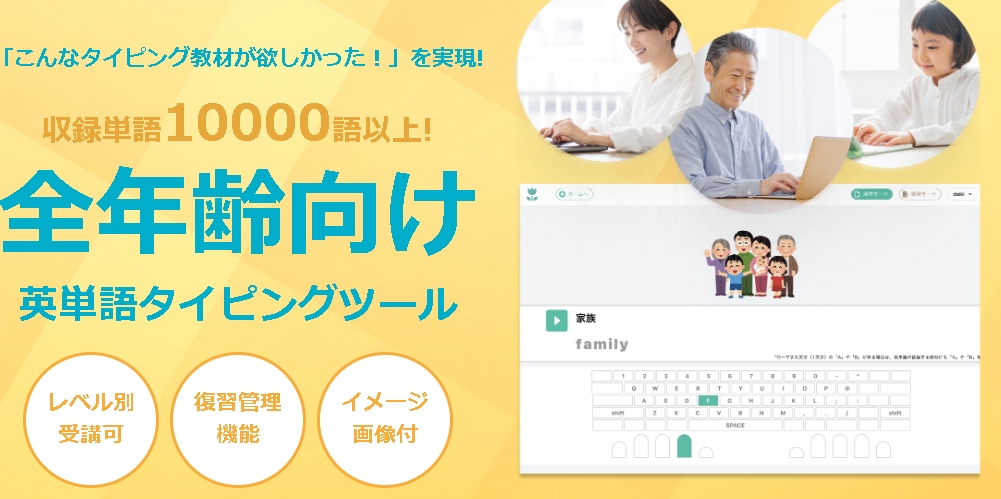
単語学習、聞き取り学習、タイピング練習はもちろん。
できなかった部分だけを重点的に学習できるように復習機能もついています。
また、中1レベルからTOEIC900点クラスまで網羅している為
無料お試し版がご利用いただけますので