Best Pokies in Brisbane 2026: A Veteran’s Guide to Not Losing Your Shirt
The phrase “best pokies in Brisbane 2026” gets thrown around like a winning lottery ticket in a crowded pub. Everyone’s chasing the same shiny object, convinced there’s a secret map to the jackpot. Let’s be clear: there isn’t. What there is, however, a landscape of venues, machines, and house edges that you can navigate with your eyes open. This isn’t a fairy tale about easy money; it’s a breakdown of the hardware, the math, and the cold reality of where your dollar goes in Queensland’s capital.
Best Aussie Online Casino 2026: A Cynic’s Guide to Not Losing Your Shirt
Brisbane’s gaming scene is a creature of regulation and habit. The state government holds the purse strings, and the clubs and hotels hold the keys to the machines. Your average punter walks in, feeds the beast, and hopes for a miracle. The veteran? He knows the beast’s appetite. He knows which venues have the newer, tighter machines and which ones still have a few older models with marginally better theoretical returns. The year 2026 doesn’t change the fundamental equation: the house always wins. The question is how quickly it takes your buy-in.
The Regulatory Maze: Queensland’s Rules of Engagement
Before you even think about which machine to play, you need to understand the cage you’re walking into. Queensland operates under a strict, state-controlled framework. The Office of Liquor and Gaming Regulation (OLGR) is the referee, and its whistle is sharp. All electronic gaming machines (EGMs) in Brisbane must be connected to a central monitoring system, tracking every cent in and out. There’s no “hot” machine that’s “due.” The system is audited, and the outcome of every spin is determined by a certified random number generator (RNG) long before the reels stop spinning.
The legal gambling age in Queensland is 18. Full stop. Venues are legally obligated to scan your ID if you look under 25, and they face hefty fines for letting minors play. The maximum bet on a poker machine in a Queensland venue is capped at $5 per spin. That’s not a suggestion; it’s law. This cap fundamentally shapes the game’s math, limiting both your potential losses per hour and your potential wins. It’s a consumer protection measure dressed up as a rule, and it means the “high roller” experience on a pokie is a very different beast to what you’d find in some offshore online casino.
Best Online Casino Payment Methods for Aussies 2026
Machine availability is another regulated factor. The number of machines per venue is capped based on its size and liquor license. You won’t find a pokie in every corner store. They’re concentrated in licensed clubs, hotels, and casinos. The Star Brisbane (formerly Treasury Casino) is the big kahuna, but the suburban RSL and the local leagues club are where most of the action happens. Each venue must display information about problem gambling and provide access to self-exclusion programs. It’s the fine print that most people ignore until it’s too late.
Decoding the Machine: RTP, Volatility, and the Illusion of Choice
Walk into any Brisbane venue and you’ll face a wall of flashing lights and themed cabinets. They all promise a different adventure—ancient Egypt, a Hollywood blockbuster, a cartoon animal. Under the hood, they’re all running the same basic software with two critical parameters: Return to Player (RTP) and volatility. RTP is the long-term theoretical percentage of all wagered money a machine will pay back. A machine with a 90% RTP will, over millions of spins, return 90 cents for every dollar put in. The other 10 cents is the house edge. In Queensland, the minimum legal RTP is 85%.
Volatility is the real wildcard. A low-volatility machine pays out small wins frequently, keeping your balance ticking over. A high-volatility machine pays out rarely, but when it does, the wins can be significant. Neither is “better”—it depends on your bankroll and your patience. A high-volatility pokie will drain your $100 in 20 minutes if you’re unlucky, or it might give you a $500 win on your tenth spin. A low-volatility machine might give you 45 minutes of play for the same $100, with lots of small wins that never quite add up to a profit. The machine’s theme is irrelevant; the math is everything.
Here’s the cynical truth: you have almost no way of knowing the exact RTP of the specific machine you’re sitting at. Venues are not required to post the RTP of individual machines on the cabinet. They are, however, required to have the information available on request, though good luck getting a floor attendant to pull up the technical specs for you. The advertised RTP for a game title is often a range (e.g., 85%-96%), and the venue can select where within that range the machine is set. The newer the machine, the more likely it is to be set at the lower end of the range to maximize venue revenue. That shiny new cabinet? It’s probably tighter than your grandfather’s wallet.
The Brisbane Venue Landscape: Clubs, Hotels, and the One Casino
Brisbane’s pokie scene is dominated by two types of venues: community clubs and commercial hotels. The clubs—think RSLs, leagues clubs, workers’ clubs—are non-profit entities where gaming revenue is supposed to fund community programs, sports teams, and veterans’ services. The hotels are for-profit businesses. Both are licensed to operate EGMs, and both are competing for the same pool of disposable income. The Star Brisbane stands alone as the state’s only casino, offering a different scale and a different vibe, but for daily pokie play, the suburban club is king.
The major clubs in Brisbane operate in a kind of silent cartel. They don’t collude on prices, but they do follow similar patterns in machine procurement, floor layout, and promotional strategies. The average club in Brisbane might have between 50 and 200 machines, depending on its size. The larger, more modern clubs like the Brisbane Racing Club (Eagle Farm) or the Souths Leagues Club have extensive gaming floors with dedicated high-roller areas. The smaller, older suburban clubs might have a single room with 40 machines that haven’t been updated since the last state election. The difference in machine age and type is the single biggest factor in your potential experience.
The commercial hotels—the big pub chains like the Australian Venue Co. or ALH Group—tend to have smaller gaming rooms, often with 20 to 50 machines. They’re more accessible, often located on major roads or in shopping strips, but they typically have less variety. The trade-off is convenience versus choice. A club membership might get you a discount on a meal, but it also means your data is being tracked and your visit frequency is being logged. The hotel doesn’t care who you are; it just wants your money in the machine. Both models are designed to keep you playing longer than you intended.
Top Pokies Venues in Brisbane: A No-Nonsense Look
Forget the glossy brochures. Here’s a breakdown of the major players in the Brisbane pokie scene for 2026, based on machine count, floor quality, and the general vibe. This isn’t a recommendation; it’s an observation. The “best” venue is the one that fits your budget and your tolerance for noise.
| Venue | Type | Estimated Machine Count | Key Feature |
|---|---|---|---|
| The Star Brisbane | Casino | 1,500+ | Scale, variety, high-roller areas |
| Brisbane Racing Club (Eagle Farm) | Club | 450+ | Modern floor, premium machines |
| Souths Leagues Club | Club | 350+ | Large, busy, standard mix |
| Creek (Kedron-Wavell) | Club | 300+ | Family-friendly, mid-range |
| Shafston Hotel | Hotel | 45 | Convenient, basic selection |
The Star Brisbane is the obvious outlier. It’s the only full-scale casino in the state, and its pokie floor is a different universe. You’ll find everything from classic three-reel machines to the latest video slots with complex bonus rounds. The minimum denomination is often 1 cent, but the maximum bet can still hit that $5 cap. The atmosphere is designed to be immersive—no windows, no clocks, piped-in oxygen (an urban myth, but the effect is similar). It’s a professional operation designed to separate you from your money as efficiently as possible.
The clubs are more democratic. The Brisbane Racing Club has invested heavily in its gaming floor in recent years, and it shows. The machines are newer, the seating is more comfortable, and the lighting is less harsh than your average suburban club. But “newer” also means “tighter,” as discussed. Souths Leagues Club is a workhorse—it’s big, it’s busy, and it has a machine for every taste. The trade-off is the noise. On a Friday night, the combined sound of a thousand near-misses is enough to make you question your life choices. Kedron-Wavell is quieter, more family-oriented during the day, but the gaming room has its own ecosystem after dark.
The hotels are the convenience stores of the pokie world. The Shafston Hotel in Kangaroo Point has a modest gaming room with a handful of machines. You won’t find the latest releases here, but you might find an older model with a slightly more generous configuration. The ALH Group hotels scattered across Brisbane’s suburbs follow a similar pattern: a small, clean gaming room with a predictable selection. The service is faster because the scale is smaller, but the odds are exactly the same. The house edge doesn’t care about the décor.
Machine Types: What You’ll Actually Find on the Floor
The pokie landscape in Brisbane is dominated by a few major manufacturers: Aristocrat, Ainsworth, and IGT. These companies design the games, the cabinets, and the math models. Aristocrat is the local giant, and its games are everywhere. You’ll see titles like Buffalo, Lightning Link, and Dragon Link in virtually every venue. These are high-volatility games with complex bonus features that are designed to be exciting. They’re also designed to be profitable for the venue. The “hold” percentage on these games is often at the higher end of the allowed range.
Ainsworth, another Australian company, tends to produce slightly more straightforward games. Their machines often have fewer bonus features but a more predictable payout structure. If you’re the type who finds the elaborate bonus rounds of Aristocrat games to be a confusing distraction, an Ainsworth machine might be more your speed. IGT, the American giant, has a strong presence in Brisbane as well, particularly in The Star. Their games often have a different feel—more polished graphics, licensed themes (like Wheel of Fortune or Monopoly), and a different bonus mechanic. The underlying math, however, is just as ruthless.
The newest trend in Brisbane venues is the multi-game cabinet. Instead of one game per machine, you can select from a menu of 10, 20, or even 50 different games on the same screen. This is a clever way for venues to maximize floor space and offer more variety without buying more cabinets. The downside is that the multi-game interface can be clunky, and the games are often configured with the lowest possible RTP to offset the perceived value of “choice.” It’s like being offered a buffet when you really just wanted a decent steak. The options are there, but none of them are great.
Bonuses and Promotions: The “Free” Money That Isn’t
Venues run promotions to get you through the door and into a chair. These range from “free” meal vouchers for members to points-based reward programs and occasional cash giveaways. The language is always enticing: “Earn 10x points on Wednesdays!” or “Win a share of $50,000 in prizes!” The reality is that these promotions are funded by the gaming revenue you and others have already generated. They’re not a gift; they’re a marketing expense. The “free” meal you get for earning 1,000 points cost you $200 in losses to accumulate.
The points systems are designed to create a sense of progress and achievement. You’re not just losing money; you’re “earning” points toward a “reward.” It’s a classic behavioral conditioning loop. The more you play, the more points you get, and the closer you are to that “free” voucher. The math is simple: the value of the reward is always a fraction of the money you had to spend to get it. If a venue gives you a $20 meal voucher for every $500 in losses, that’s a 4% return on your losses. It’s a loyalty program for losing.
Some venues offer “free” spins or bonus credits as part of a promotion. These are almost always subject to wagering requirements. You might get 10 “free” spins, but any winnings from those spins have to be bet 10 or 20 times before you can cash them out. The odds of turning those free spins into withdrawable cash are slim. It’s the casino equivalent of a free lollipop at the dentist’s office—a small, sweet gesture that distracts you from the fact that you’re about to get drilled. Casinos are not charities. Nobody gives away free money. The sooner you internalize that, the clearer the whole picture becomes.
The Math of a Session: What Your $100 Actually Buys
Let’s run a cold, hard calculation. You walk into a Brisbane club with $100. You sit at a pokie with a 90% RTP (a reasonable mid-range estimate) and a medium volatility. You’re betting $1 per spin, and you’re making about 600 spins per hour (a typical pace). Your expected loss per hour is 10% of your total wagered amount. You wager $600 per hour. Your expected loss is $60. Your $100 bankroll is, on average, gone in 100 minutes. That’s the math. The actual experience will vary wildly—you might hit a bonus round and double your money, or you might lose it all in 20 minutes. But over hundreds of sessions, the average converges on that 10% loss.
Now, let’s say you find a machine with a 95% RTP. Your expected loss per hour drops to 5% of your $600 wager, or $30. Your $100 bankroll now lasts, on average, 200 minutes. That’s a significant difference. The problem is finding that machine. As mentioned, venues don’t advertise this. Your best bet is to look for older machines in less-trafficked corners of the venue. Newer machines on the main floor are almost always set to the lower end of the RTP range. It’s not a conspiracy; it’s just business. The venue makes more money from the tighter machine, so that’s what they put where the most people will see it.
Volatility changes the experience dramatically. On a high-volatility machine, you might make 600 spins and win nothing significant for 595 of them. Then, on spin 596, you hit a bonus round that pays 200x your bet. Your $100 becomes $300. But the next 600 spins might be a slow bleed back to zero. The average loss is still $60 per hour, but the ride is a rollercoaster. A low-volatility machine will give you a steadier stream of small wins—5x, 10x your bet—that keep your balance from dropping too quickly. You’ll play for longer, but you’re unlikely to ever be significantly ahead. The choice between these two experiences is personal, but the long-term mathematical outcome is identical.
Payment Methods and Cash Handling in Venues
In Brisbane’s clubs and hotels, the payment method is simple: cash. You feed notes into the machine’s bill acceptor, and you collect your winnings as a printed ticket. You then take that ticket to a redemption terminal or a cashier to get your cash. There are no credit card transactions at the machine itself. This is a deliberate regulatory choice to slow down the flow of money and make it harder to gamble with borrowed funds. Some venues have introduced card-based systems for members, where you load money onto a membership card and use that to play. This is faster and more convenient, but it also makes it easier to lose track of how much you’ve spent. The physical act of feeding a $20 note into a machine is a different psychological experience than tapping a card.
The Star Brisbane offers more options. As a casino, it has a broader range of cashless systems, including EFTPOS and integrated player cards. It also has higher minimum bets and higher maximum limits on some machines, which means the cash flow is faster in both directions. For the average punter, though, the club experience is cash-based. The ATM in the corner of the gaming room is not there for your convenience; it’s there to ensure you never have an excuse to stop playing. The fees on those ATMs are often higher than at a bank branch, which is another small, hidden cost of your “entertainment.”
Withdrawal of winnings is straightforward. You get your cash from the cashier, and you walk out. There’s no processing time, no verification, no waiting period. This is one of the few advantages of physical venues over online casinos. When you win, you get your money immediately. The catch, of course, is that most people don’t win. They put the money backin the machine, or they lose it to the next machine, or they buy an overpriced schnitzel at the bistro. The cycle continues. The cashless systems at The Star are designed to make this cycle smoother, faster, and less painful in the moment. That’s the point. Pain is friction, and friction is bad for business.
The minimum deposit at a club pokie is, effectively, the smallest note the machine accepts—usually $5 or $10. There’s no “minimum deposit” in the online casino sense. You sit down, you feed the machine, you play until you stop or run out. The simplicity is part of the trap. There’s no bonus code to enter, no terms to read, no withdrawal request to submit. It’s just you, the machine, and the cash. The immediacy makes it feel more honest than online gambling, but the math is the same. The house edge doesn’t care about the interface.
Clubhouse Casino Free Spins 2026: A Veteran’s Guide to Not Getting Played
Newer Machines and the Upgrade Cycle
Venues in Brisbane are in a constant cycle of machine upgrades. A typical club will refresh about 10-15% of its floor each year, rotating out older models for the latest releases from Aristocrat, Ainsworth, or IGT. This isn’t done for your entertainment; it’s done because newer machines have better marketing hooks, more engaging bonus rounds, and—critically—higher default hold percentages. The venue makes more money per spin on a new machine than on the five-year-old model it replaced. The upgrade is for them, not for you.
The lifecycle of a pokie in a Brisbane venue is roughly 5-7 years. After that, it’s either sold to a smaller venue, shipped interstate, or exported to a developing market where regulations are looser. The machine’s RNG is certified for its entire working life, but the software can be updated. A venue can, with regulatory approval, change the RTP setting on a machine remotely. This means the machine you played last month might have a different mathematical profile today. You’d never know. The cabinet looks the same, the game looks the same, but the numbers have shifted. It’s a quiet, invisible adjustment designed to optimize revenue.
The trend for 2026 is toward more immersive, screen-based experiences. The old mechanical reels are gone. Even the “classic” three-reel games are now video simulations. The newest cabinets have curved screens, surround sound, and haptic feedback in the seats. They’re designed to be comfortable, to feel like an experience, not just a game. The more time you spend in the chair, the more money you spend. Comfort is a weapon. The chair is not your friend.
Responsible Gambling: The Fine Print Nobody Reads
Queensland has a comprehensive responsible gambling framework. Every venue must display signage about problem gambling, provide access to self-exclusion programs, and train staff to identify and assist patrons showing signs of distress. The state government runs the “Gambling Help” service, which offers free counseling, financial advice, and a 24/7 helpline. These are real, valuable services. They exist because gambling addiction is a serious, documented problem that ruins lives and families. The fact that they’re funded by gaming revenue is the industry’s original sin.
Self-exclusion is a formal process where you voluntarily ban yourself from a venue (or all venues) for a set period, typically 12 months. The ban is legally enforceable, and if you’re caught gambling while excluded, you can be fined. The system is managed by the OLGR and shared between venues. It’s a blunt instrument, but it works for people who have lost control. The catch is that you have to initiate it. The venue won’t do it for you unless you’re clearly in distress, and even then, they’ll only ask you to leave for the day. The permanent ban is your move.
The messaging around responsible gambling is, of course, a PR exercise. The venues are required to do it, and they do the minimum required. You’ll see the helpline number on a small sign near the cashier, half-hidden behind a promotional poster for the Friday night raffle. The “play responsibly” message is on every receipt, in fine print, below the amount you just lost. It’s a legal disclaimer, not a genuine attempt to help. The genuine help exists, but it’s separate from the venue’s primary business model, which is to keep you playing. The two goals are fundamentally incompatible.
What the Data Actually Shows: Brisbane vs. the Rest of Queensland
Brisbane accounts for the largest share of gaming revenue in Queensland, but it’s not the most intense market on a per-capita basis. That dubious honor goes to regional centers like Townsville and Cairns, where fewer entertainment options mean the local club’s pokie room is the main event. In Brisbane, you have more choices—restaurants, cinemas, sports, live music—which means the competition for your gambling dollar is fiercer. Venues respond by offering more promotions, more events, and more reasons to visit that aren’t directly related to gambling. The bistro, the live band, the kids’ playground—they’re all loss leaders designed to get you in the door. Once you’re inside, the gaming room is always just around the corner.
The average revenue per machine per day in a Brisbane club is significantly higher than in a regional venue. This is because of foot traffic and the concentration of higher-income earners in the metropolitan area. A machine in a South Brisbane club might generate $300-$500 per day in net revenue for the venue. A machine in a small country town might generate $100-$150. The difference is the volume of players and the average bet size. Brisbane punters tend to play faster and bet higher, which means the house edge works harder and faster. The math is relentless.
The Star Brisbane skews these numbers dramatically. As a casino, it operates under a different license and a different set of rules. Its machines are configured differently, its minimum bets are often higher, and its clientele includes a significant number of tourists and international visitors. The casino’s gaming revenue is measured in the hundreds of millions per year, dwarfing the combined revenue of all the clubs in the city. It’s a different scale of operation, but the underlying principle is identical: the house always wins, and the house always has a plan to make you play one more spin.
FAQ
What is the best time to play pokies in Brisbane to increase my chances of winning?
There is no best time. The RNG on every machine produces random outcomes independent of the time of day, day of the week, or how busy the venue is. A spin at 3 AM on a Tuesday is mathematically identical to a spin at 8 PM on a Saturday. The only thing that changes is the atmosphere. Quieter times might mean less distraction, but they don’t change the odds. The machine doesn’t know or care when you’re playing.
Are pokies in Brisbane rigged to pay out less than advertised?
No, but they’re configured within a legal range. The OLGR audits all machines, and the RNG is certified. However, the venue can set the RTP anywhere within the allowed band (typically 85%-92% for most machines). This means two identical machines in different venues can have different payout percentages. The machine isn’t rigged in the sense of being dishonest; it’s set to the most profitable configuration the law allows. That’s not the same thing, but the effect on your wallet is similar.
Can I check the RTP of a specific pokie machine before I play it?
In theory, yes. Queensland regulations require venues to make RTP information available on request. In practice, getting that information is difficult. You’d need to ask a floor manager, and they’re not obligated to provide it quickly or cheerfully. Some venues post the information on their website, but it’s often for the game title in general, not the specific machine configuration. Your best bet is to ask directly, but don’t expect a smooth experience. The information exists, but it’s not there for your convenience.
Safe Online Pokies Australia 2026: A Veteran’s Unvarnished Guide to Not Getting Burned
What is the maximum I can lose playing pokies in Brisbane in one session?
The theoretical maximum is unlimited, because you can always get more cash. The practical limit is the $5 maximum bet per spin and the speed of play. At 600 spins per hour, you can wager $3,000 per hour. If you’re playing a high-volatility machine and losing consistently, you could lose several thousand dollars in a few hours. The ATM in the gaming room ensures you never have to stop. The only real limit is your own bank balance and your willingness to walk away. The machine will happily take everything you have, and then some.
Do Brisbane venues offer any advantages for regular players?
Venues offer loyalty programs that reward frequency and volume. You earn points for every dollar you wager, which can be redeemed for meals, drinks, or merchandise. Some clubs offer tiered membership levels with increasing benefits. The advantages are real but modest—a 10% discount on a meal, a free drink on your birthday, priority seating at events. The cost of these benefits is always a fraction of the money you’ve spent to earn them. It’s a loyalty program for a habit, not a reward for smart play. The house edge ensures that the more you play, the more you lose, regardless of how many points you accumulate.
Best Casino in Darwin 2026: A Veteran’s Guide to the Top End’s Gaming Scene
The “VIP” treatment at a Brisbane club is not what you think. It’s not a private jet and a penthouse suite. It’s a slightly better chair in a slightly quieter corner of the gaming room, maybe a dedicated cashier so you don’t have to queue with the hoi polloi. The “VIP manager” is a staff member whose job is to keep you playing longer. They’ll offer you a “free” meal, but that meal is funded by the thousands you’ve already lost. It’s a cheap motel with a fresh coat of paint, and the bed has springs that dig into your back. The illusion of status is part of the product. The product is your money, and the house always takes its cut.
And that’s the thing about the pokie room’s air conditioning: it’s always set two degrees too cold, just cold enough to make you want to stay inside where it’s warm, but not cold enough to make you leave. It’s a small, deliberate discomfort that keeps you in the chair.The air conditioning in Brisbane’s pokie rooms is always set two degrees too cold, just cold enough to make you want to stay inside where it’s warm, but not cold enough to make you leave. It’s a small, deliberate discomfort that keeps you in the chair. The lighting is similarly engineered—bright enough to keep you alert, but with a warm, golden hue that makes the room feel cozy and the machines look inviting. It’s not an accident. Every sensory detail is calibrated to extend your session by five more minutes, five more spins, five more dollars fed into the machine’s hungry mouth.
The sound design is perhaps the most insidious element. The constant, low-level jingle of winning combinations from nearby machines creates a persistent background hum of perceived success. You hear the chimes, the bells, the celebratory music of someone else’s bonus round. It creates the illusion that winning is frequent, that the machines are generous, that your turn is coming. The near-miss sounds—the almost-jackpot, the two-out-of-three symbols—are engineered to be more stimulating than a small win. Your brain registers them as “almost there,” which is the most addictive state of all. The machine is not your friend. It’s a very sophisticated, very well-regulated vacuum cleaner for your disposable income.
And the chairs. God, the chairs. They’re designed to be comfortable enough for two hours but not comfortable enough for eight. After about ninety minutes, the lumbar support starts to feel like a subtle accusation. Your back aches, your neck is stiff, but you’re in the middle of a “cycle”—you can feel it, you’re sure of it—and you can’t leave now. The chair is a trap. It’s comfortable enough to keep you seated, but uncomfortable enough to make you irritable, which makes you play faster, which makes you lose more. It’s a perfect, miserable loop. The venue wins whether you stay or go. If you stay, you lose more money. If you go, you’ve already lost enough.
The bistro menu is another piece of the puzzle. The food is deliberately mediocre but priced just low enough that you don’t feel guilty about ordering it. A $22 schnitzel that tastes like it was microwaved by someone who doesn’t like you is the perfect fuel for a three-hour pokie session. It’s not good enough to be a reason to visit, but it’s not bad enough to be a reason to leave. It’s sustenance. It keeps you in the building. The coffee is terrible, but it’s hot and it’s caffeinated, and that’s all you need to push through another hundred spins. The entire food and beverage operation is a support system for the gaming floor. The kitchen exists to keep the gamblers fed so they don’t have to leave.
Best Progressive Jackpot Slots 2026: A Cynic’s Guide to Chasing the Math
The staff are trained to be friendly but not intrusive. They’ll ask if you’re “having fun” with a smile that doesn’t reach their eyes. They’re not allowed to comment on how long you’ve been playing or how much you’ve spent. That would be a breach of protocol. Their job is to maintain the illusion that everything is normal, that you’re a valued customer enjoying a night out, not a person sitting alone in a corner feeding a machine with money you can’t afford to lose. The friendliness is a performance. The performance is part of the product. The product is your money, and the show must go on.
The exit signs are small and unobtrusive. The path to the gaming room is wide, well-lit, and inviting. The path to the exit is narrower, often past the ATM, past the cashier, past the promotional posters promising the next big draw. The layout is not accidental. It’s designed to make leaving feel like a decision, while entering feels like a natural progression. You came in for a meal, you had a drink, you wandered past the gaming room, you sat down. The next thing you know, it’s 1 AM and you’re arguing with a machine about the fairness of a bonus round. The machine doesn’t care. The machine never cares. The machine is just a box that takes your money and occasionally gives some back, and the rest is just noise.
The noise is the worst part. Not the machine sounds—those are predictable. It’s the other people. The sighs of disappointment, the muttered curses, the occasional whoop of victory that makes everyone else look up with a mix of envy and hope. It’s a community of strangers united by a shared, irrational belief that the next spin will be different. It won’t be. The odds are the same. The math is the same. The house edge is the same. But the belief persists, because the alternative—that you’re just throwing money into a hole for no reason—is too depressing to accept. So you stay. You play. You lose. And the air conditioning hums its quiet, constant song.
And the carpet. Have you ever really looked at the carpet in a Brisbane pokie room? It’s always a chaotic pattern of swirls and shapes in deep reds and golds, designed to hide stains and to disorient. You can’t see the floor clearly, which means you can’t see how long you’ve been walking, how far you are from the exit, or how many other people are wandering the same maze. It’s a visual trick, like the mirrors in a funhouse, but less fun and more expensive. The carpet is a metaphor for the entire experience: busy, confusing, and designed to make you lose your sense of direction. You came in looking for a good time, and now you’re lost in a pattern, wondering where the last three hours went.
The clocks are missing. There are no clocks on the walls. There are no windows. The time of day is irrelevant inside the gaming room. It could be 2 PM or 2 AM; the lighting is the same, the sound is the same, the air is the same. This is deliberate. Time perception is a critical factor in gambling behavior. When you lose track of time, you lose track of how much you’ve spent. The venue doesn’t want you to know it’s midnight. It wants you to think it’s still early. The absence of clocks is the most honest thing about the place: it’s a space outside of time, where the only thing that matters is the next spin.
The security cameras are everywhere, but they’re discreet. They’re not there to protect you; they’re there to protect the venue from you. They record every transaction, every interaction, every moment you spend in the chair. If you have a dispute about a payout, the footage is there. If you cause a scene, the footage is there. If you play for twelve hours straight and then try to sue the venue for not stopping you, the footage is there—proof that you were a willing participant in your own financial destruction. The cameras are the venue’s memory, and the memory is long. Yours, in the moment, is not.
The final, crushing detail is the redemption terminal. You cash out your ticket, and the machine spits out a receipt with your remaining balance. The receipt is small, flimsy, and easy to lose. It’s a physical reminder of what you have left, which is always less than what you started with. The terminal doesn’t say “You lost $87 tonight.” It says “Balance: $13.” It frames the loss as a remainder, a small positive, something you still have. It’s a psychological trick, and it works. You walk out with $13 and a vague sense that it could have been worse, which is exactly the feeling the venue wants you to have. So you come back tomorrow, convinced that next time will be different. It won’t be. The carpet will be the same. The chairs will be the same. The air conditioning will be the same. And the machine will be waiting, patient and indifferent, ready to take your money all over again.
The final, crushing detail is the redemption terminal. You cash out your ticket, and the machine spits out a receipt with your remaining balance. The receipt is small, flimsy, and easy to lose. It’s a physical reminder of what you have left, which is always less than what you started with. The terminal doesn’t say “You lost $87 tonight.” It says “Balance: $13.” It frames the loss as a remainder, a small positive, something you still have. It’s a psychological trick, and it works. You walk out with $13 and a vague sense that it could have been worse, which is exactly the feeling the venue wants you to have. So you come back tomorrow, convinced that next time will be different. It won’t be. The carpet will be the same. The chairs will be the same. The air conditioning will be the same. And the machine will be waiting, patient and indifferent, ready to take your money all over again.
The carpet, though. It’s always the carpet. That dizzying, migraine-inducing pattern of burgundy and gold swirls, designed to hide a decade of spilled beer and broken dreams. You stare at it on your way out, trying to find your feet, and you realize you can’t remember the last time you saw the sun. The pattern is a lie. It promises movement, energy, a journey. In reality, it’s a flat, static trap. It doesn’t lead anywhere. It just covers the floor where you stood still for four hours, feeding a machine that doesn’t know your name and doesn’t care about your rent. The carpet is the last thing you see before you step into the car park, and it’s the first thing you see when you come back. It never changes. It never cleans itself. It just absorbs everything you give it, which is more than you can afford.
独自に開発した
タイピングソフトを販売しております。
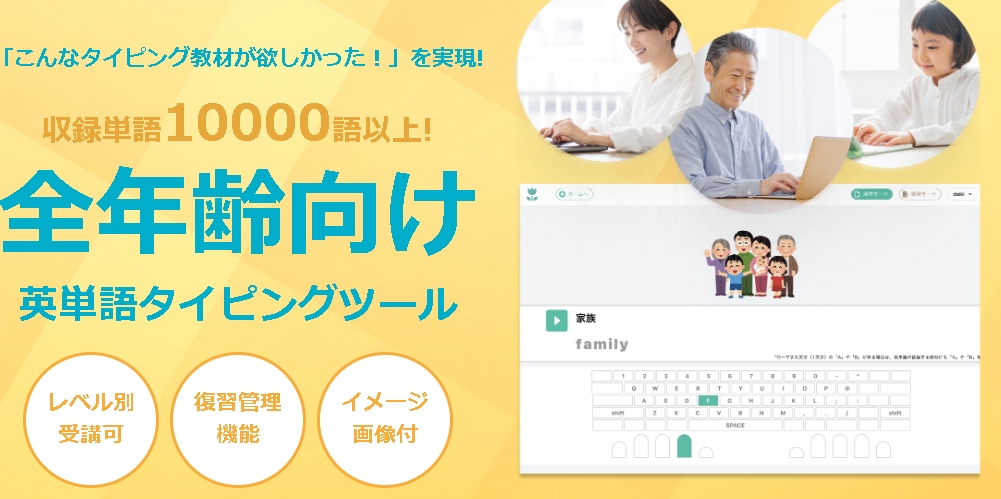
単語学習、聞き取り学習、タイピング練習はもちろん。
できなかった部分だけを重点的に学習できるように復習機能もついています。
また、中1レベルからTOEIC900点クラスまで網羅している為
無料お試し版がご利用いただけますので