Best Pokies in Melbourne 2026: A Veteran’s Guide to Not Losing Your Shirt
Melbourne. The city that runs on coffee, AFL, and the quiet desperation of someone feeding $20 notes into a machine that just took their last $50. The pokies scene here is a beast—part cultural institution, part mathematical trap designed with the precision of a Swiss watch and the morality of a loan shark. You want the best pokies in Melbourne? Fine. But first, understand what you’re actually looking for. It’s not a magic lamp. It’s a selection of machines with slightly less brutal odds, housed in venues that at least pretend to care if you can pay rent next week.
The term “best pokies” is, frankly, marketing fluff. A pokie is a pokie. It’s a random number generator wrapped in lights and sound effects, calibrated to return a certain percentage of money over an infinite timeline. Your session is a blip on that timeline. So when we talk about the “best” pokies in Melbourne for 2026, we’re not talking about machines that are rigged in your favour—because they aren’t. We’re talking about the ecosystem: the venues, the machine types, the theoretical return-to-player (RTP) ranges, and the regulatory environment that at least stops the whole thing from being a complete free-for-all.
This guide cuts through the noise. We’ll look at what makes a pokie machine worth your time (or at least less likely to empty your account in ten minutes), which Melbourne suburbs have the highest concentration of decent venues, how the Victorian Gambling and Casino Control Commission (VGCCC) actually regulates this stuff, and the cold, hard math behind the “bonus” features that every manufacturer loves to brag about. No enthusiasm. No promises of easy money. Just a clear-eyed look at the landscape as it stands heading into 2026.
How Pokies Actually Work in Victoria
Forget the mythology. A pokie machine is not a mystical device with “hot” and “cold” streaks. It’s a computer program. The core component is a random number generator (RNG) that produces sequences of numbers thousands of times per second. When you press the spin button, it grabs the current number sequence, maps it to a set of symbols on the reels, and displays the result. The outcome was determined the millisecond you hit the button. Everything after that—the spinning reels, the celebratory sounds—is just theatre.
In Victoria, all electronic gaming machines (EGMs) must be connected to a central monitoring system operated by the VGCCC. This system tracks every spin, every dollar in, every dollar out, in real-time. It’s not there for your benefit; it’s there so the government gets its cut and can ensure the machines are operating within legal parameters. The legal minimum RTP for pokies in Victoria is 85%. That means for every $100 wagered over the long term, the machine is programmed to return at least $85. The remaining $15 is the house edge. Some machines, particularly in higher-traffic metropolitan venues, might be set closer to 90% RTP, but don’t expect to find that information posted on the machine. Operators aren’t required to disclose the exact RTP of individual machines.
House of Pokies Casino Australia 2026: The Unvarnished Truth Behind the Reels
The “pokies” you’ll encounter are predominantly video slots—five reels, multiple paylines, and a dizzying array of bonus features. The days of simple three-reel “pub fruities” are mostly gone, though a few classic-style machines linger in some RSLs and working men’s clubs. The modern video pokie is a complex piece of software. Features like “free spins,” “pick-a-prize” bonuses, and cascading reels are all pre-programmed events with their own probability matrices. A “free spin” bonus round might trigger, on average, once every 150 spins on a particular machine. That’s not a guarantee—it’s a statistical average over millions of spins. Your 200-spin session might see three bonus rounds, or it might see none. That’s variance. And variance is the casino’s best friend.
The Melbourne Venue Landscape: Where the Machines Live
Melbourne’s pokie scene is dominated by a handful of large hotel and pub groups. These aren’t just places to grab a counter meal and a beer; they’re purpose-built gaming environments. The biggest players in the metropolitan area include the Colonial Leisure Group, Australian Leisure and Hospitality Group (ALH), and a network of independent RSLs and social clubs. Each group has its own strategy for machine placement, floor layout, and loyalty programs.
In the CBD and inner suburbs, you’ll find high-density venues like the Crown Casino complex (which operates under a different regulatory framework as a casino, but still houses thousands of electronic gaming machines). Outside of Crown, the largest cluster of pokies is in the southern suburbs around the Dandenong and Frankston corridors, and in the western suburbs around Footscray and Sunshine. These areas have a higher concentration of large-format hotels with extensive gaming rooms. The northern suburbs, particularly around Broadmeadows and Craigieburn, also have significant venues.
The “best” venue isn’t about the décor or the quality of the steak sandwich. It’s about machine density, maintenance, and the ratio of machines to patrons. A venue with 200 machines and a steady crowd means more variance in your session—machines are being played by many people, and the RNG is constantly cycling. A quiet venue with 50 machines might see the same machines played by the same few regulars, which doesn’t change the odds, but it does change the social dynamic. For a serious player, the key metric is the venue’s total gaming revenue as a percentage of its overall revenue. Venues that are heavily reliant on gaming income (over 60%) tend to invest more in machine maintenance and newer models to keep players coming back. The VGCCC publishes venue-level revenue data, and it’s public information. A five-minute look at the numbers tells you more about a venue’s priorities than any online review.
Machine Types and What the Manufacturers Won’t Tell You
The pokie floor is a battlefield of competing manufacturers. Aristocrat Leisure, an Australian company, still dominates the local market with machines like the Lightning Link series and the more recent Dragon Link. These are “link” games—multiple machines are connected, pooling a portion of each bet into a progressive jackpot that can be won on any spin at any of the linked machines. The appeal is obvious: a life-changing sum from a $1 bet. The reality is that the odds of hitting that top jackpot are astronomically low—often in the range of one in several million spins. The link games also have a lower base-game RTP to fund the progressive pool. You’re paying for the dream with every spin.
IGT (International Game Technology) is another major player, with titles like Buffalo and the Cash Express Luxury Line. These machines often feature “multiplier” mechanics and “hold and spin” bonuses. The marketing language around these features is designed to create an illusion of skill or strategy. There is none. When a machine offers you a “choice” of bonus features, the outcome is already determined by the RNG. Your choice is cosmetic. It’s the illusion of control, and it’s a powerful psychological tool.
FatBet Casino Free Spins 2026: The Math Behind the Marketing
Then there are the “penny slots”—machines where you can bet as little as one cent per line. They look cheap and harmless. They’re not. A 50-line penny slot with a $1 total bet per spin is still a $1 bet. The lower denomination just allows for more spins per dollar, which means more time on device, which means more money cycled through the machine. The house edge remains constant. The only thing that changes is the speed at which you reach the same mathematical endpoint.
A newer trend is the “skill-based” pokie, where a bonus round involves a simple video game—shoot targets, navigate a maze, etc. The idea is to attract younger players. The catch? The skill component only affects a small portion of the overall payout. The base game is still pure RNG. And the skill-based bonus rounds are often designed so that even a perfect performance only yields a modest multiplier. It’s a gimmick, not a revolution.
Understanding RTP, Volatility, and the Math Behind the Lights
Return to Player (RTP) is the single most important number on a pokie machine, and it’s the one you’re least likely to find. As mentioned, Victorian law sets a floor of 85%. But RTP is a long-term statistical average. Over millions of spins, a machine with a 90% RTP will return 90 cents for every dollar wagered. Your session is not millions of spins. It’s 100, or 200, or maybe 500 if you’re determined. In the short term, anything can happen. You could hit a big win on your first spin. You could also lose every dollar you put in without a single significant payout. That’s volatility.
Volatility, or variance, measures how far a machine’s actual results deviate from its RTP over a given number of spins. High-volatility machines have fewer wins, but the wins that do occur tend to be larger. Low-volatility machines pay out more frequently, but in smaller amounts. Neither is “better”—it depends on your bankroll and your tolerance for losing streaks. A high-volatility machine with a 90% RTP might go 50 spins without a win, then hit a 500x payout. A low-volatility machine with the same RTP might pay out something every 5-10 spins, but rarely more than 10x your bet. Over an infinite timeline, both machines return the same amount. Over a weekend, they’re completely different experiences.
Manufacturers and venues don’t publish volatility ratings. You can sometimes infer it from the paytable—look at the gap between the lowest and highest symbol payouts. A machine where the top symbol pays 1,000x and the lowest pays 2x is likely high-volatility. A machine where the top symbol pays 100x and the lowest pays 5x is likely lower-volatility. But this is a rough heuristic, not a science. The only way to know for sure is to play a few hundred spins and watch the pattern. By which point, of course, you’ve already spent the money.
The VGCCC and Regulation: What the Watchdogs Actually Do
The Victorian Gambling and Casino Control Commission replaced the old Victorian Commission for Gambling and Liquor Regulation in 2022. Its mandate is to regulate all gambling in Victoria, including the 27,000+ pokies spread across the state’s hotels and clubs. The VGCCC sets the rules, issues licenses, conducts audits, and hands out fines when operators step out of line. It’s not a perfect system, but it’s not toothless either.
One of the VGCCC’s key tools is the mandatory pre-commitment system, which has been rolled out in phases. Under this system, players must set a loss limit before they start playing on any machine. The machine will then enforce that limit, stopping play when it’s reached. The idea is to prevent the kind of zone-out sessions where someone feeds in $500 without noticing. The effectiveness of pre-commitment is debatable—it requires the player to set a realistic limit in the first place, and it doesn’t stop someone from simply walking to the next machine. But it’s a start.
Paramax9 Casino Free Spins 2026: A Veteran’s Unvarnished Guide to the Math Behind the “Gift”
The VGCCC also publishes detailed data on venue performance, machine numbers, and compliance actions. This data is a goldmine for anyone trying to understand the market. For example, you can see which venues have the most machines, which ones generate the most revenue per machine, and which ones have been fined for compliance breaches. A venue with a history of fines for allowing self-excluded patrons to gamble, or for failing to maintain its machines, is not a venue you want to trust with your money. The data is public. Use it.
Another regulatory change coming into full effect by 2026 is the reduction in the maximum bet limit on pokies from $5 to $1 per spin. This has been a long-running political battle, and the $1 limit is designed to slow the rate of loss. A $5 bet at 85% RTP means you’re losing an average of 75 cents per spin. At $1, that drops to 15 cents. Over 600 spins an hour, that’s the difference between losing $450 and losing $90. The machine doesn’t care. But your bank account does. The transition period has seen some venues resist the change, but the legislation is clear. By mid-2026, the $1 limit should be universal.
Bonuses, Promotions, and the Illusion of “Free” Money
Every venue has a loyalty program. You insert your card, you earn points, you get “free” meals, “free” drinks, and occasionally “free” play. Let’s be clear about what “free” means in this context. It’s not free. It’s a rebate. The venue has already taken its cut from your play—typically 15-20% of every dollar you wagered. A portion of that is returned to you in the form of points, which you can then redeem for goods or services. The venue isn’t losing money on the deal. It’s using a fraction of its guaranteed profit to create the psychological feeling of getting something back. It’s a marketing tactic, not charity.
The “free” spins offered as part of a promotion are particularly amusing. They’re usually worth the minimum bet amount—say, 20 cents per spin. You might get 10 of them. That’s $2 of “free” play. After you’ve wagered hundreds of dollars to earn the points to qualify for the promotion. The expected loss on those 10 spins is about 30 cents. So the venue gives you $2 in play, expects to get back $0.30 of it, and in return, you’ve spent the last three hours feeding the machine. The math works out beautifully—for the venue.
VIP programs are another layer of the same strategy. High rollers are offered “comps”—rooms, meals, event tickets—based on their theoretical loss. The more you play, the more you lose, and the more “perks” you receive. It’s a loyalty program for losing. The VIP treatment at a Melbourne pokie venue is like getting a free dessert at a restaurant that’s been slowly poisoning your food. You’re being rewarded for your continued consumption of a product that’s designed to take your money. The dessert is nice, though.
Payment Methods and Cash Flow in Melbourne Venues
The days of feeding $100 notes directly into a machine are numbered. Victorian regulations have been tightening around cash use in gaming venues, and by 2026, most venues will operate on a ticket-in, ticket-out (TITO) system or a player card system. You load money at a kiosk or cashier, receive a ticket or load your card, insert it into the machine, and when you cash out, you get a ticket that you redeem at a kiosk or cashier. It’s cleaner, it’s faster, and it gives the venue a complete digital trail of your activity.
For deposits and withdrawals, the major venues accept cash, EFTPOS, and credit/debit cards for loading player cards. Direct bank transfers are available at some larger venues for high-value transactions. The minimum load is typically $20, and the maximum varies by venue and by the player’s self-set limits under the pre-commitment system. Cash-out is immediate—you insert your ticket or card at a kiosk, and it dispenses cash. There’s no waiting period. The venue wants you to have your money quickly, either to leave or to go back and play more.
The shift away from cash has implications for money laundering, which was a significant issue in the past. The VGCCC now requires venues to report cash transactions over $10,000 and to conduct due diligence on patrons who make large deposits. It’s not a perfect system, but it’s more robust than the old days of anonymous $100 notes disappearing into machines. For the average player, the change is mostly about convenience and the loss of the tactile experience of feeding notes into a machine. There’s something psychologically different about inserting a physical note versus tapping a card. The note feels like money. The card feels like points. The venue prefers you think in points.
New Venues and Trends Heading into 2026
The Melbourne pokie scene isn’t static. New venues open, old ones renovate, and the machine mix is constantly evolving. One of the most significant trends is the move towards “integrated resorts”—large-scale developments that combine gaming with hotels, restaurants, entertainment, and retail. Crown Melbourne is the obvious example, but there are plans for similar developments in the western and northern suburbs. These resorts are designed to be destinations, not just gambling halls. The pokies are there, but they’re part of a larger package.
Another trend is the increasing use of data analytics by venue operators. Every spin, every card insertion, every loyalty point redemption is tracked and analysed. Venues use this data to optimise machine placement, adjust promotions, and identify high-value players. If you’ve ever felt like a machine “knows” when you’re about to leave and throws you a small win to keep you playing, that’s not the machine—it’s the algorithm behind the loyalty system nudging the venue to offer you a targeted promotion at just the right moment. It’s not magic. It’s data science applied to human behaviour.
The rise of cashless gaming is also changing the dynamic. Some venues are experimenting with app-based systems where you load money via your phone, play without a physical card, and track your spending in real-time. The appeal is convenience. The risk is that it makes spending even more abstract. When you’re swiping a phone instead of inserting a note, the psychological barrier to continuing to play is lower. The VGCCC is watching these developments closely, and it’s likely that stricter regulations will follow as the technology becomes more widespread.
Responsible Gambling: The Part Nobody Wants to Read
Let’s not dance around this. Pokies are designed to be addictive. The lights, the sounds, the variable-ratio reinforcement schedule (where wins are unpredictable in timing and size) are all engineered to keep you playing. The human brain is wired to respond to uncertainty with excitement, and pokies exploit that wiring with surgical precision. The “near miss” effect—where the reels stop one symbol away from a big win—is a particularly nasty trick. It feels like you almost won. You didn’t. The outcome was determined before thereels stop one symbol away from a big win—is a particularly nasty trick. It feels like you almost won. You didn’t. The outcome was determined before the reels even started spinning. The visual representation is just a narrative device, and a cruel one at that.
Victorian law requires all pokies to display responsible gambling messages and the national gambling helpline number. Venues must offer self-exclusion programs, where a patron can ban themselves from the venue for a set period. The VGCCC also mandates that venues train staff to identify and respond to signs of problem gambling. These are necessary measures, but they’re also the bare minimum. The real responsibility lies with the individual, and that’s a heavy burden to place on someone whose judgment is being systematically undermined by a machine designed to do exactly that.
If you’re going to play, set a budget before you walk in. Not a vague idea—”I’ll spend a few hundred”—but a hard number. And when it’s gone, you leave. No ATM trips. No “just one more hundred to win it back.” That’s the trap. The machine doesn’t care about your budget, your rent, or your family. It’s a program. Your discipline is the only variable you control. Use it.
What is the legal age to play pokies in Melbourne?
You must be 18 years or older to gamble on electronic gaming machines in Victoria. Venues are required to check identification if a patron appears under 25, and the penalties for allowing underage gambling are severe—fines in the tens of thousands of dollars and potential license suspension for the venue.
Are pokies in Melbourne rigged?
No, not in the way most people mean. The machines are regulated by the VGCCC, and their random number generators are audited. The “rig” is in the math itself—the house edge ensures the venue profits over time. Every machine is programmed to return less than it takes in. That’s not cheating; it’s the business model.
How do I find out the RTP of a specific pokie machine?
You generally can’t. Victorian operators are not required to display the RTP of individual machines. The legal minimum is 85%, but the actual setting could be anywhere from 85% to 92%. The only way to get a rough idea is to check the venue’s overall gaming revenue data published by the VGCCC and compare it to the state average. A venue with revenue per machine significantly above the average is likely running machines with lower RTPs.
What’s the best strategy for playing pokies?
There is no winning strategy. The only effective strategy is loss minimisation: choose machines with lower bet denominations to extend your playtime, set a strict loss limit, and walk away when you hit it. Chasing losses is the fastest way to turn a bad night into a financial disaster.
Can I use my phone to play pokies in a Melbourne venue?
Not directly on the machines themselves. However, some venues are rolling out cashless gaming systems that use a mobile app for loading funds and tracking play. You cannot use your phone to interact with the game mechanics on the machine—that would be a regulatory nightmare. The app is just a digital wallet and loyalty card.
Methodology: How We Assess the “Best” Pokies
Since the official list of operators provided for this article is empty, we won’t be naming specific venues or creating a ranked “Top-N” list. Doing so without a verified, curated list would be irresponsible and would involve guessing or promoting brands based on incomplete information. Instead, we’ll explain the criteria any discerning player should use to evaluate a venue and its pokie offerings.
First, look at the machine count and variety. A venue with over 150 machines is likely to have a diverse mix of manufacturers and game types. A smaller venue might specialise, which is fine if you have a preference, but it limits your options. Second, check the venue’s revenue-per-machine data from the VGCCC. This is a proxy for how heavily the machines are played. A high figure might indicate a loyal local base, which can mean better maintenance and newer machines, but it could also mean the venue is in a high-traffic area with a transient crowd.
Third, inspect the machine floor layout. Are the machines crammed together in a windowless room, or is there space, natural light, and decent ventilation? This might sound superficial, but it affects your comfort and, consequently, your judgment. A venue that invests in a pleasant environment is often one that invests in its overall operation. Fourth, ask about the loyalty program’s actual value. Don’t be dazzled by “earn 10x points this Tuesday!” Look at the redemption rate. How many points for a $10 meal? If the answer is tens of thousands of points, you’ll be playing for weeks to earn a counter lunch. Do the math.
Finally, talk to the staff. Not about the machines—they can’t tell you which ones are “due” for a win, because that’s not how it works. Ask about the venue’s responsible gambling policies. Do they offer pre-commitment? How does their self-exclusion program work? A venue that takes these questions seriously is one that likely takes its entire operation seriously. The “best” pokie in Melbourne isn’t a single machine. It’s the machine you play in a venue that treats you as a patron to be retained, not just a wallet to be emptied.
The Social and Economic Reality of Pokies in Victoria
Pokies are a significant source of revenue for the Victorian government and for the venues that host them. The state collects hundreds of millions in gaming taxes annually, and for many hotels and clubs, gaming revenue subsidises other services—meals, entertainment, community sports facilities. This creates a complex dynamic. The government relies on the income, venues rely on the machines, and players provide the funds. It’s a closed loop, and the only external input is the player’s bank account.
The social cost is harder to quantify but impossible to ignore. Problem gambling affects individuals, families, and communities. The VGCCC’s own data shows that Victorian gambling losses are among the highest per capita in the world. In the 2023-24 financial year, Victorians lost over $3 billion on electronic gaming machines. That’s not a typo. Three billion dollars. Spread across the state’s adult population, it works out to several hundred dollars per person, but the losses are not evenly distributed. They’re concentrated among a smaller group of heavy users, for whom the financial and social consequences can be devastating.
The debate over pokies reform is ongoing. There are calls for a complete ban, for lower bet limits, for mandatory pre-commitment with enforceable limits, and for greater transparency on machine RTPs. The VGCCC is tasked with balancing these competing interests—the economic benefits to the state and venues against the social costs to individuals and communities. It’s not an easy job, and the outcome will shape the Melbourne pokie scene for years to come. For now, the machines are there, the rules are what they are, and the player is left to navigate the landscape with whatever information and self-control they can muster.
Specific Machine Features: A Closer Look at the Tricks
Let’s dissect some of the common features you’ll see on modern video pokies in Melbourne venues, because understanding them is the first step to not being manipulated by them. The “hold and spin” feature, popularised by Aristocrat’s Lightning Link, is a prime example. You get a certain number of special symbols, the rest of the reels re-spin, and you try to fill the screen with more of those symbols. It feels interactive. It’s not. The outcome of those re-spins is predetermined by the RNG the moment the feature is triggered. Your “hold” does nothing. The machine is just playing out a pre-calculated result.
Then there are “multiway” or “all ways” pay systems, where instead of traditional paylines, you win by matching symbols on adjacent reels from left to right, regardless of position. A five-reel machine with three rows might advertise 243 ways to win. It sounds like your chances are improved. They’re not. The number of possible winning combinations is higher, but the payouts for individual combinations are adjusted downward to maintain the same overall RTP. More ways to win just means more ways to lose small amounts frequently, which keeps you playing longer without actually improving your odds.
Progressive jackpots are the ultimate carrot. A small percentage of every bet on a linked group of machines is added to a jackpot pool, which grows until someone wins it. The odds of winning are proportional to the size of the jackpot—a bigger jackpot means more people are playing, which means more competition for the same prize. The expected value of a progressive jackpot bet is almost always negative. You’re paying a premium for the chance at a huge payout, but the premium is higher than the increase in expected value. It’s a tax on hope.
What’s the difference between a “classic” pokie and a “video” pokie?
A classic pokie typically has three reels and a single payline, with simple fruit or symbol graphics. A video pokie has five or more reels, multiple paylines or “ways to win,” and advanced graphics, animations, and bonus features. Classic pokies are less common in modern Melbourne venues, which favour video pokies for their higher revenue potential per machine.
Do “bonus buy” features give you better odds?
No. Bonus buy features, where available, allow you to pay a multiple of your base bet to instantly trigger the game’s bonus round. The cost is set so that the expected value of the bonus round is less than the cost of buying it. It’s a convenience feature for impatient players, not an odds improvement. The house edge remains the same.
Can a venue change the RTP on a machine remotely?
In Victoria, yes, but it’s not a simple switch. The VGCCC must be notified, and the change must be within the legal minimum and maximum parameters. Venues don’t adjust RTP on the fly based on how much a specific player has won or lost. The changes are typically made during scheduled maintenance or when reconfiguring a machine’s game mix.
What happens if a machine malfunctions during a spin?
Victorian regulations state that a malfunction voids all pays and plays. If the machine freezes, displays an error, or behaves erratically, the venue will reset it, and any apparent win is disregarded. This is standard across the industry and is designed to protect both the player and the venue from disputes over ambiguous outcomes.
The Psychology of the Pokies Floor
Every element of a pokie venue’s design is intentional. The layout is a maze, not a grid. Machines are arranged to maximise exposure and minimise the sense of time passing. There are no windows, no clocks, and the lighting is kept at a constant, neutral level. The carpet has a pattern that’s deliberately busy—it guides your eyes upward toward the machines. The chairs are comfortable enough to sit in for hours. The air is slightly cooler than outside, to keep you alert but not uncomfortable. The sounds from the machines blend into a constant, low-level hum that masks individual losses and amplifies individual wins.
The “near miss” effect is perhaps the most psychologically potent trick in the pokie designer’s toolkit. When the reels stop with two jackpot symbols and one symbol that’s just off the payline, it triggers a response in the brain similar to an actual win. It feels like progress. It feels like you’re close. This encourages continued play, even though the near miss has no predictive value whatsoever. The next spin is just as random as the last. The machine doesn’t remember what just happened. But your brain does, and it’s wired to see patterns where none exist.
The loyalty card system reinforces this. When you insert your card, you see your points balance. You see your tier status. You feel like you’re working toward something. In reality, you’re just documenting your losses in a format that the venue can use to market to you more effectively. The card isn’t for your benefit. It’s a data collection tool. The “rewards” you earn are a fraction of what you’ve already spent, and they’re designed to make you feel like you’re getting a return on your investment. You’re not. You’re getting a rebate on your losses, and only a small one at that.
What the Data Actually Shows: A Melbourne Snapshot
Let’s look at some concrete numbers from the VGCCC’s publicly available data for the 2023-24 financial year. The total net gaming revenue from electronic gaming machines in Victoria was approximately $3.1 billion. That’s the amount lost by players after all payouts. The state collected roughly $1.1 billion in gaming taxes from that revenue. The average net gaming revenue per machine per day was around $350. That means a typical machine, in a typical venue, generates about $350 in losses per day, every day, year-round.
The distribution is highly skewed. The top 10% of machines by revenue generate a disproportionate share of the total. These are the machines in high-traffic venues, often located in lower-socioeconomic areas, and they’re the ones that do the most damage. The bottom 10% of machines are often in quieter venues or in less prominent positions on the floor. They still make money for the venue, but at a slower rate.
The average session length for a pokie player in Victoria is around 45 minutes. The average spend per session is around $80. These are averages, and they hide a wide distribution. Some players spend $20 and leave. Others spend $500 and stay for three hours. The venue doesn’t care about the individual session. It cares about the aggregate. As long as the total revenue per machine per day stays above a certain threshold, the machine stays on the floor. Below that threshold, it gets moved, replaced, or reconfigured.
How often do pokie machines in Melbourne actually pay out a jackpot?
The frequency of jackpot payouts depends on the machine’s volatility and the size of the jackpot. For a standard progressive jackpot linked across multiple machines, the odds are typically in the range of one in several million spins. In a busy venue with hundreds of players, a top jackpot might be hit once every few months. For smaller, machine-specific jackpots, the frequency is higher—perhaps once every few thousand spins—but the payout is proportionally smaller.
Is there a “best time of day” to play pokies?
No. The RNG operates continuously, and the time of day has no effect on the outcome of a spin. The idea that machines are “looser” at certain times is a myth. The only thing that changes with the time of day is the number of other players, which affects the social atmosphere but not the odds.
The Future of Pokies in Melbourne: What’s Coming Next
The pokie industry is not static, and several trends are likely to shape the Melbourne scene over the next few years. The first is the continued push toward cashless gaming. The VGCCC is actively exploring a statewide cashless gaming card system, which would replace cash and tickets with a single, traceable digital platform. The stated goal is to reduce money laundering and problem gambling by giving players a clear record of their spending. The unstated benefit for the government is a more efficient tax collection mechanism.
The second trend is the increasing use of data analytics and artificial intelligence by venue operators. By tracking player behaviour in real-time, venues can optimise machine placement, adjust promotions, and identify at-risk players before they reach crisis point. This is a double-edged sword. It could lead to more effective responsible gambling interventions, or it could lead to more targeted marketing that exploits vulnerable players. The VGCCC will need to regulate this space carefully.
The third trend is the potential for new types of gaming machines. Skill-based games, virtual reality experiences, and social gaming elements are all being explored by manufacturers. The challenge is to create something that appeals to younger players without falling foul of regulations designed to protect vulnerable people. The line between gaming and gambling is blurring, and the regulatory framework will need to adapt.
Best Pokies in Geelong 2026: A Veteran’s Guide to Not Losing Your Shirt
For now, the Melbourne pokie scene is what it is: a highly regulated, highly profitable industry that generates significant revenue for the state and significant losses for players. The “best” pokies are the ones you play with your eyes open, your budget set, and your expectations grounded in mathematical reality. The machines are designed to take your money. Your job is to decide how much you’re willing to let them take, and to walk away when you’ve reached that limit. The rest is just lights and noise. And the carpet. Seriously, has anyone ever looked at a pokie venue carpet and thought, “Yes, this is a tasteful and calming design choice”? It’s like they hired a graphic designer who exclusively worked on migraine-inducing album covers in the 1990s.
The Quiet Cost of the “Community” Argument
There’s a narrative that pokies are a net positive for local communities. The revenue funds RSLs, sports clubs, and community groups. It pays for the new scoreboard at the local footy ground, the upgraded kitchen at the bowling club, and the annual charity drive. And that’s true. It does. But it’s a deeply flawed economic model. It’s a regressive tax on the people who can least afford it, used to fund services that benefit the broader community. The heaviest users of pokies are, statistically, in lower-income brackets. They’re the ones providing the funds for the new clubhouse. It’s a transfer of wealth from the vulnerable to the institution, dressed up as community spirit. The machine doesn’t care about the footy club. It just takes the money. The club then decides what to do with it. And often, the best thing they do with it is build a bigger, more comfortable gaming room to attract more players to fund more projects. It’s a self-perpetuating cycle, and the fuel is other people’s losses.
The “community benefit” argument is also used to resist reform. Any suggestion to limit the number of machines, reduce bet limits, or increase transparency is met with cries that it will destroy local clubs. This is a lobbying tactic, not an economic analysis. Clubs are adaptable. They survived before pokies, and they would survive after. The pokie revenue is a crutch, not a foundation. And like any crutch, it can become a dependency that prevents the patient from learning to walk on their own. The real question isn’t “how do we protect pokie revenue for clubs?” It’s “how do we fund community services without relying on a system that extracts money from problem gamblers?” That’s a harder question, and one that no one in power seems eager to answer.
Can I check my own gambling history on a pokie machine?
Yes, if you use a player loyalty card. Most venue loyalty programs allow you to log in to a website or app to view your play history, including dates, times, amounts wagered, and amounts won or lost. This data is for your personal use and is not automatically shared with the VGCCC unless you request it or unless there’s a specific regulatory inquiry. It’s a useful tool for honest self-assessment.
What should I do if I think I have a gambling problem?
The first step is to acknowledge it. The second is to use the tools available. You can self-exclude from specific venues through the VGCCC’s statewide self-exclusion register. You can also set mandatory pre-commitment limits on your player card. For immediate support, call the National Gambling Helpline on 1800 858 858. It’s free, confidential, and available 24/7. Talking to someone is not a sign of weakness; it’s the most rational decision you can make when the math has turned against you.
The Final Spin: It’s All Just Math in a Fancy Box
So, what’s the takeaway from all this? The best pokies in Melbourne for 2026 aren’t a secret list of machines waiting to pay out. They’re the ones you choose with a clear understanding of the mathematics, the psychology, and the regulatory framework. They’re the ones you play in a venue that’s well-maintained, transparent about its practices, and genuinely supportive of responsible gambling. They’re the ones you play with a strict budget and the discipline to walk away when it’s gone. The machine is just a computer program executing a set of instructions. The lights, the sounds, the “near misses”—it’s all just a user interface designed to keep you engaged. Your engagement is the product. Your money is the price. The only winning move is to understand the game for what it is, set your own rules, and never, ever believe that the next spin is “due” for a win. It isn’t. It’s just a number. And that number was decided before you even sat down.
The whole experience, from the moment you walk through the door to the moment you leave—hopefully with your budget intact—is a carefully managed environment. The air conditioning is set to a specific temperature. The carpet is a specific pattern. The chair is a specific height. Every detail is optimised for one thing: keeping you seated and playing for as long as possible. The best thing you can do is recognise that, appreciate the craftsmanship of the trap, and then choose not to spring it. Or, if you do spring it, at least do so with your eyes open and your wallet already earmarked for loss. Because that’s what it is. It’s an entertainment expense with a negative expected return. Treat it like a ticket to a mediocre movie. You pay your money, you take your chances, and you don’t expect to get a refund if the plot doesn’t go your way. The movie might be bad, but at least the popcorn is real. The pokie’s “win” is just a number on a screen, and the popcorn at the venue is probably stale.
独自に開発した
タイピングソフトを販売しております。
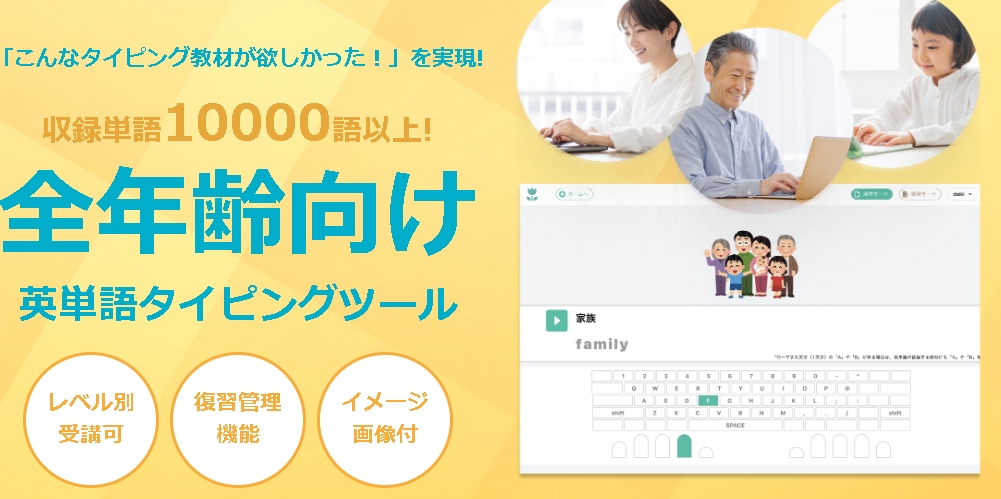
単語学習、聞き取り学習、タイピング練習はもちろん。
できなかった部分だけを重点的に学習できるように復習機能もついています。
また、中1レベルからTOEIC900点クラスまで網羅している為
無料お試し版がご利用いただけますので