Redspin Casino Free Spins 2026: The Math Behind the “Free” Lollipop
The phrase “redspin casino free spins 2026” is a peculiar beast. It suggests a forward-looking search for a specific promotional mechanic at a specific operator, yet the reality of iGaming is that promotional calendars are as stable as a house of cards in a wind tunnel. Searching for a bonus that doesn’t exist yet is like planning a heist based on the architectural blueprints of a building that hasn’t been built. The core issue isn’t the year or the brand; it’s the fundamental misunderstanding of what a “free spin” actually represents in the cold calculus of casino economics.
Redspin, as a brand, operates in a crowded market where differentiation often comes down to the size of the welcome package rather than the quality of the underlying product. The promise of free spins for 2026 is, at this stage, pure speculation—a placeholder in a marketing deck. What we can analyze is the machinery behind such offers, the typical structure of a spin-based promotion, and the brutal math that governs whether you walk away with pocket change or, more likely, nothing at all. This isn’t about hope; it’s about understanding the terms and conditions before you even think about clicking “claim.”
Let’s dissect the anatomy of a “free spin” offer. Typically, an operator will advertise a package like “100 Free Spins on Book of Dead.” The naive interpretation is that you get 100 chances to win for free. The reality is a transaction. You are exchanging your data, your time, and often a deposit for a set number of spins on a specific slot game, each spin capped at a predetermined value—usually the minimum bet, say €0.10. The “free” part is the spin itself; the winnings are subject to a wagering requirement. This requirement, often 30x to 50x the winnings, is where the casino reclaims its investment. A €10 win from your “free” spins, subjected to a 40x wagering requirement, means you must place €400 in bets before you can withdraw that €10. The house edge on a slot with a 96% RTP means, on average, you’ll lose €16 of that €400 in the process. The “free” spin cost you €16. That’s the price of the lollipop.
Aussie Online Slots in 2026: A Cynic’s Guide to Gambling Casino Sites Australia
For the 2026 horizon, the trend is moving away from massive, high-wagering spin packages toward smaller, lower-wagering, or even wager-free spins. Operators are realizing that a 200-spin offer with a 60x requirement generates more customer service complaints than loyalty. The smarter play, from a retention standpoint, is 50 spins at 10x wagering or 20 spins with no wagering at all, where winnings are paid as cash up to a certain limit. This shift is a direct response to player savvy and regulatory pressure. The “free spins 2026” search will likely yield offers that look less generous on the surface but are mathematically more transparent. The raw number of spins is becoming less important than the multiplier attached to the winnings.
How to Evaluate a Free Spin Offer Without the Marketing Fog
The first step is to ignore the headline number. “500 Free Spins!” is a headline designed to trigger a dopamine response, not a rational one. The number that matters is the spin value. A 500-spin package at €0.10 per spin is a €50 bonus. A 50-spin package at €1.00 per spin is also a €50 bonus. The second is the wagering requirement. If it’s above 40x, you’re in the high-risk zone where the expected loss from wagering often exceeds the initial bonus value. If it’s between 20x and 35x, you’re in a more reasonable, though still challenging, territory. Below 20x is rare and usually comes with a lower total spin value or a win cap.
The game restriction is another critical filter. Free spins are almost always tied to a single slot, often one with high volatility. This isn’t a coincidence. High-volatility slots have a lower hit frequency but larger potential payouts. The casino knows that over a large number of spins, the house edge remains constant, but the player’s experience is one of long dry spells punctuated by occasional small wins that rarely cover the wagering requirement. They’re not giving you spins on a low-volatility, high-RTP game where you’d grind out consistent, small returns. They’re giving you the lottery ticket, not the savings bond.
Then there’s the win cap. Many “free” spin offers, especially no-deposit ones, limit the amount you can actually withdraw from your winnings. A common structure is a €100 win cap on a no-deposit offer. You could hit a €5,000 jackpot on your last spin, but you’ll only be able to cash out €100. The rest is forfeited. This cap is the operator’s ultimate risk management tool. It ensures that even a lucky outlier doesn’t damage their bottom line. For deposit-based spin offers, the cap is less common but still appears, particularly on the first tranche of a multi-day spin allocation.
What Does “Wager-Free” Actually Mean in Practice?
A wager-free spin offer is the closest thing to a “free” gift you’ll find, but it comes with its own set of constraints. The winnings are paid as cash, which you can withdraw immediately, but they are almost always subject to a maximum withdrawal limit. A typical offer might be “20 Wager-Free Spins, winnings paid as cash up to €50.” This means if you win €75, you keep €50. If you win €30, you keep €30. There’s no playthrough. The casino’s risk is limited by the cap, not the wagering. It’s a cleaner deal, but the potential upside is firmly capped. It’s a free lollipop, but it’s a small one.
Are There Any “Free Spins” That Are Truly Free?
Truly free spins, with no deposit required and no wagering on winnings, are the unicorn of the casino world. They do exist, but they are rare, typically very limited in number (5-10 spins), and come with strict win caps, often as low as €10 or €20. They are a customer acquisition tool, a taste of the product designed to get you to make a deposit. The value to the casino is your contact information and the chance to market to you. The value to you is a genuine, if tiny, risk-free shot. Expecting more than a few euros from such an offer is wishful thinking. It’s a sample at the grocery store, not a full meal.
The Regulatory Landscape and Its Impact on Spin Offers
Regulation is the invisible hand that shapes every promotion. In the UK, the Gambling Commission has cracked down on “misleading” bonus terms, requiring clear, prominent display of wagering requirements and other key conditions. This has led to a standardization of terms but hasn’t eliminated the complexity. In Malta, under the MGA, the rules are slightly more operator-friendly, but the trend toward transparency is global. For 2026, expect more jurisdictions to adopt strict rules on bonus advertising, potentially limiting the use of words like “free” unless the offer meets specific criteria. This could force a rebranding of the entire concept.
The impact on the player is a double-edged sword. On one hand, clearer terms mean fewer surprises. On the other, it may lead to less generous offers as operators price in the regulatory risk and the cost of compliance. The “free spin” as a marketing vehicle isn’t going away, but its form is evolving. We’re seeing a move toward “bonus spins” or “extra spins” as terminology, a subtle linguistic shift to avoid the legal implications of the word “free.” The mechanics, however, remain the same: a limited, game-specific bet with conditions attached to any profit.
How Do Different Regulators View Bonus Terms?
The UKGC focuses on fairness and transparency, mandating that key terms are not hidden in fine print. The MGA requires that bonuses are not misleading and that players can opt-out. In Sweden, Spelinspektionen has imposed strict limits on bonus offers, including a one-time bonus offer per player per operator. This “one-bonus” rule has fundamentally changed the market, forcing operators to make their single offer extremely compelling. In Denmark, the Spillemyndigheden requires that bonus terms are “clear and unambiguous.” Each regulator adds a layer of complexity for operators and a layer of protection for players. The 2026 landscape will likely see further harmonization, but the differences in approach mean a “free spin” offer in one jurisdiction may look very different from another.
Comparing Typical Free Spin Offer Structures Across the Market
To put this in perspective, let’s compare the typical structures you’ll encounter. The table below is based on common market practices, not specific, time-sensitive promotions. It illustrates the trade-offs between spin value, quantity, and conditions.
| Offer Type | Typical Spin Value | Typical Wagering Requirement | Typical Win Cap | Common Game Restriction |
|---|---|---|---|---|
| No-Deposit Spins | €0.10 – €0.20 | 40x – 60x Winnings | €50 – €100 | Single, high-volatility slot |
| Deposit Match + Spins | €0.20 – €1.00 | 30x – 45x Winnings | Usually None | Specific slot or provider |
| Wager-Free Spins | €0.10 – €0.50 | None (Winnings as Cash) | €50 – €200 | Single slot |
| Daily/Weekly Reload Spins | €0.10 – €0.30 | 25x – 40x Winnings | Varies | Often a “Game of the Week” |
This table reveals the core equation. The “freer” the spin (no deposit, no wagering), the tighter the constraints on its value (low spin value, strict win cap). The more you commit (a deposit), the more flexible the terms become, but you’ve now risked your own capital. There is no scenario where you receive significant value without some form of exchange, whether it’s your money, your data, or your loyalty. The casino is a business, not a charity. The “free” in “free spins” is a marketing term, not a financial one.
The Psychology Behind the “Free Spin” Offer
Casinos understand human psychology better than most psychologists. The “free spin” leverages several cognitive biases. First, the zero-price effect: we overvalue things that are free. The word “free” triggers an emotional response that overrides rational analysis of the terms. Second, the endowment effect: once you’ve “won” something from your free spins, even if it’s bonus money locked behind wagering, you feel you own it and are reluctant to let it go, leading you to play more than you intended. Third, the illusion of control: you choose when to spin, giving you a sense of agency in a game of pure chance.
The design of the free spin experience is intentional. The spins are often presented with fanfare, with celebratory sounds and visuals for even small wins. This creates a positive feedback loop, encouraging you to continue playing with your own money after the free spins are exhausted. The goal of the free spin offer isn’t just to give you a bonus; it’s to habituate you to the gameplay, to make the transition from “bonus player” to “depositing player” as seamless as possible. It’s a customer acquisition cost, and you are the customer being acquired.
Why Are Free Spins Always on Specific Slots?
The choice of slot is never random. Operators select games that balance player appeal with house edge. A popular slot with a recognizable theme attracts players. A game with a medium-to-high volatility ensures that while some players will win big (creating stories and social proof), the majority will experience the house edge over time. The slot provider also often subsidizes part of the promotion, giving the operator spins at a reduced cost. This three-way deal—operator, provider, player—means the “free” spin is a subsidized marketing tool for both the casino and the game developer. You’re the product being marketed to.
Calculating the True Expected Value of a Free Spin
Let’s do the math. Suppose an offer is “100 Free Spins at €0.10 each on Starburst, with 35x wagering on winnings.” The total face value is €10. Starburst has an RTP of 96.09%. The expected loss from 100 spins at €0.10 is 100 * €0.10 * (1 – 0.9609) = €0.391. So, on average, you’ll have about €9.61 left from the initial €10 value. Now, you must wager these winnings 35 times. The expected loss from wagering €9.61 * 35 = €336.35 at a 96.09% RTP is €336.35 * (1 – 0.9609) = €13.15. Your expected value is €9.61 – €13.15 = -€3.54. You are, on average, expected to lose money on this “free” offer before you even consider the opportunity cost of your time.
This calculation assumes average outcomes. The reality is more volatile. You could win big on the spins and clear the wagering with profit. You could also win nothing. But the math, played out over thousands of players, always favors the house. The free spin offer is a loss leader for the casino, designed to bring you in the door. The expected loss is their marketing budget. Your job, if you choose to accept it, is to be the outlier who beats the math. The odds are not in your favor.
How Can I Improve My Odds with Free Spins?
You can’t change the house edge, but you can choose offers with better terms. Prioritize low wagering requirements (under 30x). Look for offers on low-volatility slots if available, as they provide more consistent, smaller wins that are easier to wager. Avoid offers with low win caps, as they limit your upside without reducing your risk. The best strategy is to treat the free spins as entertainment with a cost (your time and potential deposit), not as an investment. Set a strict limit on how much you’ll deposit to claim an offer, and never chase losses incurred while wagering free spin winnings.
New Casino Trends for 2026: Beyond the Traditional Spin
The free spin as we know it is evolving. For 2026, several trends are emerging. First, the rise of “mission-based” bonuses, where you earn spins or other rewards by completing tasks (e.g., playing a certain number of rounds, trying different games). This gamification increases engagement and session time. Second, the integration of social features, where you might earn spins through friend referrals or community challenges. Third, the use of personalized offers, where the casino’s algorithm analyzes your play style and offers spins on games you’re likely to enjoy, increasing the perceived value and the likelihood of a deposit.
Another trend is the blurring of lines between casino and sportsbook. You might earn free spins as a reward for placing sports bets, or vice-versa. This cross-product promotion is designed to increase player lifetime value by exposing them to more of the operator’s offerings. The “free spin” becomes a tool for product discovery, not just a standalone bonus. The underlying math remains the same, but the delivery mechanism is becoming more sophisticated and integrated into a broader loyalty ecosystem.
Will Cryptocurrency Affect Free Spin Offers?
Crypto casinos are already experimenting with different bonus models. The transparency of blockchain allows for provably fair spins, where you can verify the randomness of each outcome. This could lead to a new type of “verifiable free spin,” where the fairness is guaranteed by code, not just by a regulator’s license. However, the volatility of cryptocurrency also means that the value of your winnings can fluctuate wildly between the time you win and the time you withdraw. The “free” spin in a crypto context comes with an extra layer of financial risk that traditional fiat casinos don’t have.
Payment Methods and Their Role in Claiming Spin Offers
The method you use to deposit can affect your eligibility for free spin offers. Some operators exclude deposits made via e-wallets like Skrill or Neteller from welcome bonuses. This is because these methods have historically been associated with bonus abuse. If you’re planning to claim a spin offer, check the terms for payment method restrictions. Using a debit card or bank transfer is usually the safest bet. For withdrawals, the method matters too. E-wallets typically offer the fastest withdrawal times, often within 24 hours, while bank transfers can take 3-5 business days. If you win from your free spins and want to cash out quickly, your choice of payment method is critical.
The minimum deposit to claim a spin offer is another practical consideration. It’s often €10 or €20. This isn’t just a threshold; it’s part of the value calculation.If a spin offer requires a €20 deposit and gives you 50 spins at €0.10 each, you’ve paid €20 for €5 in face-value spins. The math only works if the wagering terms are exceptionally lenient or if you’re genuinely planning to deposit that amount anyway. The “bonus” then becomes a slight improvement on a decision you were already going to make, not a reason to make it.
Critically Assessing Operator Claims and “VIP” Promises
The word “VIP” in iGaming is perhaps the most abused term in the industry. It conjures images of velvet ropes and personal concierges. In reality, for 99% of players, it means you’ve been automatically enrolled in a points-based loyalty program after your first deposit. The “VIP treatment” is often a cheap motel with a fresh coat of paint—a tiered system where the rewards at the bottom levels are so negligible they barely register. Reaching a tier where you get a dedicated account manager usually requires wagering tens of thousands of dollars. For the average player, the “VIP” label is a marketing fiction designed to make you feel valued while you churn through your bankroll.
Operator claims about “fast payouts” are another area requiring scrutiny. “Instant withdrawals” often apply only to specific payment methods (like certain e-wallets) and only after your account has been fully verified, which can take days on the first request. The speed of the payout is less about the casino’s generosity and more about the payment processor’s infrastructure and the operator’s risk department’s review queue. A “24-hour payout” guarantee might mean they process the request within 24 hours, but then the funds take another 1-3 days to hit your account depending on your bank. The fine print is where the truth lives.
How Do I Identify a Legitimate Operator from a Shady One?
Look beyond the homepage glamour. A legitimate operator will have its license information (e.g., from the UKGC, MGA, or Gibraltar) clearly displayed in the footer, with a clickable link to the regulator’s public register. The terms and conditions should be detailed, clear, and not buried behind three clicks. Check for independent audit seals from bodies like eCOGRA or iTech Labs, which certify game fairness. A lack of transparent ownership information, a history of delayed payments on player forums, or bonus terms that are deliberately convoluted are all red flags. The flashy welcome offer means nothing if the foundation is rotten.
The Role of Game Providers in the Free Spin Ecosystem
Game providers like NetEnt, Play’n GO, and Pragmatic Play are not just passive suppliers. They actively co-fund free spin promotions to drive traffic to their new releases. When you see “100 Free Spins on Gates of Olympus,” Pragmatic Play has likely subsidized a portion of that cost to the operator. This is a customer acquisition cost for them, too. They want you to experience their game, get hooked on its mechanics, and then seek it out at other casinos or play it with your own money. The “free” spin is a three-way transaction: the casino gets a new depositing player, the provider gets exposure and data on player behavior, and you get… a very conditional, mathematically disadvantaged chance to win.
This symbiotic relationship explains why certain slots dominate free spin offers. It’s not always the most popular game, but the one the provider is pushing hardest in a given quarter. The operator has little choice in the matter if the provider is subsidizing the promotion. Your “choice” of game in a free spin offer is an illusion; you’re playing what the marketing department of a game studio has decided you should play. The game’s volatility and RTP are pre-selected to balance the operator’s risk and the provider’s desire for a hit game with big win potential that can be used in advertising.
Understanding the True Cost of “Free” in a Broader Context
Every “free” offer has an opportunity cost. The time you spend reading terms, wagering winnings, and waiting for withdrawals has value. If you spend two hours to clear a wagering requirement and end up with a €15 profit, your effective hourly rate is €7.50. Is that a good use of your time? Compare it to other forms of entertainment or even a side gig. The casino is banking on you not doing this calculation. They want you focused on the thrill of the spin, not the drudgery of the wagering grind. The “free” spin is a hook, and your time is the bait you’ve already taken.
There’s also the psychological cost. The cycle of hope, near-misses, and occasional small wins can be draining. The “free” spin offer is designed to initiate this cycle. It normalizes the act of playing, making the transition to depositing feel like a natural next step. The true cost isn’t just the potential loss of your deposit; it’s the normalization of a activity where the odds are structurally against you. The most valuable thing you can protect isn’t your wallet, but your perspective. A “free” spin that costs you nothing financially but shifts your perception of risk has extracted a far greater price.
Is There a Strategy to Clear Wagering Requirements Efficiently?
There is no magic strategy, but there are tactical choices. Focus on low-volatility slots with a high RTP (97%+). These games provide more consistent, smaller wins, which help maintain your balance while you grind through the wagering. Avoid high-volatility slots, as they can quickly deplete your balance during a dry spell. Bet the minimum allowed amount per spin. This extends your playtime and gives you more chances to hit a winning streak that can carry you through. Most importantly, set a loss limit. If your balance drops to a certain point, accept that clearing the wagering isn’t viable and walk away. Chasing losses to clear a “free” bonus is the fastest way to turn a free offer into a costly mistake.
The Future of Player Acquisition: Beyond the Free Spin
The free spin’s dominance as the primary acquisition tool is waning. For 2026 and beyond, expect to see more “cashback” offers, where a percentage of your net losses over a period is returned as bonus funds with low or no wagering. This model is more transparent and feels fairer to the player. There will also be more “tournament” based promotions, where you compete against other players for a prize pool, adding a skill-based (or at least time-and-volume-based) element. The core principle remains the same: the operator needs to spend money to acquire a customer, and that cost is baked into the house edge. The method of delivery is simply changing to meet player expectations for fairness and transparency.
The rise of gamification—achievements, levels, and narrative-driven promotions—is another shift. Instead of a one-off bonus, you’re engaged in an ongoing “journey” that encourages regular play. This is more effective at building long-term habits than a single, flashy offer. The “free spin” of 2026 might be a reward for completing a weekly challenge, not a welcome gift. This makes the bonus feel earned rather than given, which can alter the player’s psychological relationship with the offer, making them less likely to abuse it and more likely to continue playing afterward. It’s a more sophisticated form of the same fundamental transaction.
What Should a Player Prioritize When Choosing an Operator in 2026?
Prioritize transparency and responsible gambling tools over bonus size. A good operator will make it easy to set deposit limits, loss limits, and session time limits directly from your account settings, without needing to contact support. They will have a clear, accessible responsible gambling page with links to help organizations. The quality of the customer support—tested via live chat before you deposit—is a strong indicator of how they’ll treat you when a problem arises. Finally, read the withdrawal policy. A casino that processes withdrawals quickly and without excessive verification hurdles for small amounts respects your time and money more than one that offers a huge bonus but makes cashing out a nightmare.
The most mundane detail, and the one players consistently ignore, is the maximum bet rule while a bonus is active. Almost every bonus term states that while you have active bonus funds, you cannot bet more than a certain amount per spin (often €5 or 10% of the bonus amount). Violating this rule, even accidentally on a single spin, can result in the forfeiture of your entire bonus and any winnings. It’s a technicality that has ruined more bonus attempts than bad luck. The casino’s software logs every bet, and there is no appeal. It’s the ultimate “read the fine print” trap, buried in paragraph 7.3 of the terms, waiting to void your progress because you clicked the “max bet” button out of habit.
The irony is thick enough to spread on toast. You hunt for a “free” spin, dissect the terms, calculate the expected value, navigate the wagering labyrinth, and then lose everything because you instinctively hit the button that says “max bet.” The casino didn’t beat you with superior odds on that spin; they beat you with a clause you skimmed past. It’s the digital equivalent of tripping over the welcome mat after carefully picking the lock on the front door. The house always wins, but sometimes, it wins because you broke a rule you didn’t know existed.
And that, in a nutshell, is the free spin experience. It’s a complex transaction disguised as a simple gift. It’s a marketing tool, a data collection exercise, a game of psychological chess, and a math problem all rolled into one. The “free” part is the bait. The terms are the hook. Your job isn’t to find the perfect offer—it doesn’t exist—but to understand the mechanics well enough to decide if the cost, in time, money, and mental energy, is worth the fleeting entertainment. For most, the math says it isn’t. But then again, nobody ever accused a gambler of being purely rational.
The search for “redspin casino free spins 2026” will lead you to pages promising the moon. They’ll use words like “exclusive,” “generous,” and “unbeatable.” They’ll show you shiny graphics of coins spilling out of a slot machine. What they won’t show you is the 40x wagering requirement buried in the terms, the €50 win cap, or the fact that the spins are only valid on a high-volatility slot at 2 AM on a Tuesday. The gap between the promise and the reality is where the casino makes its money. Your advantage, the only real edge you have, is closing that gap with knowledge before you click “claim.”
So, when you see that offer for 2026, don’t look at the number of spins. Look at the spin value. Don’t look at the word “free.” Look at the wagering multiplier. Don’t look at the game logo. Look at its RTP and volatility. Don’t dream of the jackpot. Calculate the expected loss. The cold, boring math is your only friend in a environment designed to make you feel anything but cold and boring. The casino wants you emotional. Be analytical. It’s less fun, but it’s infinitely cheaper.
Top Rated Online Casinos Australia 2026: A Cynic’s Guide to Not Losing EverythingThe irony is thick enough to spread on toast. You hunt for a “free” spin, dissect the terms, calculate the expected value, navigate the wagering labyrinth, and then lose everything because you instinctively hit the button that says “max bet.” The casino didn’t beat you with superior odds on that spin; they beat you with a clause you skimmed past. It’s the digital equivalent of tripping over the welcome mat after carefully picking the lock on the front door. The house always wins, but sometimes, it wins because you broke a rule you didn’t know existed.
And that, in a nutshell, is the free spin experience. It’s a complex transaction disguised as a simple gift. It’s a marketing tool, a data collection exercise, a game of psychological chess, and a math problem all rolled into one. The “free” part is the bait. The terms are the hook. Your job isn’t to find the perfect offer—it doesn’t exist—but to understand the mechanics well enough to decide if the cost, in time, money, and mental energy, is worth the fleeting entertainment. For most, the math says it isn’t. But then again, nobody ever accused a gambler of being purely rational.
The search for “redspin casino free spins 2026” will lead you to pages promising the moon. They’ll use words like “exclusive,” “generous,” and “unbeatable.” They’ll show you shiny graphics of coins spilling out of a slot machine. What they won’t show you is the 40x wagering requirement buried in the terms, the €50 win cap, or the fact that the spins are only valid on a high-volatility slot at 2 AM on a Tuesday. The gap between the promise and the reality is where the casino makes its money. Your advantage, the only real edge you have, is closing that gap with knowledge before you click “claim.”
So, when you see that offer for 2026, don’t look at the number of spins. Look at the spin value. Don’t look at the word “free.” Look at the wagering multiplier. Don’t look at the game logo. Look at its RTP and volatility. Don’t dream of the jackpot. Calculate the expected loss. The cold, boring math is your only friend in an environment designed to make you feel anything but cold and boring. The casino wants you emotional. Be analytical. It’s less fun, but it’s infinitely cheaper.
Top Rated Online Casinos Australia 2026: A Cynic’s Guide to Not Losing EverythingThe house edge is a mathematical certainty, a slowly grinding machine that doesn’t care about your “strategy” or your “lucky streak.” It’s a fixed percentage of every bet, guaranteed over millions of spins. The casino doesn’t need you to lose on every spin; it needs you to play enough spins for the law of large numbers to kick in. The “free spin” offer is designed to get you to that threshold of spins faster. It’s a catalyst for the inevitable. The only variable is how much of your own money you feed into the machine after the “free” sample runs out.
Can I Use Free Spins on Any Game I Want?
No. Free spins are almost universally restricted to a specific slot game or a small selection of games from a particular provider. This restriction is non-negotiable. The casino and the game provider have a commercial agreement that dictates where the promotional spins can be used. Attempting to use them on another game will simply result in the spins not appearing or an error message. The “choice” is an illusion; you’re playing in a walled garden designed by the marketing department. The game’s parameters—its volatility, its RTP, its maximum win potential—have been pre-selected to balance the operator’s risk and the provider’s promotional goals. You’re not a player making a choice; you’re a user following a script.
The Administrative Hurdles: Verification, Limits, and the Fine Print
Before you can even think about withdrawing winnings from free spins, you’ll face the verification process. This is a regulatory requirement under Know Your Customer (KYC) and Anti-Money Laundering (AML) laws. You’ll need to provide proof of identity (passport, driver’s license), proof of address (utility bill, bank statement), and sometimes proof of your payment method. This process can take anywhere from 24 hours to several business days, especially for first-time withdrawals. The casino’s risk department will review your activity. Any deviation from “normal” play patterns—like unusually large bets or rapid deposits and withdrawals—can trigger additional scrutiny and delays. The “instant payout” promise evaporates in the face of compliance.
Then there are the limits. Minimum withdrawal amounts (often €10-€20), maximum withdrawal limits per transaction, per day, or per month. These limits are often higher for higher-tier VIP players, but for the average player, they can be restrictive. If you win a large amount from free spins (unlikely, but possible), you might be looking at a payout spread over several months. The casino’s liquidity and risk management policies dictate these limits, not your convenience. The fine print on withdrawals is where the operator’s control is most absolute. Read it. Understand it. Then decide if the potential hassle is worth the potential prize.
What Happens If I Break a Bonus Term?
Consequences are swift and binary. If you violate a bonus term—betting over the maximum limit, playing a restricted game, or failing to meet the wagering requirement within the time limit—the casino will void your bonus and any associated winnings. There is no appeal, no negotiation. The software logs everything. A single spin over the max bet limit, even if it loses, can be grounds for forfeiture. The system is automated and unforgiving. It’s designed to protect the casino from bonus abuse, but it also catches honest mistakes. The burden of proof is on you to have read and understood every clause. Ignorance is not a defense; it’s a liability.
The time limit is another common pitfall. Most free spin offers require you to use the spins and meet the wagering requirements within a set period—often 7 days, sometimes 24 hours. If you let the clock run out, the bonus and any winnings from it are removed from your account. This creates a sense of urgency, pushing you to play more and faster than you might otherwise. It’s a psychological pressure tactic that benefits the casino by increasing your activity and, statistically, your losses. The “free” spin comes with an expiration date, and that date is designed to make you rush.
The Social and Environmental Cost of the “Free” Offer
The pursuit of “free” casino bonuses has a cost that extends beyond your bankroll. It’s a cost of attention and mental space. The constant checking of promotional emails, the calculation of wagering requirements, the monitoring of bonus balances—this is cognitive labor. It’s time and mental energy that could be spent on more productive or enjoyable pursuits. The casino industry thrives on capturing this attention, turning leisure time into a series of micro-transactions and conditional offers. The “free” spin is a tiny hook in a vast net designed to keep you engaged, thinking about the casino, even when you’re not playing.
There’s also a social cost. The normalization of gambling through “free” offers can blur the line between entertainment and addiction. For vulnerable individuals, the constant availability of low-risk, high-reward propositions can be a trigger. The industry’s marketing, while regulated, still operates on the principle of attracting new players, and the “free” offer is the most effective tool for this. The societal cost of problem gambling—financial ruin, mental health issues, strained relationships—is the unspoken externality of every “generous” promotion. The “free” spin isn’t free for society; it’s subsidized by the potential harm it enables.
How Do Responsible Gambling Tools Interact with Bonus Offers?
Most reputable operators allow you to set deposit limits, loss limits, and session time limits that apply to your entire account, including bonus play. If you set a deposit limit, you cannot deposit more to chase a bonus. If you set a loss limit, your session may be stopped when you hit it, even if you have an active bonus. These tools are designed to give you control, but they require you to use them proactively. The casino won’t automatically apply them to your bonus play. The responsibility is yours. A good operator makes these tools easy to find and use; a bad one buries them in the account settings, hoping you’ll never look.
The reality is that most players don’t use these tools until it’s too late. The “free” spin offer is designed to bypass your rational defenses, to make you feel like you’re playing with house money. The responsible gambling tools are the antidote, but they’re only effective if you take them before the fever hits. The casino provides the tools to meet its regulatory obligations, but the implementation is on you. It’s a strange dynamic: the entity profiting from your play is also required to give you the tools to stop. The sincerity of that gesture is, at best, questionable.
The Final Calculation: Is It Worth Your Time?
Let’s do a final, brutal calculation. Assume you find a “good” free spin offer: 50 spins at €0.20 each, 25x wagering on winnings, no win cap. The face value is €10. You play the spins, and after the expected loss from the spins themselves, you have €9.50 in winnings. You now need to wager €9.50 * 25 = €237.50. At a 96% RTP slot, the expected loss from this wagering is €237.50 * 0.04 = €9.50. Your expected profit is €9.50 (initial winnings) – €9.50 (wagering loss) = €0. You’ve spent an hour of your time to break even, on average. The variance means you might win €50 or lose €20, but the expected value is zero. You’ve worked for free. The casino has gained a depositing player, data on your behavior, and the chance to market to you. You’ve gained… a story, maybe.
This is the core truth. The “free” spin, when analyzed with any rigor, is a zero-sum game at best, and a negative-sum game for the player when you factor in time and opportunity cost. The only way to “win” is to not play, or to play with the full understanding that you are paying for entertainment with a very high house edge. The search for “redspin casino free spins 2026” is a search for a shortcut, a way to beat the system. There is no shortcut. There is only the math, the terms, and the cold, hard fact that nobody gives away money for nothing. The “free” lollipop at the dentist’s office comes with a cavity check. The “free” spin comes with a wagering requirement. The price is always there; you just have to read the fine print to see it.
NDB Casino Australia 2026: A Cynic’s Guide to No Deposit Bonuses That Actually Pay
And the most mundane detail of all, the one that trips up even the most careful player, is the maximum bet rule while a bonus is active. It’s a tiny clause, often buried in the terms, that states you cannot bet more than a certain amount per spin (e.g., €5) while you have an active bonus. Violate this, even once, even on a losing spin, and the casino will void your entire bonus and all associated winnings. The system logs every bet. There is no appeal. It’s the ultimate “gotcha,” a technicality that renders all your careful wagering moot. You can do everything else right—choose the right game, manage your bankroll, meet the wagering requirement—and still lose it all because you clicked “max bet” out of habit. The casino didn’t beat you with odds; they beat you with a rule you forgot to read. That’s the real cost of the “free” spin: the assumption that you know the rules, when you almost certainly don’t.
独自に開発した
タイピングソフトを販売しております。
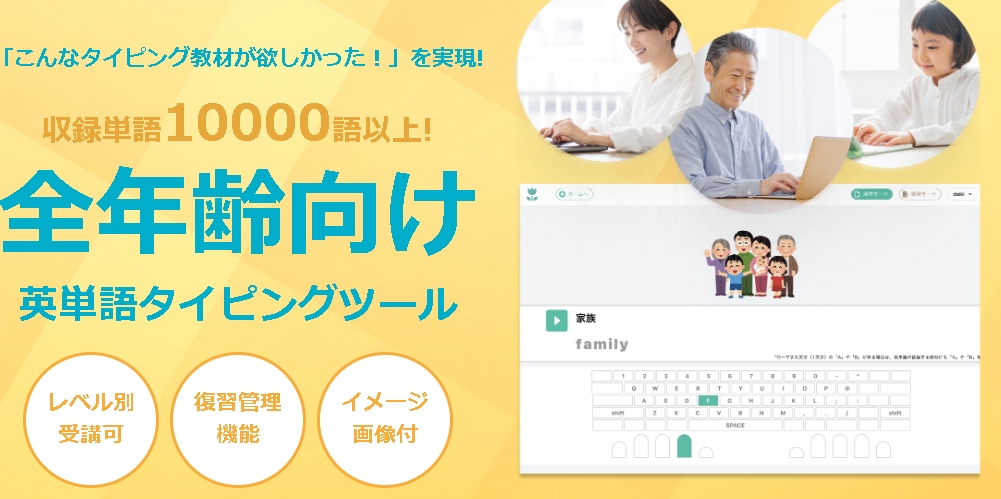
単語学習、聞き取り学習、タイピング練習はもちろん。
できなかった部分だけを重点的に学習できるように復習機能もついています。
また、中1レベルからTOEIC900点クラスまで網羅している為
無料お試し版がご利用いただけますので