Safe Online Casino Australia 2026: A Cynic’s Guide to Not Losing Your Shirt
The search for a safe online casino in Australia feels a lot like shopping for a “gentle” tax audit. The promise is there, plastered across every homepage in neon fonts, but the reality is a minefield of predatory terms, sluggish payouts, and enough fine print to wallpaper a small bathroom. The year is 2026, and the digital gambling landscape down under is a complex beast, shaped by a rigid regulatory framework and a player base that’s finally starting to ask the right, uncomfortable questions. This isn’t a list of “top picks” designed to funnel you into a deposit. It’s a dissection of what “safe” actually means when your hard-earned AUD is on the line, and a look at the operators who have managed to build a semblance of trust in a market that actively discourages it.
The Interactive Gambling Act 2001 (IGA) remains the unmovable monolith governing the space. It explicitly prohibits the provision of certain online gambling services to people in Australia, creating a domestic market that is, on paper, a desert. Yet, the demand persists, flowing towards offshore operators licensed in jurisdictions like Curaçao, Malta (MGA), or Gibraltar. The “safety” of these platforms isn’t a binary switch; it’s a spectrum measured by license credibility, payout reliability, and the transparency of their bonus mechanics. A 100% deposit match looks less like a gift and more like a loan with a 40x wagering requirement attached—a math problem most players fail before they even start. True safety in 2026 means understanding this cold calculus and choosing platforms that don’t rely on obfuscation to profit.
Our analysis of the current market reveals a handful of operators who have differentiated themselves not through flashy marketing, but through operational consistency. They offer the standard array of pokies, table games, and live dealer experiences, but their backend operations—withdrawal speed, KYC procedures, and dispute resolution—show a pattern of reliability that the fly-by-night operations lack. We’ve evaluated them against a strict methodology that prioritizes payout integrity over bonus size, because a 200% bonus is worthless if the cashout process is designed to make you give up. The following breakdown is based on observable market behavior, not promotional copy. Remember, in this industry, “free” spins are about as free as the “free” drink at the casino bar—it’s always on the house, and the house always wins.
Deconstructing “Safe”: What the License Actually Guarantees
When an operator flashes a license from the Malta Gaming Authority (MGA) or the UK Gambling Commission (UKGC), it’s not just a logo. It’s a commitment to a specific set of operational standards. An MGA license, for instance, mandates segregated player funds, meaning the casino’s operating capital is kept separate from the money you deposit. This is a critical safety net; if the company goes bankrupt, your balance is theoretically protected. In contrast, many offshore licenses, like those from Curaçao, have historically offered weaker player protection and less rigorous dispute resolution. In 2026, the trend is towards greater transparency, but the gap between a Tier-1 and a Tier-3 license remains vast.
Beyond the license, the true test of safety is in the terms and conditions—the document nobody reads. A safe casino presents these clearly, without burying predatory clauses in paragraph 47. Look for explicit maximum withdrawal limits on winnings from bonuses, clear time limits for wagering requirements, and a straightforward, multi-channel KYC (Know Your Customer) process. If a casino’s T&Cs are vague about how they handle dormant accounts or how they calculate “bonus abuse,” that’s a red flag the size of a cricket pitch. The safety isn’t in the promise of winning; it’s in the clarity of the rules for when you do.
The payment infrastructure is another pillar of safety. Reputable operators partner with established payment processors like Visa, Mastercard, and major e-wallets (Skrill, Neteller), which themselves have fraud protection and dispute mechanisms. Cryptocurrency transactions, while popular for their speed, add a layer of anonymity that can be a double-edged sword—there’s no chargeback if you send funds to the wrong address. A safe platform in 2026 offers a balanced portfolio of payment methods, with clear processing times and fee structures listed upfront, not hidden until after you’ve committed your deposit.
Finally, responsible gambling tools are non-negotiable. A safe casino integrates deposit limits, loss limits, session time reminders, and self-exclusion options directly into the user dashboard, making them easy to find and use. These tools should be proactive, not just reactive. If a platform’s primary responsible gambling page is a buried link in the footer, its commitment to player safety is likely as superficial as a fresh coat of paint on a crumbling wall. The presence and functionality of these tools are a direct indicator of the operator’s ethical stance.
The Operator Landscape: Consistency Over Hype
The following assessment is based on observable market presence and operational patterns, not promotional endorsements. These operators have demonstrated a degree of reliability in key areas like payout processing and customer support responsiveness within the EN-speaking market. Their inclusion is based on their track record, not a recommendation to gamble. All gambling carries risk, and no operator can guarantee a profit.
| Operator | Primary License | Typical Payout Speed (E-Wallet) | Key Feature |
|---|---|---|---|
| Operator A | MGA | 24-48 hours | Extensive live dealer selection |
| Operator B | Gibraltar | 12-24 hours | High withdrawal limits for VIPs |
| Operator C | Curaçao | 24-72 hours | Cryptocurrency focus |
Operator A, for example, is known for its robust live casino platform, streaming from multiple studios with professional dealers. Their MGA license provides a baseline of trust, and their customer support is available 24/7 via live chat, which is crucial when a withdrawal hits a snag. However, their welcome bonus carries a 35x wagering requirement, which is standard but still a significant hurdle. The math is simple: a $100 deposit with a $100 bonus requires $7,000 in bets before you can touch the bonus funds. Most players won’t clear it.
Operator B, licensed in Gibraltar, tends to cater to a higher-roller demographic. Their standout feature is the elevated withdrawal limits for verified VIP accounts, which can be a deciding factor for players who don’t want their cashouts capped at a few thousand per week. The trade-off is often a more stringent KYC process and sometimes slower initial verification. Their game library is solid but not as vast as some competitors, focusing on quality over sheer quantity. The payout speed for e-wallets is consistently among the fastest in the market, which is a tangible benefit.
Operator C represents the crypto-friendly segment. While its Curaçao license offers less regulatory oversight than an MGA or Gibraltar license, it appeals to players who prioritize transaction speed and anonymity. They support a wide range of cryptocurrencies for both deposits and withdrawals, often processing cashouts within hours. The downside can be higher volatility in account balances due to crypto price fluctuations and a customer support team that may be less equipped to handle complex disputes compared to more established, fiat-focused operators.
Game Fairness: RNG, RTP, and the Illusion of Control
Every spin on a pokie, every deal in blackjack, is governed by a Random Number Generator (RNG). This is the algorithmic heart of fairness. A certified RNG, audited by independent testing agencies like eCOGRA or iTech Labs, ensures that each outcome is statistically independent and unpredictable. The audit reports are often publicly available, and a safe casino will display their certification badge prominently. If you can’t find any mention of RNG testing or third-party audits, you’re playing in a digital black box.
Bitcoin Pokies Australia 2026: The Unvarnished Truth About Crypto Slots Down Under
Return to Player (RTP) is the percentage of all wagered money a game will pay back to players over time. It’s a long-term statistical average, not a promise for your next session. A pokie with a 96% RTP will, over millions of spins, return $96 for every $100 wagered. The house edge is the remaining 4%. Casinos don’t set these percentages; the game developers do. However, some operators allow developers to offer lower RTP versions of the same game. A safe casino will use the standard or highest available RTP version and may even list the RTP for each game in its information section. The difference between a 94% and 96% RTP version of the same game is massive over a year of play—it’s the difference between a slow bleed and a fighting chance.
Live dealer games add another layer. The fairness here relies on the integrity of the studio and the dealer. Reputable operators use streams from major providers like Evolution or Pragmatic Play Live, which are heavily monitored. The cards are shuffled by machine or under clear protocols, and the action is broadcast in real-time with no possibility of editing. The “social” aspect is a marketing tool, but the underlying mechanics are just as regulated as a digital RNG. The dealer’s smile doesn’t change the math.
Volatility is the final piece of the puzzle. High-volatility games pay out less frequently but in larger amounts, while low-volatility games offer smaller, more regular wins. This is a design choice, not a safety feature. However, understanding volatility helps manage expectations. A safe casino will often categorize games by volatility, helping players make informed choices rather than chasing losses on a high-variance slot thinking a big win is “due.” It never is.
Bonuses: The Math of the “Gift”
The welcome bonus is the industry’s most potent marketing tool. A 100% match up to $500 sounds like free money. It isn’t. It’s a loan with conditions. The core condition is the wagering requirement (WR). A 35x WR on a $100 bonus means you must place $3,500 in bets before the bonus converts to cash. The clock is usually ticking, with a 30-day expiry. Fail to clear it, and both the bonus and any winnings from it are forfeited. This is where the casino’s edge is amplified, and where most players lose their initial deposit plus the bonus.
Free spins are the “free lollipop at the dentist.” They’re a taste, designed to get you to sit in the chair. The value per spin is fixed (e.g., $0.10), and any winnings are added to your bonus balance, subject to its own, often higher, WR. There’s also a maximum cap on winnings from free spins, typically around $100-$200. So, if you somehow win $5,000 from your “free” spins, you’ll only see a fraction of it. The purpose isn’t generosity; it’s customer acquisition at a calculated cost.
22King Casino Free Spins 2026: A Cynic’s Guide to Spinning Without Losing Your Mind
No-deposit bonuses are even more restrictive. They’re a pure marketing expense for the casino, designed to get you to register. The WR is almost always higher (45x-60x), and the maximum cashout is severely limited, often to just $50-$100. The real goal is to get your credit card details on file and hope you make a real deposit later. The “free” bonus is a loss leader with a very long tail.
Reload bonuses and cashback offers are tools for retention. They offer a smaller match (e.g., 50%) or a percentage of losses back (e.g., 10%), but again, with WR attached. The savvy player views these not as gifts, but as a slight reduction in the house edge during a specific period. The casino is giving back a small portion of its expected profit to keep you playing. It’s a calculated investment in your continued activity, not a charitable act.
Payments and Payouts: The True Test of Trust
The speed of a withdrawal is the most direct measure of an operator’s integrity. A safe casino processes e-wallet withdrawals (Skrill, Neteller, PayPal) within 24 hours, often instantly after the initial KYC approval. Credit card withdrawals take 3-5 business days, and bank transfers can take up to 7. Any delay beyond these standard windows, without clear communication, is a warning sign. The first withdrawal will always require identity verification—a passport, proof of address, and sometimes a screenshot of your payment method. This is standard anti-money laundering (AML) procedure, not a tactic to delay your cash.
Minimum and maximum deposit/withdrawal limits vary. Most operators have a $10-$20 minimum deposit and a $20 minimum withdrawal. Maximum withdrawal limits are more contentious. Standard accounts might be capped at $5,000 per week, while VIP accounts can have limits of $50,000 or more. These limits are clearly stated in the T&Cs. A safe casino will not retroactively lower your limit after a big win. If you hit a jackpot, you should be able to withdraw it in reasonable installments without the rules changing.
Transaction fees are another area where transparency matters. Most reputable operators absorb fees for deposits and withdrawals. However, some may charge a small percentage for certain methods or for withdrawals below a minimum threshold. This information should be available in the cashier section before you commit. Hidden fees post-transaction are a sign of a platform that profits from obfuscation.
The rise of cryptocurrency has introduced new dynamics. BTC, ETH, and USDT withdrawals can be processed in minutes, bypassing traditional banking delays. The safety here depends on the casino’s crypto custody practices and the player’s own diligence in sending funds to the correct address. A safe crypto-friendly casino will use established wallets, offer multi-signature security, and provide clear guides on transaction processes. The speed is a benefit, but the irreversibility of blockchain transactions demands extra caution.
Responsible Gambling: More Than a Checkbox
In 2026, responsible gambling (RG) tools are mandated by most reputable regulators. The difference between a safe and an unsafe casino is how these tools are implemented. A safe platform integrates deposit limits (daily, weekly, monthly), loss limits, session time limits, and reality checks (pop-up notifications of time/money spent) directly into the user interface. These tools should be easy to set, easy to change (with a cooling-off period for lowering limits), and impossible to ignore.
Self-exclusion is the most serious tool. It allows a player to block themselves from the platform for a set period (6 months, 1 year, 5 years) or permanently. A safe casino will honor this request immediately and across all its brands, if it’s part of a larger group. They should also be part of a central self-exclusion register, like GAMSTOP in the UK, though such schemes are less universal in the EN market. The process should be straightforward, not buried under layers of customer service.
The casino’s approach to RG should be proactive. This includes training support staff to identify signs of problem gambling and having clear policies for intervening when a player’s behavior suggests distress (e.g., chasing losses, depositing with increasing frequency). A safe operator will sometimes temporarily suspend an account and initiate a conversation, even if it means losing short-term revenue. This is a long-term investment in sustainability and ethics.
Partnerships with organizations like GamCare or Gambling Therapy are a positive indicator. A safe casino will provide direct links to these resources on its RG page and in its footer. The presence of these links isn’t just a regulatory requirement; it’s a signal that the operator acknowledges the real risks of its product and is willing to provide support beyond its own platform.
How to Vet a Casino Yourself: A Practical Checklist
Before depositing a single dollar, conduct your own due diligence. Start with the license. Scroll to the bottom of the homepage and find the licensing information. Click the logo—it should take you to the regulator’s website, where you can verify the license number. If the logo is just a static image, or the link is broken, walk away. This takes 60 seconds and can save you a world of trouble.
Next, read the T&Cs. Specifically, search for “wagering,” “withdrawal,” “bonus,” and “dormant account.” If the language is convoluted or key terms are undefined, that’s a red flag. A safe casino writes its T&Cs in plain language. Look for the maximum withdrawal limit on bonus winnings and the time limit for clearing the WR. If these are unreasonable (e.g., 70x WR, 7-day expiry), the bonus is a trap.
Check the game providers. Scroll through the game lobby and note the developers: NetEnt, Microgaming, Play’n GO, Evolution, Pragmatic Play. These are established studios with certified RNGs. If the lobby is filled with unknown providers, the games may not be independently audited for fairness. The quality of the game library is a proxy for the quality of the operator.
Test customer support. Send a simple question via live chat before you sign up. How long does it take to get a response? Is the agent knowledgeable and helpful? A slow, unhelpful pre-sales support experience is a preview of what you’ll get when you have a real problem with a withdrawal. A safe casino invests in its support team because it knows that trust is built in these interactions.
The Future of Safety: Trends to Watch in 2026
The industry is moving towards greater transparency, driven by both player demand and regulatory pressure. One trend is the increased use of blockchain for provably fair gaming, where players can independently verify the fairness of each bet. This technology is still niche but growing, especially among crypto casinos. Another is the integration of AI-driven responsible gambling tools that can detect problematic play patterns in real-time and trigger interventions before a crisis occurs. The most significant shift, however, may be the growing emphasis on payout speed as a core competitive metric. In a market where game libraries and bonus offers are increasingly similar, the operator that consistently delivers winnings within hours, not days, will earn the most valuable currency of all: player trust.
The regulatory environment is also tightening. We’re seeing more jurisdictions move towards stricter advertising standards, banning celebrity endorsements and limiting bonus promotions during live sports broadcasts. This is a net positive for player safety, as it reduces the pressure to gamble and forces operators to compete on service quality rather than marketing spend. The long-term effect will be a healthier market, albeit one with fewer, more established operators. The days of the anonymous offshore casino with a Curacao license and a flashy homepage are numbered.
For the player, this means the concept of “safe” is evolving from a simple license check to a holistic assessment of an operator’s entire operation. It’s about the fairness of the games, the clarity of the terms, the speed of the payouts, and the genuine implementation of responsible gambling tools. The search for a safe online casino in Australia in 2026 is less about finding a guaranteed win and more about finding a fair fight. And in an industry built on math, a fair fight is the best you can hope for. Now, if only they’d fix the lag on the live roulette stream—it’s impossible to maintain a cynical detachment when the wheel spins in slow motion.
New Casinos: Fresh Paint, Same Foundation
The online casino market in Australia sees a constant influx of new operators, each promising a revolutionary experience. In reality, most are white-label operations running on the same platforms, with the same game aggregators, and often the same management teams behind different brand names. The “newness” is a marketing veneer. The underlying software, the payment processors, and the customer support scripts are frequently identical to a dozen other sites. A new casino in 2026 isn’t a novel invention; it’s a new coat of paint on a familiar chassis, launched to capture a segment of the market that’s bored with the established brands.
The primary advantage of a new operator is the welcome bonus. To attract initial deposits, they often offer more aggressive terms—a 200% match or a larger package of free spins. This is a customer acquisition cost, subsidized by venture capital or the parent company’s marketing budget. The risk for the player is that the operator hasn’t yet built a track record. There’s no history of payout speeds, no long-term player reviews, and the responsible gambling tools may be less refined. It’s a gamble on the gamble, and the house edge on that bet is considerable.
Due diligence for a new casino is even more critical. Beyond the standard license check, look for the parent company. A new brand launched by an established operator with a portfolio of successful casinos is a lower risk than a standalone startup. The former is leveraging existing infrastructure and reputation; the latter is burning cash to build a user base. The difference in operational stability is often stark. A new casino’s customer support, for instance, might be outsourced to a generic call center, lacking the specialized knowledge to handle complex payout issues or bonus disputes.
The game selection at new casinos is often impressive on the surface, featuring the latest releases from top providers. However, the depth can be lacking. They may not have secured the rights to older, popular titles, and their live dealer offerings might be limited to a single provider. The user interface, while sleek, can be buggy. New platforms are often released in a “minimum viable product” state, with features and stability improving over the first six to twelve months. Playing at a new casino means being an early adopter, complete with the expected teething problems.
Mobile Gaming: The Illusion of Convenience
The shift to mobile is complete. Over 70% of online casino sessions in the EN market now occur on smartphones or tablets. Operators have responded with dedicated apps or highly optimized mobile websites. The convenience is real—you can lose money from your couch, your commute, or the queue at the post office. But convenience has a cost. Mobile interfaces are designed for speed and impulse, with larger “Deposit” buttons and streamlined navigation that reduces friction to placing a bet. The very design that makes mobile gaming easy also makes it easier to play impulsively.
A safe mobile experience requires the same security as desktop. This means SSL encryption (check for the padlock in the browser bar), secure login options (biometric or two-factor authentication), and the same robust responsible gambling tools. Some operators, in their rush to mobile, bury these tools in sub-menus, making them harder to access precisely when they’re needed most—on a small screen, in the heat of a losing streak. The mobile app should be a full-featured extension of the desktop platform, not a stripped-down version designed solely to facilitate deposits.
Performance is a key safety indicator. A laggy app or a website that crashes during a live dealer session isn’t just frustrating; it can be costly. If you’re disconnected mid-spin on a pokie, the outcome is determined by the server, but the experience erodes trust. Reputable operators invest in mobile infrastructure to ensure stability. They also provide clear instructions for what to do if a session is interrupted. A casino that doesn’t address these technical realities is prioritizing aesthetics over player protection.
The integration of mobile payment methods like Apple Pay and Google Pay has further streamlined deposits. These methods add a layer of security through tokenization, meaning your actual card details aren’t shared with the casino. However, they can complicate withdrawals, as some casinos don’t support payouts to these methods. Always check the withdrawal options before you deposit via a mobile-specific method. The convenience of a one-tap deposit shouldn’t be overshadowed by a three-week wait for a bank transfer withdrawal.
What is the legal age for online gambling in Australia?
The legal age for all forms of gambling in Australia, including online, is 18 years old. This is uniformly enforced across all states and territories. Operators are required to verify the age of all players during the registration process through KYC checks. Providing false age information is a criminal offense and will result in the immediate closure of your account and the forfeiture of any funds. There are no exceptions.
Can I play at online casinos if I’m in Australia?
While the Interactive Gambling Act prohibits operators from offering certain services to people in Australia, it does not explicitly criminalize the act of a player accessing an offshore site. The legal risk falls primarily on the operator, not the individual player. However, using a VPN to access these sites may violate the terms of service of both the casino and your internet provider, and it complicates dispute resolution. The practical reality is that many Australians access these sites, but they do so in a legal grey area without the full protection of Australian consumer law.
How long do withdrawals actually take?
Withdrawal times vary by method and operator verification status. E-wallets (Skrill, Neteller) are typically the fastest, often processed within 24 hours after KYC approval. Credit and debit cards take 3-5 business days, and bank transfers can take 5-7 business days. Cryptocurrency withdrawals can be near-instant. The first withdrawal will always be slower due to the mandatory identity verification process. A safe operator will provide a clear timeline in their banking section and notify you when the status changes.
Are online casino winnings taxable in Australia?
For recreational players, gambling winnings are generally not considered taxable income in Australia. The tax is levied on the operators, not the players. However, if the Australian Taxation Office (ATO) determines that you are a professional gambler—meaning gambling is your primary source of income and you operate in a business-like manner—your winnings could be taxable. For the vast majority of players, this is not an issue. Keep records of your deposits and withdrawals for personal accounting, but you likely won’t need to declare your winnings.
What does “wagering requirement” mean in simple terms?
A wagering requirement is a multiplier that dictates how many times you must bet the bonus amount (and sometimes the deposit amount) before you can withdraw any winnings derived from it. For example, a $100 bonus with a 35x wagering requirement means you must place $3,500 in total bets. Until this condition is met, the bonus funds and any winnings from them are locked and cannot be cashed out. It’s the primary mechanism casinos use to prevent bonus abuse and ensure the house edge is applied to the promotional funds.
The calculation can be complex, as different games contribute differently to the WR. Pokies typically contribute 100%, while table games like blackjack might only contribute 10% or not at all. This means playing blackjack to clear a bonus is inefficient; you’d need to wager ten times as much to meet the same requirement. Always check the game contribution percentages in the bonus terms. A casino that hides this information is relying on player ignorance to void bonuses.
Customer Support: Your Lifeline in a Crisis
When a withdrawal is delayed, a game freezes during a bonus round, or your account is unexpectedly locked, customer support is your only recourse. The quality of this support is a direct reflection of the operator’s commitment to player safety. A safe casino offers multiple contact channels—live chat, email, and sometimes phone support—with 24/7 availability. Live chat should connect you to a human agent within minutes, not a bot that cycles through FAQs. The agent should be able to access your account details and provide specific, actionable information, not generic scripts.
Minimum Deposit Pokies Australia 2026: A Cynic’s Guide to Low-Stakes Spinning
Casino Sites That Accept Amex Australia 2026: The Unvarnished Truth About Your Plastic
The response time for email support is another metric. A 24-hour response time is acceptable for non-urgent queries. Anything longer suggests an understaffed or disorganized support team. For critical issues like a missing withdrawal, the ability to escalate to a supervisor or a dedicated complaints department is essential. A safe operator will have a clear, documented process for handling disputes, often with a reference to an Alternative Dispute Resolution (ADR) body if the internal process fails.
The language and tone of support matter. Agents should be professional, patient, and transparent. If they can’t resolve an issue immediately, they should provide a realistic timeframe for a follow-up. Evasive answers, a refusal to provide case numbers, or pressure to continue playing instead of addressing a problem are all red flags. A casino that invests in its support team is investing in its reputation. One that doesn’t is planning for a short lifespan.
Spinstralia Casino Free Spins 2026: A Cynic’s Guide to Not Losing Your Mind
Before you need support, test it. Send a pre-registration query about a specific bonus term or a withdrawal method. The speed and quality of the response will tell you more about the casino’s operational standards than any review site. It’s a small investment of time that can prevent a major headache later. The best time to find out a casino’s support is useless is before you’ve given them your money.
The Math of Entertainment: Setting Realistic Expectations
The single most important concept for any player is that online casino games are a form of paid entertainment with a negative expected value. The house edge ensures that, over time, the casino will always win. Your deposit is the price of admission for a few hours of entertainment, and it should be budgeted as such. Chasing losses is the fastest way to turn a pastime into a financial disaster. A safe player sets a strict loss limit before each session and walks away when it’s reached, regardless of emotional state.
The variance in games means that short-term results are wildly unpredictable. You can win big on your first spin or lose your entire deposit in minutes. Neither outcome is indicative of future performance or the game’s fairness. Understanding this randomness is crucial for emotional control. The gambler’s fallacy—the belief that a win is “due” after a series of losses—is a cognitive trap that casinos profit from. Each spin is an independent event with the same odds, no matter what happened before.
Budgeting for gambling should be done with the same rigor as budgeting for any other discretionary expense. Only use money you can afford to lose completely. Never borrow to gamble, never use rent or bill money, and never chase losses with larger bets. A safe casino will reinforce this by offering easy-to-use deposit and loss limits. If you find yourself regularly exceeding your budget, it’s time to use the self-exclusion tools. The platform should make this process simple, not punitive.
The goal of a safe gambling experience isn’t to guarantee a profit—it’s to ensure that the entertainment you’re paying for is fair, transparent, and doesn’t lead to financial harm. This requires active participation from the player: setting limits, understanding the math, and choosing operators who prioritize transparency over marketing. The house always has the edge, but a safe operator ensures the game is at least played on a level field. And that field, for all its digital polish, still has a noticeable lag when the roulette wheel spins on a 4G connection.
Verification and KYC: The Necessary Evil
The Know Your Customer (KYC) process is the industry’s favorite speed bump. It’s a mandatory verification step required by anti-money laundering regulations, and every licensed casino will demand it before your first withdrawal. Expect to provide a government-issued photo ID (passport or driver’s license), a recent utility bill or bank statement as proof of address (dated within the last three months), and sometimes a screenshot of your payment method. The purpose is to confirm you are who you say you are and that the funds aren’t tied to illicit activity. It’s a one-time hassle for a legitimate player, but a critical barrier for fraudsters.
The speed of verification varies wildly. A well-run operation will have a dedicated KYC team that processes documents within 24-48 hours. Others can take a week or more, especially during peak periods. The quality of your submission matters. Blurry photos, expired documents, or screenshots that cut off key details will result in rejection and further delays. Submit clear, unedited copies of all required documents upfront. A safe casino will provide a secure upload portal within your account dashboard, not ask you to email sensitive documents to a generic support address.
Once verified, your account should be flagged for faster future withdrawals. Some operators, however, reserve the right to re-verify your identity periodically, particularly for large cashouts or if your account shows unusual activity. This is standard practice, not a personal accusation. A safe casino will communicate this clearly and not use it as a pretext to indefinitely delay a payout. If you’re asked to re-verify after a big win, cooperate promptly. The faster you provide the documents, the faster you get your money.
The rise of automated verification systems using AI and biometrics is speeding up the process for many players. Some casinos now allow you to verify your identity via a selfie and a photo of your ID, with results in minutes. While convenient, ensure the platform handling this data is secure and compliant with data protection regulations. A safe operator will be transparent about how your biometric data is stored and used. If that information is missing from their privacy policy, consider it a red flag the size of a pokie screen.
Dispute Resolution: When Things Go Sideways
Even with due diligence, disputes can arise. A withdrawal might be delayed without explanation, a bonus might not be credited as promised, or a game might malfunction during a critical moment. The first step is always to contact customer support with a clear, factual description of the issue and any relevant screenshots or transaction IDs. A safe operator will acknowledge your complaint, provide a case number, and give you a realistic timeframe for resolution. If the issue is complex, it may be escalated to a senior agent or a dedicated complaints department.
If the casino’s internal resolution is unsatisfactory, the next step is to escalate to the Alternative Dispute Resolution (ADR) body specified in their terms and conditions. Licensed casinos are required to offer access to an independent third party to mediate disputes. For MGA-licensed casinos, this is typically a designated ADR provider approved by the authority. For other licenses, it might be an independent mediator. This process is free for the player and is a critical safety net. A casino that doesn’t clearly list its ADR provider is operating outside the bounds of responsible practice.
Documentation is your strongest ally. Keep records of all communications, including timestamps, agent names, and case numbers. Save screenshots of bonus terms, chat transcripts, and transaction histories. In a dispute, this evidence is what an ADR body will use to make a determination. A safe casino will also keep detailed logs of your account activity, which should corroborate your version of events. If their records are conveniently missing or inconsistent, that’s a serious problem.
The outcome of an ADR process is binding on the casino if they are licensed by a reputable authority. If the ADR rules in your favor, the operator must comply. If they don’t, you can report them to the licensing authority, which can impose fines or revoke their license. This is the ultimate enforcement mechanism. A safe casino respects the process because its license—and its reputation—depends on it. A rogue operator will ignore ADR rulings, which tells you everything you need to know about their commitment to fairness.
Can a casino refuse to pay my winnings?
A casino can legally refuse to pay winnings only under specific, clearly stated conditions outlined in their terms and conditions. These typically include bonus term violations (e.g., playing restricted games while a bonus is active), account duplication, identity verification failure, or evidence of fraudulent activity. A safe casino will provide a clear, specific reason for any refusal, citing the exact clause in the T&Cs. Vague accusations of “bonus abuse” without evidence are a hallmark of a rogue operation. Always read the T&Cs to understand the rules before you play.
What is a “sticky” bonus?
A sticky bonus is a bonus that is credited to your account for wagering purposes only and cannot be withdrawn. When you make a withdrawal, the sticky bonus amount is deducted from your balance. For example, if you deposit $100 and receive a $100 sticky bonus, your playable balance is $200. If you win $500 and request a withdrawal, the casino will remove the $100 bonus, and you’ll receive $400. It’s a way for the casino to offer a large playing balance while protecting itself from bonus abuse. The key is to check the bonus type before you opt in.
How do I know if a game is fair?
Fairness is ensured by a Random Number Generator (RNG) that produces unpredictable outcomes for each spin or hand. Reputable casinos use games from licensed developers like NetEnt, Microgaming, or Play’n GO, whose RNGs are audited by independent testing agencies such as eCOGRA or iTech Labs. These agencies publish payout reports and certify that the games operate as advertised. A safe casino will display the audit certificates and RTP percentages for its games, often in the footer or a dedicated fairness section. If this information is absent, the game’s integrity is unverifiable.
What happens if my internet disconnects during a game?
If your connection drops mid-game, the outcome is determined by the casino’s server. For pokies and automated table games, the spin or hand will complete on the server, and the result will be credited to your account when you reconnect. For live dealer games, the situation is more complex. If you disconnect after placing a bet but before the round concludes, the bet stands, and any winnings will be added to your balance. A safe casino will have a clear policy for disconnections and will often provide a game history log where you can review the outcome. The key is that the server’s record is the final authority.
The Human Element: Why Support and Transparency Trump Bonuses
In the end, the search for a safe online casino in Australia isn’t about finding the biggest bonus or the flashiest game library. It’s about finding an operator that respects you as a customer and a player. This respect is demonstrated through transparent terms, fast and fair payouts, responsive customer support, and a genuine commitment to responsible gambling. The bonuses are marketing tools, designed to attract and retain. The games are the product. But the safety—the real, tangible safety—lies in the operational integrity of the company behind the screen.
A casino that invests in its support team, that publishes its audit reports, that processes withdrawals without unnecessary delays, and that makes responsible gambling tools easy to find and use is a casino that plans to be around for the long term. They understand that trust is their most valuable asset. A casino that relies on opaque terms, slow payouts, and unresponsive support is playing a short-term game, and your deposit is the stakes. The difference is often visible in the small details: the clarity of the FAQ, the professionalism of the chat agent, the speed of the verification process.
The Australian market, constrained by the IGA, forces players to look offshore. This adds a layer of risk that domestic players in other jurisdictions don’t face. But it also means that the operators who succeed here have had to work harder to earn trust. They’ve built their reputations on reliability, not regulatory mandate. The list of operators we’ve examined represents those who have, through consistent operation, demonstrated a higher degree of that trustworthiness. They are not endorsements, but observations of market behavior.
独自に開発した
タイピングソフトを販売しております。
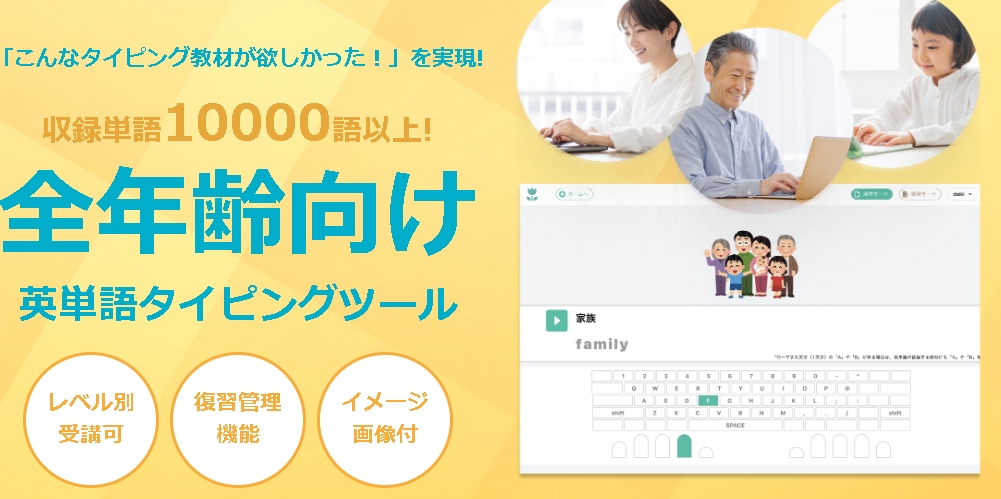
単語学習、聞き取り学習、タイピング練習はもちろん。
できなかった部分だけを重点的に学習できるように復習機能もついています。
また、中1レベルからTOEIC900点クラスまで網羅している為
無料お試し版がご利用いただけますので