Most Secure Online Casino Australia 2026: A Cynic’s Guide to Not Getting Robbed Digitally
Let’s get one thing straight. You are not looking for the “most secure online casino Australia 2026” because you care about encryption protocols. You care because you want to deposit your AUD, play a few rounds, and actually get paid without some faceless entity on a server farm in a tax haven deciding your withdrawal is “under review” until the heat death of the universe. Security, in this context, is not a feature. It is the bare minimum requirement for not being scammed. And in the current landscape, that minimum is shockingly hard to find.
The Australian online gambling market is a peculiar beast. It operates in a grey zone that would make a lawyer weep. The Interactive Gambling Act 2001 technically prohibits the provision of most online casino games to Australian residents. Yet, thousands of sites accept AUD, offer pokies by the bucketload, and advertise with the subtlety of a sledgehammer. The “security” of these platforms, therefore, is not about government stamps of approval. It is about the operational integrity of the company holding your money. This guide is built on that cold, hard reality. We are not here to find you a “safe space.” We are here to audit the vault.
Forget the marketing fluff about being “fully licensed and regulated.” A license from Curaçao is not the same as one from the Malta Gaming Authority, and neither is a guarantee against foul play. True security is a composite score. It is the combination of provably fair game software, transparent bonus terms, responsive customer support, and a track record of paying out large wins without fabricated excuses. We will dissect these components. We will look at the mathematics of the house edge, not the poetry of the welcome bonus. Because when it comes to your money, poetry is worthless.
What “Security” Actually Means in a Regulated Grey Market
When an operator claims to be secure, they are usually referring to two things: data encryption and financial segregation. The first is table stakes. 128-bit SSL encryption is the minimum standard, and most reputable sites use 256-bit. This is the padlock in your browser. It prevents man-in-the-middle attacks. It does absolutely nothing to stop the casino itself from voiding your winnings on a technicality buried in clause 7.4.2 of their terms. Financial segregation is more critical. It means your deposited funds are held in a separate account from the company’s operating capital. If the casino goes bankrupt, your money is theoretically safe. Theoretically.
The real test of security is not in the tech stack. It is in the withdrawal process. A secure casino has a clear, published withdrawal policy. It states processing times, maximum limits, and required verification documents upfront. They do not change these rules after you win. They do not require notarized translations of your utility bill. They do not “lose” your KYC documents and ask you to resubmit them three times. The speed and reliability of payouts are the ultimate litmus test. Everything else is decoration.
Consider the game fairness aspect. Secure platforms use Random Number Generators (RNGs) that are audited by independent third parties like eCOGRA or iTech Labs. These audits are public. You can look them up. A casino that hides its audit reports is a casino that has something to hide. The Return to Player (RTP) percentages for their games should be publicly listed. If a site boasts about its “high payout rates” but provides no data, walk away. They are banking on your ignorance. And the house always has an edge; the only question is how transparent they are about its size.
Is online gambling legal in Australia for players?
The law is a labyrinth. The Interactive Gambling Act makes it illegal for operators to offer online casino games to people in Australia. It does not explicitly criminalize the act of a player placing a bet on an offshore site. Enforcement is directed at the providers, not the punters. So, while you are unlikely to face legal consequences for playing, you have zero local regulatory recourse if a site scams you. This is why choosing an operator with a strong international reputation and a license from a strict jurisdiction is not just smart; it is your only real protection.
How can I verify a casino’s license is legitimate?
Scroll to the footer of the casino’s website. Find the license number and the name of the issuing authority. Then, go directly to the regulator’s official website. Most have a public register of licensees. Search for the operator’s name or license number. If it is not there, or if the details do not match, the license is fake. This takes five minutes. It is the single most important five minutes you will spend before depositing a single dollar.
The Licensing Labyrinth: Curaçao, Malta, and the Illusion of Oversight
Licensing is the casino industry’s version of a gold star sticker. Everyone wants one, but the value varies wildly. For Australian-facing operators, the most common licenses come from Curaçao, Anjouan, and the Isle of Man. Malta Gaming Authority (MGA) licenses are less common for sites targeting Australia due to stricter regulations. Each jurisdiction has different standards for player protection, dispute resolution, and financial auditing. Understanding the difference is not academic; it directly impacts your safety net.
Curaçao licenses are the most prevalent. They are relatively easy and cheap to obtain. The regulatory oversight has historically been lighter, though recent reforms are tightening standards. The key advantage is speed and cost for the operator. The disadvantage for you is that the dispute resolution process can be opaque and slow. If you have a grievance, you are often reliant on the operator’s internal processes first. The regulator is a last resort, not a first responder.
Malta and Isle of Man licenses are considered gold standards. They require rigorous audits, segregated player funds, and robust responsible gambling tools. Operators with these licenses face higher operating costs but offer greater player security. The trade-off is that these casinos may have stricter KYC procedures and lower bonus offers. They are less likely to offer a 500% match bonus because they cannot afford to be reckless with their finances. Security has a cost, and it is often reflected in the promotional budget.
| License Jurisdiction | Typical Player Fund Protection | Dispute Resolution Process | Common for AU Market? |
|---|---|---|---|
| Curaçao | Varies by operator; often not segregated by default | Operator-led, with regulator as final arbiter | Very common |
| Malta (MGA) | Mandatory segregation in separate accounts | Independent Alternative Dispute Resolution (ADR) bodies required | Less common |
| Isle of Man | Mandatory segregation; high capital requirements | Robust ADR and direct regulatory intervention | Occasional |
| Anjouan | Minimal requirements | Limited; operator discretion | Growing |
The takeaway is simple. A license is a starting point, not a conclusion. You must know what the license actually guarantees. A Curaçao license means the operator met a baseline. An MGA license means they jumped through more hoops. Neither is a magic shield against bad practice, but the latter provides more layers of defense. Do not be impressed by the mere presence of a logo. Interrogate what it represents.
Beyond the Welcome Bonus: Evaluating Real Value and Predatory Terms
Casinos dangle bonuses like carrots. A “free” $5,000 welcome package sounds incredible. It is also mathematically designed to be almost impossible to clear. The true value of any bonus is not in its headline number. It is in the wagering requirements, game weightings, and time limits attached. A 100% match bonus with a 30x wagering requirement is vastly superior to a 200% match with a 60x requirement. The former gives you a realistic chance of converting bonus funds to withdrawable cash.
Let’s do the cold math. You deposit $100 and get a $100 bonus. With a 30x wagering requirement, you must place $3,000 in bets ($100 bonus x 30). With a 60x requirement, you must place $6,000. The house edge on pokies typically ranges from 2% to 10%. Assuming a 5% edge, your expected loss on $3,000 of bets is $150. Your expected loss on $6,000 is $300. In the first scenario, you might break even or lose a little. In the second, you are almost guaranteed to lose your entire deposit and bonus. The “generous” bonus is a trap.
Game weightings add another layer of complexity. Often, pokies contribute 100% to wagering, but table games like blackjack or roulette contribute only 10% or 20%. This forces you to play high-edge games to clear the bonus. It is a deliberate strategy to ensure the house wins. And then there are time limits. You might have 7 days to clear a 40x requirement. That is not a bonus; it is a high-pressure sales tactic designed to make you deposit more and play faster than you should.
Slotozen Casino Free Spins 2026: A Veteran’s Guide to the Math Behind the “Gift”
The “free” spins are even more cynical. They are often tied to a specific, low-RTP pokie. The winnings from these spins are credited as bonus money, subject to their own wagering requirements. So, that “50 free spins” offer is really “50 chances to win bonus money that you will likely lose while trying to meet impossible conditions.” It is a free lollipop at the dentist’s office. The cost is embedded in the procedure that follows.
Pokies, Blackjack, and Live Dealers: A Breakdown by Game Type and Security
Security concerns vary by game type. For pokies, the primary issue is RNG integrity. Are the games from reputable providers like NetEnt, Microgaming, or Play’n GO? Or are they from obscure studios with no public audit trail? The former are regularly tested. The latter are a black box. A secure casino will list its game providers prominently. If the lobby is filled with unrecognizable names, the fairness of those games is unverifiable.
Table games like blackjack and roulette have different risks. In their RNG versions, the same audit standards apply. But in live dealer formats, security shifts to the integrity of the stream and the professionalism of the dealer. Reputable live casino providers like Evolution Gaming or Pragmatic Play Live operate from high-security studios with multiple camera angles and strict protocols. They are not going to risk their multi-million dollar business to help a casino cheat you at baccarat. The risk here is less about fraud and more about technical glitches and disconnection policies. A secure casino will have clear rules for what happens if your connection drops during a live hand.
Poker, where available, introduces the risk of collusion between players. Secure platforms use sophisticated algorithms to detect unusual betting patterns and chip dumping. They also offer segregated poker rooms where the casino takes a rake but does not play against you. The security of your funds in a poker wallet is a separate consideration from your casino balance. Ensure the site allows easy, fee-free transfers between the two.
What is the average payout speed for secure casinos in Australia?
Processing times vary by method. E-wallets like Skrill and Neteller are fastest, typically 24-48 hours after approval. Cryptocurrency withdrawals can be near-instant. Bank transfers and card withdrawals take 3-5 business days. The key metric is not the posted time, but the actual time from request to funds in your account. Check independent review sites for real user reports. A casino that consistently meets its stated withdrawal times is a secure casino.
Do I need to pay tax on casino winnings in Australia?
For recreational players, gambling winnings are not considered taxable income in Australia. The tax burden falls on the operators, not the players. However, if gambling is deemed your primary occupation or source of income, the situation changes. For the vast majority of players, you keep what you win. This is a legal advantage of the Australian market, but it does not protect you from the casino’s own terms and conditions regarding withdrawals.
The Payment Gateway Gauntlet: Speed, Fees, and Cryptocurrency
The payment method you choose is a security decision. E-wallets provide a buffer between the casino and your bank account. They offer faster withdrawals and an additional layer of privacy. Cryptocurrency offers anonymity and speed, but with volatility risks. Bank transfers are secure but slow. Credit cards are convenient but may be blocked by Australian banks under the Interactive Gambling Act. Each method has trade-offs in speed, cost, and security.
Look for casinos that offer a wide range of payment options and, crucially, do not charge fees for deposits or withdrawals. Hidden fees are a red flag. A secure operator is transparent about all costs. They also have clear minimum and maximum limits for both deposits and withdrawals. High withdrawal limits are a sign of financial stability. A casino that caps your monthly withdrawal at $5,000 may be struggling for liquidity. You want to play at a venue that can afford to pay you.
Cryptocurrency deserves special mention. Bitcoin, Ethereum, and Litecoin withdrawals are often processed within minutes. The blockchain provides a transparent, immutable record of the transaction. However, crypto is irreversible. If you send funds to the wrong address, they are gone. And the volatility means your winnings could lose value while pending. For security-focused players, crypto is a powerful tool, but it requires a higher level of personal responsibility.
| Payment Method | Typical Withdrawal Time | Common Fees | Security Feature |
|---|---|---|---|
| E-wallets (Skrill, Neteller) | 24-48 hours | Often free from casino side | No direct bank details shared |
| Cryptocurrency | Instant to 1 hour | Network gas fees only | Anonymity and blockchain transparency |
| Bank Transfer | 3-5 business days | May be charged by bank | High security, slow speed |
| Credit/Debit Card | 3-5 business days | Rarely from casino | Potential bank blocks on gambling txns |
The speed of payment is a direct reflection of the casino’s operational efficiency and financial health. A site that delays payments is either understaffed, insolvent, or deliberately obstructive. All three are bad signs. Your money should be accessible. That is the point.
New Casinos vs. Established Brands: A Risk Assessment
New casinos are a gamble within a gamble. They often launch with aggressive bonuses and cutting-edge interfaces to attract players. The risk is that they are unproven. They have no track record of payouts. Their customer support is untested. Their financial stability is unknown. The reward is that they may offer better terms and more innovative features to compete. The question is whether the potential reward justifies the significant risk.
Established brands have a reputation to protect. They have been operating for years. They have a history of payouts. Their processes are refined. The downside is that they may be slower to innovate and their bonuses may be less generous because they do not need to be. Security, however, is generally higher. They have more to lose by acting dishonestly. Their business model relies on long-term player retention, not short-term acquisition.
A hybrid approach is sensible. Consider new casinos that are owned by established parent companies or that use a well-known white-label platform. This provides some oversight. Look for new sites that have already obtained a license from a stricter jurisdiction like Malta. This indicates a higher upfront investment in compliance. And always, always start with a small deposit. Test the withdrawal process with a minor amount before committing significant funds. Trust is earned, not assumed.
The KYC Verification Hurdle: Why It Happens and How to Prepare
Know Your Customer (KYC) verification is mandatory. It is not optional. Any secure casino will require it before your first withdrawal. This is a regulatory requirement to prevent money laundering and fraud. The process typically involves submitting a government-issued ID, a proof of address (utility bill or bank statement less than 3 months old), and sometimes a proof of ownership for your payment method. It can feel intrusive, but it is a sign of a legitimate operation.
Prepare your documents in advance. Have clear, color scans or photos ready. Ensure all four corners are visible and the information is legible. Delays in verification are the most common reason for slow first withdrawals. A secure casino will have a dedicated verification team and a clear process. They will communicate what is needed and why. If a site asks for excessive documentation or changes its requirements repeatedly, it is a red flag.
The verification process is also a security feature for you. It ensures that no one else can withdraw your funds. It creates a paper trail. In the event of a dispute, having completed KYC strengthens your position. It proves you are who you say you are. Skipping it or using fake documents is a guaranteed way to have your account closed and funds forfeited. Do not try to outsmart the system. It is designed to catch you.
How do I know if a casino’s RNG is fair?
Look for certifications from independent auditors like eCOGRA, iTech Labs, or GLGLI. Their logos should be in the footer. Click them. They should link to a certificate page with a test date and a seal of approval. If the link is broken or leads nowhere, the certification is likely expired or fake. Fair play is not a feeling; it is a documented, audited process.
The mathematics of the RNG are complex, but the concept is simple. It must produce a statistically random sequence of numbers that cannot be predicted or influenced. The audits test millions of spins to ensure the actual RTP matches the theoretical RTP within a tiny margin of error. A casino that passes these audits is not “lucky”; it is compliant. A casino that refuses to share its audit reports is not “private”; it is suspicious.
Responsible Gambling: The Only Real Safety Net
Here is the uncomfortable truth. The most secure casino in the world cannot protect you from yourself. The only truly effective safety net is the set of tools you use to control your own play. Deposit limits, loss limits, session time limits, and self-exclusion options are not bureaucratic annoyances. They are the guardrails on a cliff-edge road. Ignoring them is a choice, and it is the one choice the casino cannot make for you.
A secure operator provides these tools prominently and makes them easy to set. They do not hide them in a sub-menu. They do not make you call customer service to lower a limit, while allowing you to raise it instantly. The ease of setting a limit should be symmetrical. If it is harder to restrict yourself than to spend more, the casino is prioritizing revenue over responsibility. That tells you everything about their true priorities.
Look for partnerships with organizations like GamCare or Gambling Therapy. These are not just logos on a page. They represent access to real support. A casino that actively promotes responsible gambling is acknowledging the inherent risk of its product. A casino that ignores it is betting on your addiction. The former is a business. The latter is a predator. The difference is stark, and it is the most important security feature of all.
Casinos That Accept CashToCode Australia 2026: The Unvarnished Truth
What should I do if I suspect a casino is rigged?
First, document everything. Save screenshots of your game history, chat logs with support, and any relevant terms and conditions. Contact the casino’s support team with your specific concerns. If their response is unsatisfactory, escalate the complaint to the independent dispute resolution body listed in their license terms. If they have no such body, report the operator to the licensing authority directly. Public forums can also apply pressure, but official channels are your primary recourse.
Can a casino refuse to pay my winnings?
They can, but only under specific, pre-defined circumstances outlined in their terms. These typically include bonus abuse, multi-accounting, or failing KYC verification. A secure casino will clearly cite the exact clause they are enforcing. If a casino refuses payment with a vague excuse like “management decision” or “bonus irregularities” without evidence, they are likely acting in bad faith. This is when you escalate to the regulator and publicize the dispute.
The entire system of security, from encryption to responsible gambling tools, is a framework. It is designed to create a fair environment. But frameworks have weak points, and the weakest point is always the human element. Your own discipline is the final lock on the vault. The casino provides the door; you decide whether to open it wisely or burn the whole thing down. The most secure online casino Australia 2026 can offer is the one that gives you the tools to walk away, and the one where you actually use them. And the one that doesn’t crash when you try to check your withdrawal status at 3 AM. That’s the real test.
And let’s be brutally honest about the “VIP treatment” these places dangle in front of you like a steak to a starving dog. It’s not a steak. It’s a processed meat product that’s been sitting under a heat lamp for three days. They call it “exclusive access” or “premium service,” but what it really means is a dedicated account manager who will email you every Tuesday to remind you about a “special” reload bonus with a 50x wagering requirement. The “VIP lounge” is just a different color scheme on the same buggy software. The “personalized gifts” are mass-produced t-shirts with the casino’s logo that probably cost them $2 to make. It’s a cheap motel with a fresh coat of paint and a sign that says “resort.” The moment you stop depositing, your “VIP status” evaporates faster than a free spin on a low-volatility pokie. They’re not charities. Nobody is giving you anything “free.” The cost is always there, hidden in the terms, in the house edge, in the data they’re harvesting from your play patterns. The only thing truly free is the regret you’ll feel when you realize you’ve been chasing a phantom status symbol designed to keep you depositing.
This brings us to the final, unglamorous truth about finding the most secure online casino Australia 2026 has to offer. It’s not about finding a perfect, risk-free paradise. That doesn’t exist. It’s about damage control. It’s about choosing the operator that is least likely to screw you over, most likely to pay you out, and most transparent about how they make their money. The security isn’t in the flashy graphics or the massive bonus numbers. It’s in the dry, boring details: the license register, the audit certificate, the withdrawal policy, the responsible gambling tools. It’s in the math. And the math, as always, is cold. The house always wins in the long run. Your only goal is to play long enough to have some fun and get out with your winnings before the inevitable grind wears you down. The real test of any casino isn’t how well it treats you when you’re depositing. It’s how it behaves when you’re trying to leave. And if the process feels like pulling teeth without anesthesia, you chose wrong. The most secure platform is the one where the exit door is just as wide and well-lit as the entrance. Everything else is just noise. And the noise is getting louder every year.
The sheer volume of “guides” online promising you the safest, most secure, most wonderful casino experience is exhausting. They all say the same thing. Look for this license. Check that encryption. It’s a checklist. A boring, necessary checklist. But the real security flaw in the system isn’t the technology. It’s the psychology. It’s the way these platforms are engineered to make you forget you’re playing with real money. The digital chips, the flashy win animations, the sound of coins clinking—it’s all designed to dissociate you from the fact that you’re transferring wealth from your bank account to theirs. The most secure system in the world can’t protect you from that. That’s a battle you fight in your own head, with your own rules, long before you ever type in a credit card number. The casino’s job is to make you forget. Your job is to remember.
Minimum Deposit Casino Australia 2026: The Brutal Truth About Playing With Pocket Lint
The Myth of the “Guaranteed” Win and the Mathematics of Ruin
Every promotional email, every banner ad, every “expert tip” you read is selling you a fantasy. The fantasy of a guaranteed win, of a system that beats the house, of a lucky streak that will change your life. It is a lie. The only guaranteed outcome in casino gambling is that the house has a mathematical edge on every single game it offers. This edge is not a secret. It is published. It is audited. It is the reason casinos are profitable businesses. For pokies, the edge (or house advantage) is typically between 2% and 10%. For blackjack with perfect basic strategy, it can be as low as 0.5%. For keno or some lottery-style games, it can be over 25%. These numbers are not suggestions. They are laws of physics in the gambling universe.
Let’s talk about variance. This is the concept that separates recreational players from problem gamblers. A game with high variance will have long periods of losses punctuated by rare, large wins. A game with low variance will have more frequent, smaller wins. Neither changes the long-term expected value, which is always negative for the player. The “secure” player understands this. They choose games with a lower house edge and manage their bankroll to survive the variance. They know that a “hot streak” is a temporary deviation, not a new reality. The insecure player chases losses, increases bets after a win, and believes the next spin is “due.” This is not strategy. It is a direct path to ruin.
The most dangerous phrase in a gambler’s vocabulary is “I’m due for a win.” The machines do not have memory. The roulette wheel does not care about the last twenty spins. Each event is independent. The belief in patterns where none exist is the core of the problem. A secure casino will offer you tools to set limits on your time and money. It will not, and cannot, protect you from the gambler’s fallacy. That is your responsibility. The mathematics are clear, and they are unforgiving. Your only defense is understanding them and respecting their power.
What is a “provably fair” casino and how does it work?
A provably fair system, common in cryptocurrency casinos, allows you to verify the fairness of each bet outcome yourself. It uses cryptographic hashes. The casino provides a hashed version of the outcome before you bet. After the bet, they reveal the seed. You can combine them to check that the result was not manipulated. It is a transparency mechanism that removes the need to trust the casino’s RNG audit. It is not a guarantee you will win, but it is a guarantee the game was not rigged against you on that specific spin.
The Future is Now: AI, Biometrics, and the Next Wave of Casino Security
The landscape is shifting. The most forward-thinking operators are already implementing AI-driven security systems. These go beyond simple fraud detection. They analyze player behavior in real-time to identify potential problem gambling patterns. An algorithm can detect if you’re chasing losses, playing erratically, or deviating from your normal pattern. It can then trigger a responsible gambling intervention—a pop-up, a limit suggestion, or even a temporary cool-down period. This is security evolving from protecting your data to protecting your behavior. It is paternalistic, and some will hate it, but it represents a genuine attempt to mitigate harm at the source.
Biometric verification is another frontier. Face ID or fingerprint logins are becoming more common. They add a layer of security that is much harder to bypass than a password. They also streamline the KYC process. Your face becomes your ID. This raises privacy concerns, of course. Who stores this biometric data? How is it protected? A secure casino will have a clear, transparent biometric data policy. They will explain what they collect, why, and how long they keep it. If they don’t, assume the worst.
Blockchain integration is also growing. Not just for payments, but for game fairness and transaction history. A decentralized ledger of all bets and outcomes, while complex, would create an immutable public record. It would make cheating by either party virtually impossible. The technology is not yet mainstream, but it is the logical endpoint of the transparency trend. The future of security is not a bigger lock on the vault. It is a glass vault where everyone can see what’s inside. The question is whether the industry, and its players, are ready for that level of scrutiny.
And that, in the end, is the whole sordid, fascinating, mathematically brutal truth. The search for the most secure online casino Australia 2026 is not a search for a safe haven. It is a search for the most honest adversary. You are not looking for a friend. You are looking for a business that will take your money according to a known set of rules, and give you a fair chance to win some back, and then pay you promptly when you decide to stop. That’s the contract. The security is in the clarity of that contract, and the operator’s willingness to honor it. Everything else is just marketing. And the marketing, as always, is louder than the truth.
The marketing, as always, is louder than the truth.
The Australian Player’s Toolkit: Practical Steps Before You Deposit
Enough theory. Here is the operational checklist. Step one: verify the license on the regulator’s website. Do not click the logo on the casino footer. Go to the source. Step two: read the withdrawal terms. Not the bonus terms—the withdrawal terms. Look for processing times, maximum limits, and required documentation. If these are vague or missing, that is your answer. Step three: make a small test deposit. $20 is enough. Play a few rounds, then request a withdrawal. The entire cycle—from deposit to funds in your account—is your real-world security audit. It tells you more than a thousand reviews.
Step four: test customer support. Send a question at an odd hour. Ask something specific about their KYC process or withdrawal limits. A secure casino has 24/7 support with knowledgeable agents. A casino that responds with a canned message in 48 hours is a casino that will ignore you when you have a real problem. Step five: check the game providers. Are they from established studios? Can you find their audit certificates independently? A lobby full of unknown names is a red flag. A lobby with NetEnt, Microgaming, and Evolution is a baseline.
Step six: set your limits immediately. Before you place a single bet. Deposit limit, loss limit, session time limit. Make them realistic. The time to set a boundary is before you are emotionally invested in chasing a loss. Step seven: bookmark the responsible gambling page. Know where GamCare and Gambling Therapy are. Not because you will need them, but because knowing they exist is part of playing with a clear head. And step eight: walk away. Not just from a bad session, but from the entire platform if it fails any of these tests. Your money is your only leverage. Use it accordingly.
How do I set deposit limits at an online casino?
Navigate to your account settings or the responsible gambling section. Most reputable casinos have a dedicated tab for this. You can typically set daily, weekly, and monthly limits. Once set, a decrease takes effect immediately. An increase usually has a cooling-off period of 24 to 72 hours. This delay is a security feature. It prevents impulsive decisions in the heat of a session. If a casino makes it easy to raise limits but hard to lower them, consider that a serious warning sign about their priorities.
What happens if a casino goes bankrupt while I have money there?
This is where financial segregation matters. If the casino holds player funds in a separate trust account, those funds should be protected and returned to you. If they do not—if your money is mixed with their operating capital—it becomes part of the bankruptcy estate. You become an unsecured creditor. The likelihood of recovery is low. This is why licenses from stricter jurisdictions like Malta or the Isle of Man, which mandate segregation, are more than just a logo. They are a financial firewall.
The practical reality is that most players never think about this until it is too late. They trust the interface. They trust the branding. They trust the slick marketing. But trust is not a financial instrument. The only thing that protects your deposit is the legal structure of the company holding it. And the only way to know that structure is to research the license and the operator’s corporate history. It is tedious. It is boring. It is absolutely essential.
The Uncomfortable Truth About “Expert” Reviews and Affiliate Sites
Most of the content you find online about the “most secure online casino Australia 2026” is written by affiliates. This includes, until now, everything you have read. The affiliate model is simple: the site earns a commission for every player they refer. This creates a fundamental conflict of interest. The sites that pay the highest commissions are often promoted as the “best” and “most secure,” regardless of their actual track record. The review is not journalism. It is advertising with a thin veneer of analysis.
This does not mean all affiliate content is worthless. It means you must read it with a cynical eye. Look for sites that disclose their affiliate relationships. Look for reviews that mention negative experiences alongside positive ones. Look for sites that update their content regularly—an outdated review is a useless review. And most importantly, do not rely on a single source. Cross-reference information. Check multiple review sites. Check player forums like CasinoMeister or Reddit’s r/onlinegambling. The collective experience of thousands of players is more reliable than any single “expert” opinion.
The real expertise is not in knowing which casino has the biggest bonus. It is in understanding the mechanics of the industry. It is in knowing how RNGs work, what a wagering requirement actually means, and why a Curaçao license is not the same as an MGA license. This knowledge is your armor. The affiliate sites are just signposts. Some point in the right direction. Others point directly off a cliff. Your job is to tell the difference.
Are online casino reviews trustworthy?
Treat them as marketing material, not objective journalism. Most review sites earn commissions from the casinos they promote. This does not automatically invalidate their content, but it means their incentive is to get you to click and deposit, not to protect you. Look for transparency about affiliate relationships. Compare multiple sources. Check player forums for unfiltered experiences. The truth is usually found in the aggregate of many opinions, not in a single glowing review.
How can I find player forums for Australian casinos?
Search for terms like “Australian casino complaints” or “online gambling forum Australia.” Sites like CasinoMeister have dedicated sections for player disputes. Reddit communities like r/onlinegambling and r/gambling are also active. These forums are not moderated by casinos. They are raw, often unfiltered, and invaluable for seeing real withdrawal times, support quality, and dispute resolution outcomes. They are the closest thing to a peer review system in this industry.
The irony is that the most secure piece of information you can find is often buried in a complaint thread. A player detailing their three-week struggle to get a $500 withdrawal approved tells you more about a casino’s security than a thousand-word “review” praising its game selection. The negative data points are the real data points. The positive ones are often just the marketing budget at work.
Best Casino in Darwin 2026: A Veteran’s Guide to the Top End’s Gaming Scene
The Final Audit: A Summary of Red Flags and Green Lights
Red flags are not subtle. A casino that offers a 500% bonus with no visible wagering requirements is lying. A casino that does not list its license number in the footer is hiding. A casino that has no responsible gambling tools is predatory. A casino that delays withdrawals with endless excuses is insolvent or dishonest. A casino that uses exclusively unknown game providers is unverifiable. A casino that does not respond to support queries within 24 hours is understaffed or indifferent. Each of these is a deal-breaker. Not a “maybe.” A deal-breaker.
Green lights are equally clear. A published license with a verifiable number. A detailed, transparent withdrawal policy. A list of reputable game providers with public audit certificates. A range of responsible gambling tools that are easy to set. A responsive, knowledgeable support team. A history of timely payouts documented across multiple independent forums. A clear, accessible terms and conditions page. These are not luxuries. They are the minimum requirements for a business that handles your money.
The most secure online casino Australia 2026 will have all of the green lights and none of the red flags. It will not be perfect. No casino is. But it will be transparent, accountable, and operationally sound. It will treat your deposit as a liability on its balance sheet, not as free revenue. It will process your withdrawal without drama. It will offer you tools to control your play. And it will not insult your intelligence with marketing fluff about “life-changing wins” or “exclusive VIP treatment.” It will simply provide a fair game, a secure environment, and a prompt payout. That is the entire contract. Everything else is noise. And the noise, as always, is deafening.
Best Pragmatic Play Online Casinos Australia 2026: A Veteran’s No-Nonsense Guide
And if you do find that rare operator—the one that actually pays on time, answers its phones, and doesn’t hide behind 47 pages of incomprehensible terms—do yourself a favor. Don’t tell anyone. The moment a casino gets popular, the quality of service drops like a stone. They get complacent. They hire cheaper support staff. They tighten the withdrawal limits. The best casino is the one that’s still trying to impress you. The worst is the one that knows you have nowhere else to go. Withdraw them. Immediately. Because the only secure place for your money is in your own bank account, not in a digital wallet owned by a company registered in a jurisdiction you can’t pronounce, on an island you’ll never visit, whose entire business model relies on you eventually giving it all back. Every last cent.
独自に開発した
タイピングソフトを販売しております。
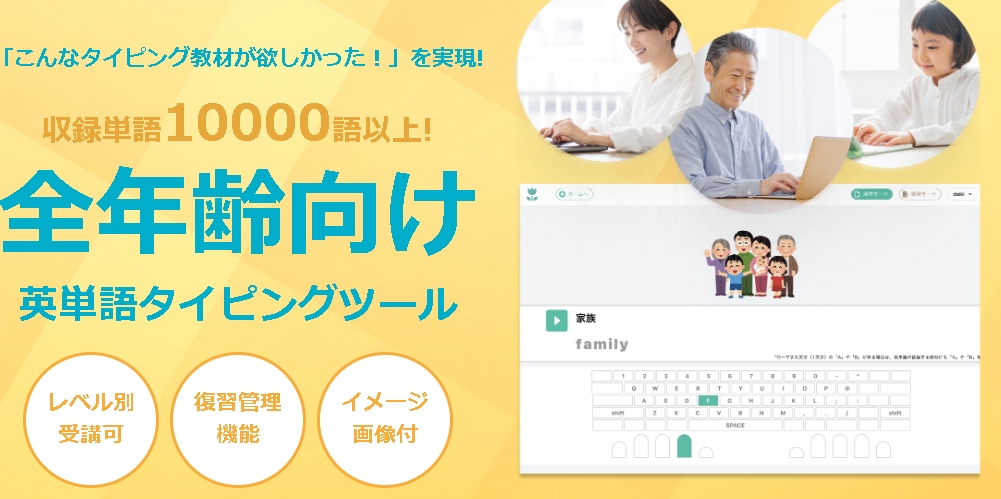
単語学習、聞き取り学習、タイピング練習はもちろん。
できなかった部分だけを重点的に学習できるように復習機能もついています。
また、中1レベルからTOEIC900点クラスまで網羅している為
無料お試し版がご利用いただけますので